

Roses have a reputation for needing cool weather, so many people assume they are out of reach here. The good news is that growing roses in singapore is very possible once you pick the right types and work with our climate instead of against it. Our warm days, strong light and steady humidity actually keep roses in bloom for much of the year, as long as you manage watering, airflow and leaf disease. This guide walks you through the practical steps for a balcony, corridor or small garden.
Choosing Roses That Suit Our Climate
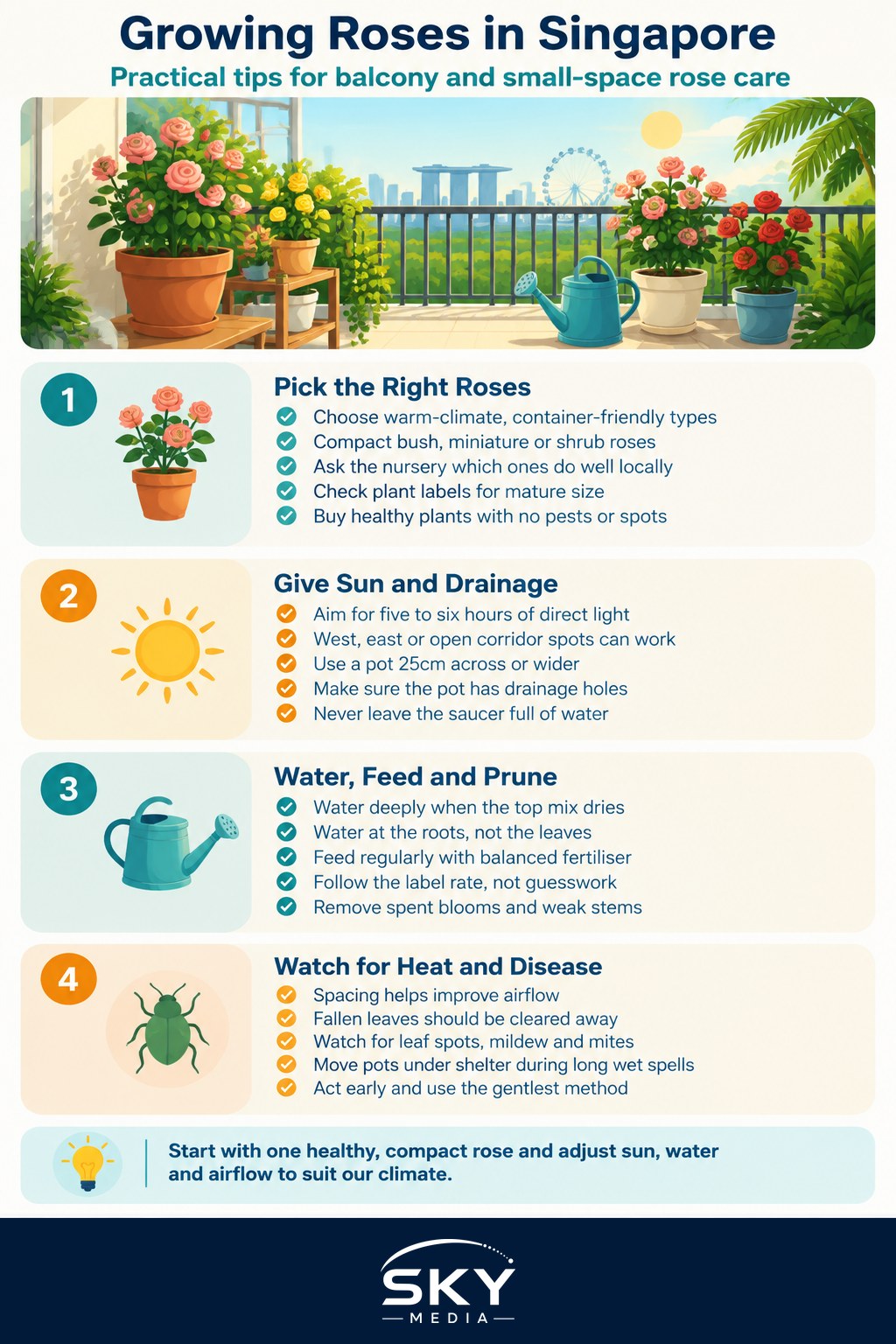
Not every rose enjoys the tropics. Look for warm climate and container friendly types, often sold as compact bush roses, miniature roses, or hardy shrub roses. These tend to shrug off heat and keep flowering rather than sulking. Ask the nursery staff which plants have done well in local conditions, and check the plant label for its mature size so you can match it to your space.
Grafted roses and roses grown on their own roots both work. What matters more is buying a healthy plant to begin with. Choose one with firm green stems, no black spots on the leaves, and no sad yellowing lower foliage. Skip anything with sticky pests or webbing. If you are new to buying plants, our notes on how to choose healthy plants at the nursery will save you from bringing home problems.
Sun, Pots and Potting Mix
Roses are sun lovers. Aim for at least five to six hours of direct light a day, which usually means a west or east facing balcony ledge or an open corridor spot that catches the morning sun. Too little light gives you leggy stems and few flowers.
Grow in a generous pot, ideally 25cm across or wider, with plenty of drainage holes. Roses hate sitting in soggy soil, so use a well draining potting mix rather than heavy garden soil. A mix that holds some moisture but drains fast is ideal, and you can improve any bag by adding a little coarse material for structure. If you want to blend your own, see our guide to making your own potting mix.
One important local reminder: never let the pot saucer sit full of water. Standing water in saucers and trays is a prime breeding spot for Aedes mosquitoes and a dengue risk. Empty and scrub saucers regularly, tip out rainwater after storms, and follow NParks and NEA guidance on preventing mosquito breeding.
Watering, Feeding and Pruning
In our heat, potted roses drink a lot. Water deeply when the top of the mix feels dry, usually daily in dry spells, aiming water at the roots rather than the leaves. Wet foliage overnight encourages fungal disease, so water in the morning when you can.
Roses are hungry plants. Feed regularly through the growing period with a balanced fertiliser, following the label rate rather than guessing. A slightly higher potassium feed can support flowering. Always read the product label and adjust to the plant’s response.
Light, frequent pruning keeps a tropical rose tidy and flowering. Snip off spent blooms just above a healthy leaf to push out new buds, and remove any weak, crossing or dead stems to open up airflow. Good air movement is one of your best defences against leaf disease in humid weather. For more on keeping blooms coming, read our guide to deadheading and encouraging more blooms.
Managing Heat, Humidity and Pests
The tropical challenges for roses are fungal leaf spots, powdery mildew in muggy weather, and sap suckers like aphids and spider mites in hot dry spells. Spacing plants for airflow, watering at the base, and removing fallen leaves go a long way. If disease or pests appear, act early and start with the gentlest effective method. A general purpose horticultural treatment can help, but only if you follow the label dilution, test on a few leaves first, spray in cooler hours, and keep it away from children and pets. Our overview of how to deal with plant pests covers the common tropical culprits.
During long wet spells, move pots under some shelter so the leaves are not constantly soaked, and ease back on feeding while growth slows. When the sun returns, your roses will pick up quickly.
A Realistic Outlook
Roses in the tropics take a little more attention than a fuss free foliage plant, but they reward you with colour and scent that few plants match. Start with one hardy, compact variety, get the sun, pot and watering right, and learn from how your plant responds. Once you have the rhythm, you may well find yourself adding a second and a third. With patience and a sunny spot, growing roses in singapore turns from a doubtful idea into one of the most satisfying corners of your garden.
Frequently Asked Questions
Which rose varieties are easiest for beginners in Singapore? Compact bush roses, miniature roses and hardy shrub roses are the usual beginner picks because they cope better with heat and pots. Ask the nursery which ones have done well locally. Start with one healthy plant before collecting more.
Why are my rose leaves turning yellow with black spots? Black spots on yellowing leaves usually point to a fungal problem, made worse by wet foliage and poor airflow in humid weather. Remove affected leaves, water at the base in the morning and space plants out. If it keeps spreading, ask a nursery about a suitable treatment.
Can I grow roses from cuttings instead of buying a plant? Yes, many roses can be rooted from stem cuttings, though success varies and it takes patience. Use a healthy stem, a clean cut and a light, well-draining mix kept evenly moist. Buying a nursery plant is the more reliable route for a first rose.
How often should I repot a rose in a pot? Repot when roots crowd the pot or water runs straight through, which is often every year or two. Move up only one size and refresh the mix. Do it when the plant is not stressed by heat or a heavy flowering flush.
Do roses do well on a shady HDB balcony? Not really, because roses want about five to six hours of direct sun and shade gives leggy stems and few blooms. A west- or east-facing ledge with good light suits them better. If your balcony is shady, consider a more shade-tolerant flowering plant.
Further reading: Growing Portulaca (Moss Rose) in Singapore · Growing Bonsai as a Hobby in Singapore