
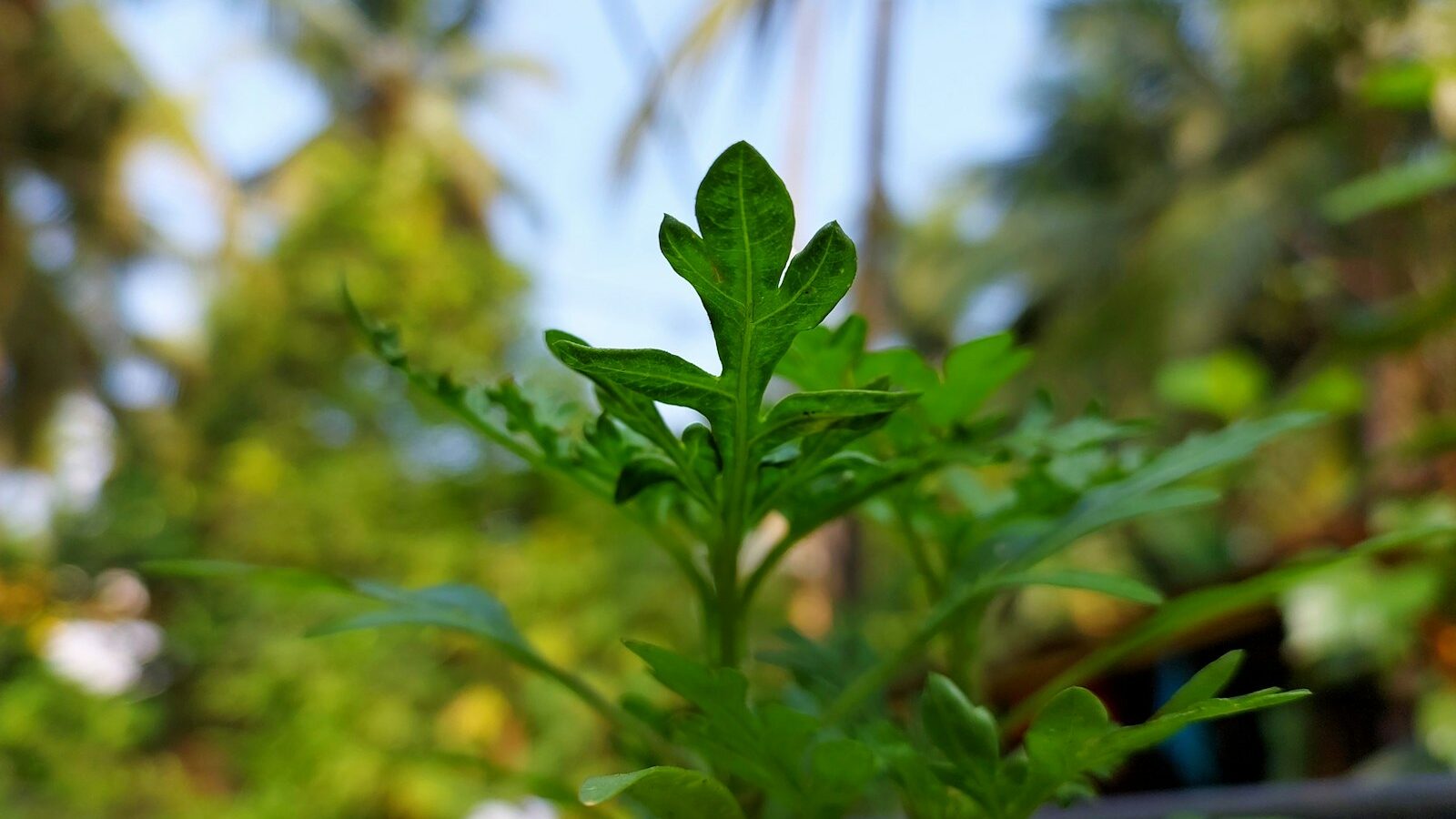
Ulam is the Malay tradition of eating fresh, raw leaves and shoots alongside rice, often with sambal belacan or budu. A plate of ulam might include crunchy, slightly tangy ulam raja, round pegaga leaves, peppery daun kaduk and other greens picked that morning. Many Malay and Peranakan families once grew these plants in kampung gardens, and they are surprisingly easy to grow on an HDB corridor or balcony today.
If you want to grow ulam raja and its companions at home, this guide covers the main herbs, how to start them, how much sun and water they need, and how to harvest and prepare them safely for eating raw. Laksa leaf, pandan and other cooking herbs are covered in our other guides, so this one sticks to the leaves usually eaten fresh.

The Main Ulam Herbs Worth Growing
Ulam raja (Cosmos caudatus). Its name roughly means “king of salads.” It is a relative of the ornamental cosmos flower, with feathery leaves, pink or purple flowers and a fresh, slightly resinous, mango-like taste. It grows quickly and often self-seeds.
Pegaga (Centella asiatica). Also called Asiatic pennywort or gotu kola, pegaga has small, round, kidney-shaped leaves on long stalks and spreads along the soil by runners. The taste is mildly bitter and grassy.
Daun kaduk (Piper sarmentosum). Often called wild betel leaf, it has glossy, heart-shaped leaves with a gentle peppery flavour. It is eaten raw and also used to wrap snacks or cooked in dishes. Note that it is a different plant from betel leaf (sirih).
Selom (Oenanthe javanica). Sometimes called water dropwort or Java water dropwort, selom has celery-like leaves and loves moist conditions. Young shoots are eaten raw.
Cekur (Kaempferia galanga). Also called aromatic ginger or sand ginger, cekur has broad leaves that lie flat close to the soil. The young leaves are sometimes eaten as ulam, and the rhizome is used in cooking.
Several of these also feature in other Southeast Asian cuisines under different names, so you may find them in Thai, Indonesian or Vietnamese cooking too.
Growing Conditions at a Glance
Each herb has slightly different needs. Use this table to plan where each one goes.
| Herb | Light | Water and soil | How to start | Growth habit |
|---|---|---|---|---|
| Ulam raja | Full sun, at least half a day | Well-drained, moderately moist | Seeds or stem cuttings | Upright, bushy, can grow tall |
| Pegaga | Partial shade to bright light | Consistently moist, rich soil | Runners or rooted plantlets | Low, spreading groundcover |
| Daun kaduk | Partial shade | Moist, well-drained | Stem cuttings or runners | Creeping, spreads quickly |
| Selom | Bright light to partial shade | Wet, can sit in shallow water | Cuttings rooted in water | Soft, spreading stems |
| Cekur | Partial shade | Loose, well-drained | Rhizome pieces | Low, flat rosette |
How to Grow Ulam Raja Step by Step
- Get seeds or cuttings. Ulam raja seeds are long and thin. Some nurseries and online sellers carry them, and gardeners in community gardens often share seeds. A healthy stem cutting from a friend’s plant also roots readily.
- Sow shallowly. Press seeds lightly into moist potting mix, barely covered. Keep the mix damp but not soggy. Seeds usually sprout within days to a couple of weeks in Singapore’s warmth.
- Pot up or thin out. Once seedlings have a few true leaves, give each one its own medium pot or space them out in a planter. Crowded seedlings grow weak and leggy.
- Give it sun. Ulam raja wants a sunny corridor, balcony or window ledge. In too much shade it becomes spindly and flowers poorly.
- Water regularly. Water when the top of the soil feels dry. Pots dry quickly in hot, windy spots, so check daily during dry spells.
- Feed lightly. A slow-release fertiliser or diluted organic liquid feed every few weeks keeps leaves coming. Too much nitrogen gives lush leaves but weaker flavour, so go gently.
- Pinch the tips. Harvesting the top shoots regularly makes the plant bushier and gives you more tender leaves.
Ulam raja can be short-lived once it flowers heavily. Let a few flowers go to seed so new seedlings appear, or root a fresh cutting every few months to keep a supply going.
Growing Pegaga, Daun Kaduk, Selom and Cekur
Pegaga loves moisture. Grow it in a wide, shallow pot with rich soil and keep it consistently damp. A saucer underneath helps in hot weather, but empty standing water regularly to avoid mosquito breeding, which is a serious concern in Singapore. It spreads by runners, so one plant soon fills a pot.
Daun kaduk is almost foolproof. Push a stem cutting into moist soil in a partly shaded spot and it usually roots. It spreads along the ground, so give it a trough or a pot of its own unless you want it everywhere.
Selom can be rooted in a glass of water, then moved into a pot of wet soil. Some growers keep it in a container with a little standing water, but again, you must prevent mosquitoes: change the water often or keep it covered so larvae cannot develop. NEA guidance on preventing mosquito breeding applies to any water-holding container.
Cekur grows from rhizome pieces planted just below the soil surface. It has a natural dormant phase when the leaves die back, so do not panic if it disappears for a while. Keep the soil lightly moist and it should return.
For general herb basics such as potting mix and container choices, our guides on how to grow herbs at home in Singapore and growing herbs and vegetables at home are useful companions.
Pests and Common Problems
- Aphids and whiteflies often gather on ulam raja. Spray them off with water or use a mild soapy water spray, then rinse leaves well before eating.
- Caterpillars and snails chew holes in pegaga and daun kaduk. Pick them off by hand, especially in the evening.
- Leggy, pale growth usually means not enough light.
- Yellowing leaves can mean overwatering, poor drainage or hunger. Check the pot drains freely before adding fertiliser.
Because these herbs are eaten raw, avoid chemical pesticides. If you must treat a problem, choose a product labelled for edible plants and follow the label’s waiting period before harvest.
Harvesting and Eating Ulam Safely
- Pick young leaves and shoots in the morning when they are crisp.
- Wash thoroughly under running water to remove soil, insects and any residue, especially for low-growing pegaga, which sits close to the soil.
- Eat fresh. Ulam is best eaten the same day. Wrap extra leaves in a damp paper towel in the fridge for a short time.
- Introduce new herbs gradually. Some people find certain raw herbs strong or hard to digest. Start with small amounts.
A note on health claims: ulam herbs are often described as traditionally beneficial, but they are food, not medicine. If you are pregnant, breastfeeding, have a medical condition or take regular medication, check with your doctor before eating large or regular amounts of any herb.
Serving Your Homegrown Ulam
Serve a mix of leaves on a plate beside rice, grilled fish and sambal belacan, and let everyone pick what they like. Ulam raja and pegaga can also be finely sliced into nasi ulam, a herb rice dish, along with other aromatics. Starting with just two or three pots, ulam raja in the sun and pegaga or daun kaduk in the shade, gives you a steady handful of fresh greens for the table.
Frequently Asked Questions
Can I grow ulam raja in a pot on an HDB corridor? Yes, it suits a sunny corridor, balcony or window ledge. It needs full sun, at least half a day, with well-drained, moderately moist soil. In too much shade it becomes spindly and flowers poorly. Check pots daily in hot, windy spots, because they dry out fast.
How do I prevent mosquitoes when growing pegaga and selom? Empty standing water from saucers regularly, and change the water often or keep containers covered so larvae cannot develop. This matters for selom kept in water and pegaga with a saucer. NEA guidance on preventing mosquito breeding applies to any water-holding container.
Is daun kaduk the same as betel leaf? No. Daun kaduk (Piper sarmentosum), often called wild betel leaf, is a different plant from betel leaf (sirih). It has glossy, heart-shaped leaves with a gentle peppery taste, eaten raw, used to wrap snacks or cooked in dishes.
Is it safe to spray pesticide on herbs I eat raw? Avoid chemical pesticides on herbs eaten raw. Spray aphids and whiteflies off with water or a mild soapy water spray and rinse leaves well. If you must treat a problem, choose a product labelled for edible plants and follow the label’s waiting period before harvest.
Can pregnant women eat ulam herbs regularly? Ulam herbs are food, not medicine, and health claims should be treated carefully. If you are pregnant, breastfeeding, have a medical condition or take regular medication, check with your doctor before eating large or regular amounts of any herb.
Further reading: Growing Torch Ginger (Bunga Kantan) in Singapore · How to Grow Stevia at Home in Singapore · Growing Fenugreek (Methi) at Home in Singapore