
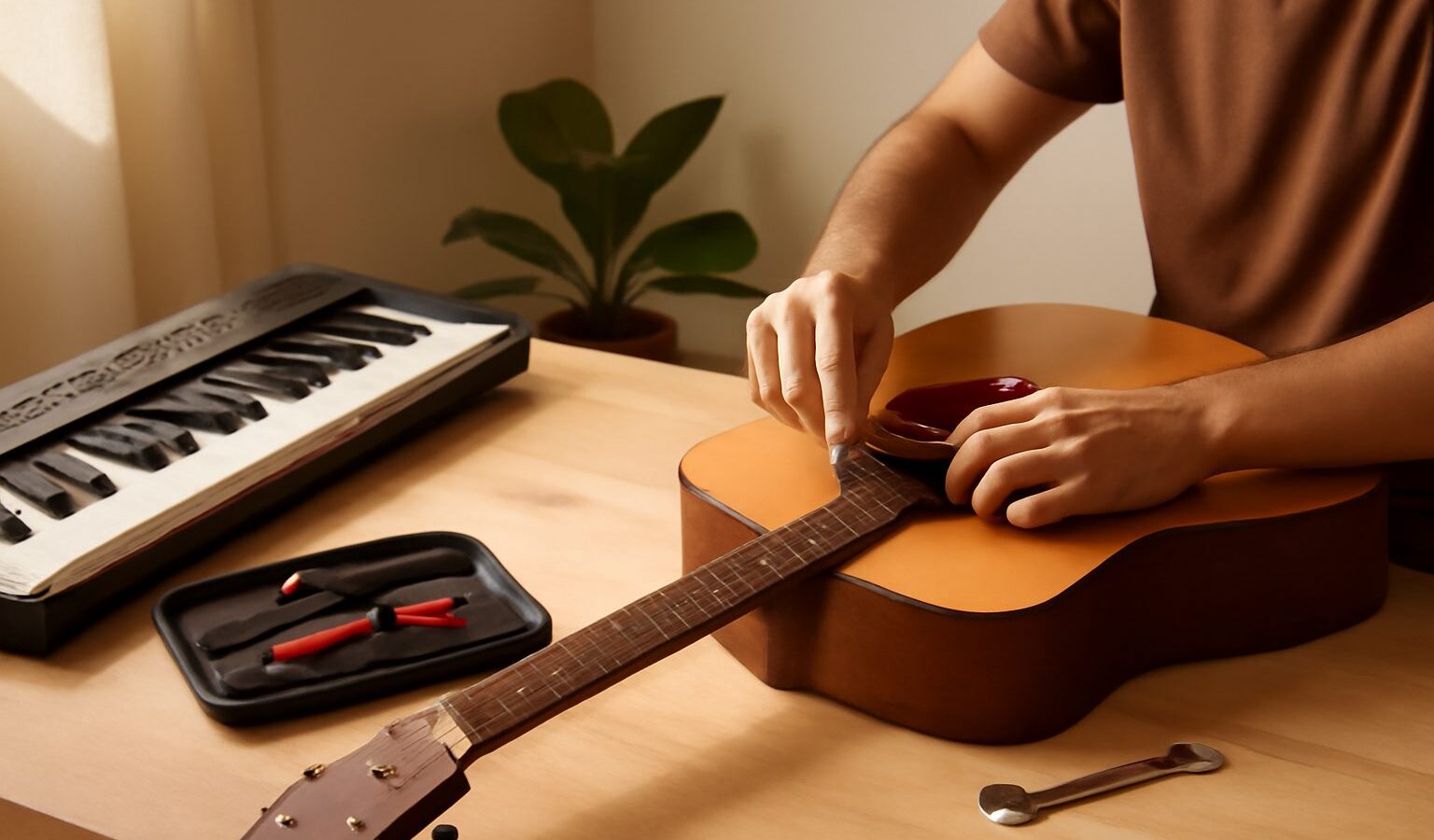
A buzzing fret, a crackling output jack or a digital piano key that no longer responds can stop a practice session cold. Before you head out to buy a replacement, it is worth knowing what can be fixed, who usually fixes it and how to get the best result. This guide to music instrument repair in Singapore focuses on guitars and keyboards, covering when to repair versus replace, what different shops typically handle and how to prepare it before servicing.
We do not name individual shops here. Instead, you will learn what to look for so you can judge any repairer you find through music communities, your teacher or the store where you bought the instrument.
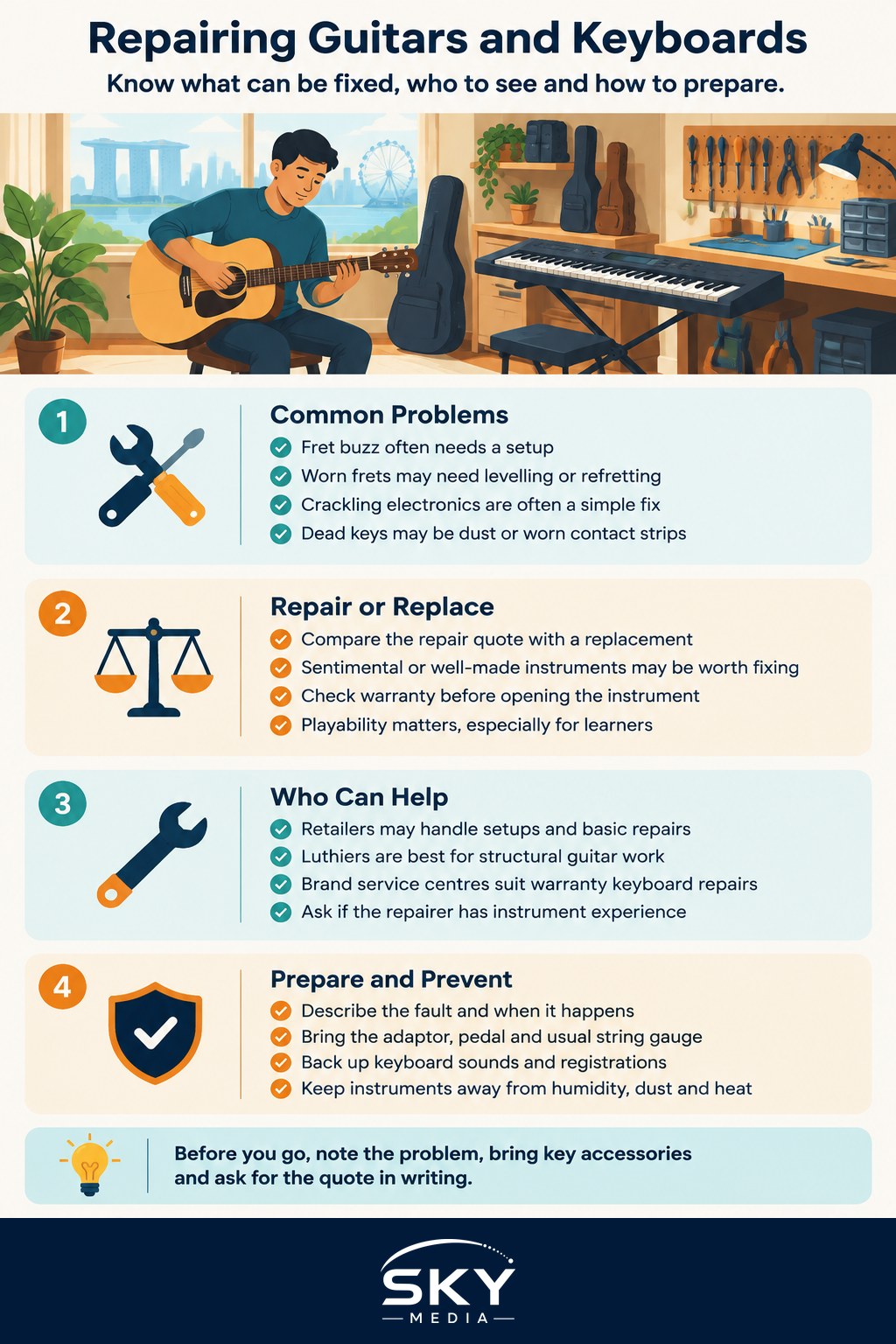
Common Problems and What They Usually Mean
Many issues that feel serious turn out to be routine adjustments. Others are signs of deeper trouble.
Guitars (Acoustic, Classical and Electric)
- Fret buzz or high action. Often fixed with a setup: adjusting the truss rod, saddle height and nut. Singapore’s humidity can make necks move, so this is very common.
- Worn or uneven frets. Can be addressed with a fret level and crown, or a partial or full refret for heavily worn frets.
- Crackling, cutting out or no sound (electric). Frequently a dirty pot, loose output jack or failing solder joint. Usually a straightforward electronics repair.
- Cracks in the top or body (acoustic). Often caused by humidity changes or knocks. Small cracks can usually be repaired if caught early.
- Lifting bridge or bulging top. A more serious structural issue that needs a skilled luthier, the term for a specialist who builds and repairs stringed instruments.
- Tuning problems. May point to worn tuners, a poorly cut nut or old strings.
Keyboards and Digital Pianos
- Dead, sticky or uneven keys. Often caused by dust, spilled liquid or worn contact strips under the keys.
- No power or random shutdowns. May be a faulty adaptor, power supply or internal board.
- Crackling speakers or headphone jack issues. Usually a jack or speaker component that can be replaced.
- Sustain pedal not working. Frequently the pedal or its cable rather than the keyboard itself.
- Buttons or screens failing. Depends on whether replacement parts are still available for your model.
Repair or Replace: How to Decide
The table below gives a practical way to think about the choice.
| Situation | Usually Worth Repairing | Often Better to Replace |
|---|---|---|
| Entry-level guitar with fret buzz | A basic setup is quick and often transforms playability | Only if the neck is badly warped or the body cracked in several places |
| Quality or sentimental guitar with structural damage | Yes, a good luthier can restore value and sound | Rarely, unless repair is impossible |
| Budget keyboard with dead keys | If the fix is cleaning or a simple contact strip | If parts are unavailable or the quote nears the cost of a new one |
| Digital piano with a failed main board | If parts exist and the instrument is otherwise in good shape | If the model is discontinued and parts cannot be sourced |
| Electric guitar with crackling electronics | Almost always, as these are routine fixes | Very seldom |
Some questions to help you decide:
- What would a comparable replacement cost? Compare the repair quote against current prices for a similar new or used instrument.
- Does it have sentimental or resale value? Older, well-made or gifted instruments are often worth more care.
- Is it still under warranty? Check before letting anyone open it, as unauthorised repairs may void coverage.
- Will the repair make it pleasant to play? For learners especially, an instrument that is hard to play can kill motivation. See our tips on helping your child practise a musical instrument for why playability matters.
What Different Repairers Typically Handle
Repair in Singapore is usually offered through a few types of provider. What each covers varies, so always ask.
- Music retailers with in-house technicians. Often handle setups, string changes, basic electronics and warranty claims for brands they sell.
- Independent luthiers and guitar workshops. The best choice for fret work, crack repair, neck resets, custom nuts and saddles, and restorations.
- Authorised brand service centres. Usually the right place for digital pianos, synthesisers and keyboards under warranty, since they may have access to official parts and diagnostic tools.
- General electronics repairers. Some can fix adaptors, jacks and speakers, but may not know instrument-specific parts. Confirm experience with musical gear first.
- Piano technicians. For acoustic pianos, tuning and regulation are specialist jobs. Some also look at digital pianos.
Questions to Ask a Repairer
- Have you worked on this type and brand of instrument before?
- Is there a fee to inspect and quote, and is it deducted if I go ahead?
- How will you contact me if you find more problems once it is opened?
- Do you offer any warranty on the repair work?
- Roughly how long will it take, and what happens if parts must be ordered?
Get the quote in writing or by message so you have a record.
How to Prepare Your Instrument for Servicing
A little preparation makes the repair faster and the result better.
- Describe the problem clearly. Note when it happens, which strings or keys are affected, and whether it is constant or occasional. A short phone video of the issue helps a lot.
- Bring accessories involved. For keyboards, bring the power adaptor and pedal. For electric guitars, mention your usual string gauge and tuning.
- Say how you play. Tell a guitar tech whether you prefer low action or play with heavy picking, so the setup suits you.
- Back up your settings. If your keyboard stores sounds, songs or registrations, save them before handing it over, as some repairs reset memory.
- Photograph the instrument. Record its condition and serial number before drop-off.
- Transport it safely. Use a padded case or gig bag. For larger keyboards, check whether the repairer offers pickup, or arrange suitable transport.
Prevent the Next Repair
Many common faults in Singapore come down to humidity, dust and heat.
- Control humidity. Keep guitars away from direct air-con blasts, open windows and sunny spots. Some players use humidity packs in the case or a dehumidifier in the room.
- Wipe down after playing. Sweat and skin oils corrode strings and frets over time.
- Cover keyboards when not in use. Dust is a common cause of key problems.
- Use a surge protector. It helps protect electronics from power spikes.
- Book a regular setup. Many players find a periodic check keeps small issues small.
If you are deciding between fixing an old instrument and starting fresh, our guide on how to choose your first instrument can help you weigh what to buy, and learning the piano and keyboard covers what to look for in a keyboard for practice.
With the right repairer and a clear brief, most guitars and keyboards can be brought back to good playing condition, often for less than you might expect compared with buying new.
Further reading: Guitar Setup Basics: Action, Intonation and Truss Rod · Where to Donate Old Musical Instruments in Singapore