
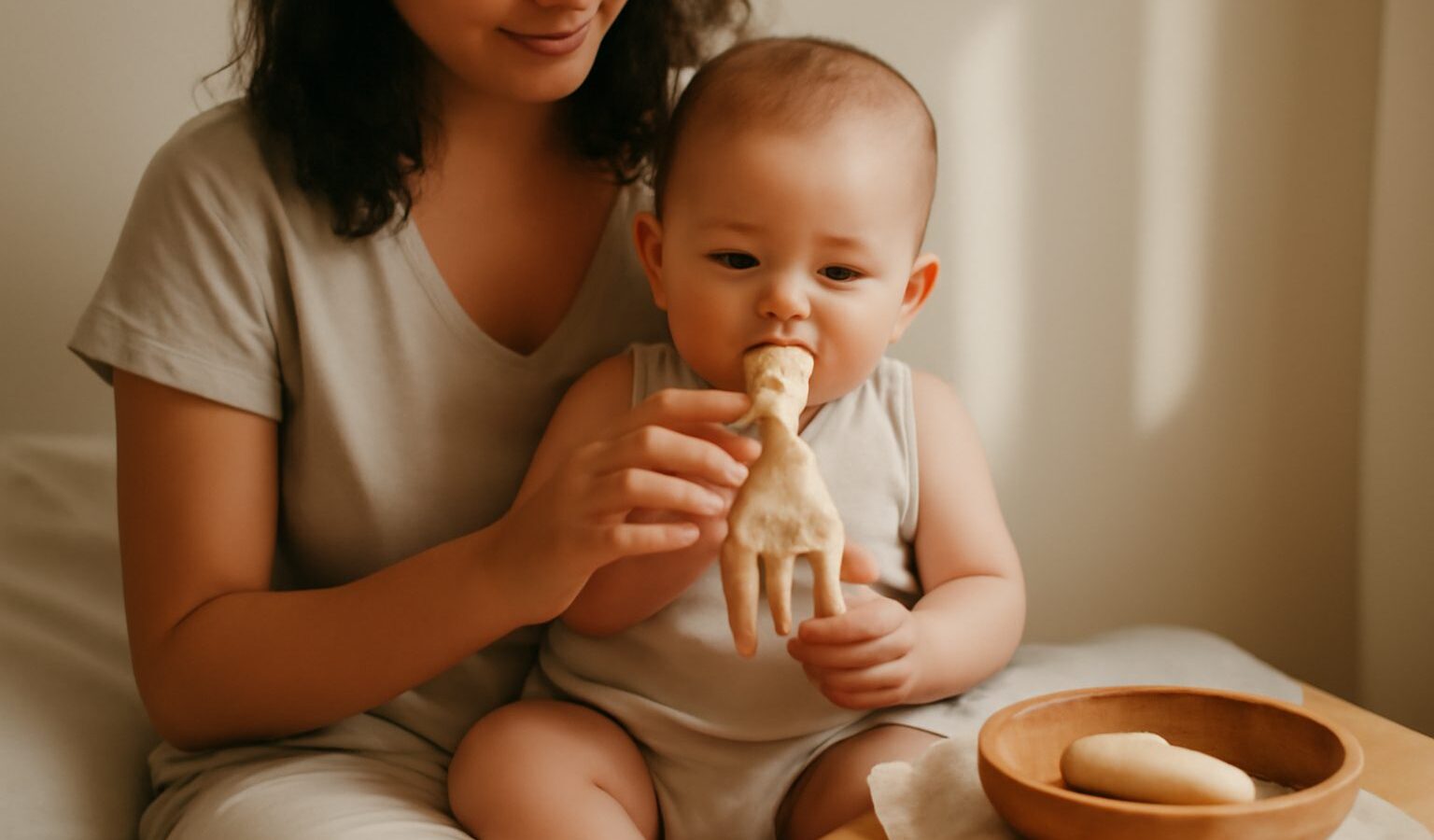
If your once cheerful baby has turned into a drooly, gnawing, grizzly little bundle, teething may well be the reason. For many families dealing with baby teething in Singapore, those first pearly whites arrive with weeks of chewing on everything, disturbed naps, and a lot of dribble on every bib you own. It is one of those normal but genuinely tiring stages, and the good news is that there is plenty you can do to keep your little one comfortable while nature does its work.
This is general information to help you cope, not medical advice. Every baby is different, and if you are ever worried about your child, please speak to your doctor, a paediatrician, or the team at KKH or NUH.
When Teething Usually Starts and What to Expect
Most babies get their first tooth somewhere in the second half of the first year, though some start earlier and a few keep parents waiting well past their first birthday. All of that can be perfectly normal. The bottom two front teeth often appear first, followed by the top front teeth, with the rest arriving in stages over many months.
Common signs that a tooth is on the way include:
- Lots of drooling, sometimes enough to cause a mild rash around the mouth or chin
- A strong urge to chew and bite on fingers, toys, and cot rails
- Sore, red, or slightly swollen gums
- More fussiness or clinginess than usual, especially in the late afternoon and evening
- Broken naps and unsettled nights
- A slightly reduced appetite when gums feel tender
You may feel the hard edge of a tooth if you run a clean finger gently along the gum. Not every baby shows obvious signs, so do not worry if one day a tooth simply appears with no drama at all.
Gentle Ways to Soothe Sore Gums
The aim is simple comfort and counter pressure on the gums. Here are calm, safe things to try:
- Clean fingers or a soft flannel. With clean hands, rub the sore gum gently for a minute or two. The pressure often brings quick relief.
- A chilled teether. Pop a solid, one piece silicone or rubber teether in the fridge, not the freezer, since a rock hard frozen teether can hurt tender gums. In our warm, humid climate a cool teether feels especially soothing.
- A cold damp flannel. Wet a clean flannel, wring it out, chill it in the fridge, and let your baby chew the cool cloth under your eye.
- Something cold to eat, if your baby is already on solids. Chilled cucumber sticks, cold plain yoghurt, or cold water in an open or sippy cup can help. Always stay close, as any solid food carries a choking risk.
- Extra cuddles and distraction. A walk to the void deck, a favourite song, or some floor play can take the edge off a grizzly afternoon.
- Manage the dribble. Keep a soft bib on and pat the chin dry now and then to protect the skin from a drool rash.
Comfort feeding at the breast or bottle can also settle an unsettled baby. If your little one bites while feeding, calmly break the latch and offer a teether instead.
Teether Safety and What to Avoid
Teethers are a real help, but only when they are used safely. Please keep these points in mind:
- Choose a sturdy, one piece teether with no small parts, and check it regularly for splits or wear.
- Never tie a teether, dummy, or any cord around your baby’s neck. Ribbons and necklace style teethers are a serious strangulation and choking hazard. Keep all cords and strings away from your baby.
- Skip amber teething necklaces and similar products, which carry strangulation and choking risks and have no proven benefit.
- Do not use frozen solid teethers, which are too hard on sore gums.
- Do not reach for teething gels, powders, or medicines without a doctor’s advice. Some products are not recommended for babies, so ask your doctor or pharmacist before giving anything.
- Never leave your baby alone with any food or teether.
Below is a quick guide to help you decide what to try and what to leave well alone.
| Situation | Gentle things to try | Better to avoid |
|---|---|---|
| Sore, swollen gums | Clean finger rub, chilled solid teether, cold flannel | Frozen hard teethers, rubbing on anything sharp |
| Heavy drooling and chin rash | Soft bib, gently pat skin dry, a barrier cream if your doctor suggests one | Leaving wet skin, ignoring a spreading or weeping rash |
| Fussy, wants to chew | Safe teether, cold cucumber if on solids and supervised | Necklace teethers, cords tied near the neck |
| Broken sleep | Extra comfort, calm bedtime routine, patience | Any medicine or gel without medical advice |
The Teething and Fever Myth
This part matters, so read it carefully. Teething may make your baby a little warm or unsettled, but teething on its own does not cause a high fever, vomiting, diarrhoea, or a cough. It is a common myth that these are just teething, and blaming a fever on teeth can delay care for a real illness.
Please see a doctor promptly if your baby has any of these, whether or not a tooth is coming:
- A high or persistent fever
- Difficulty breathing, or fast or laboured breathing
- Repeated vomiting or diarrhoea
- Signs of dehydration, such as far fewer wet nappies, a dry mouth, or no tears
- Unusual drowsiness, floppiness, or a baby who is very hard to rouse
- A rash that does not fade, or any symptom that worries you
For a baby under three months, any fever needs a doctor the same day. When in doubt, get your child seen. You know your baby best, and it is always better to check.
Looking After Yourself Through the Rough Patches
Teething can drag on in waves, and disturbed nights wear you down. Try to share the load with your partner, a grandparent, or your helper so you can rest when you can. Lower your expectations for a few days, keep meals simple, and remember this stage really does pass as each tooth settles in.
Once teeth arrive, start gentle oral care. Wipe new teeth with a clean damp cloth or a soft baby toothbrush, and ask a dentist or your doctor about first dental visits and fluoride toothpaste for our local water.
Teething is one of those early tests of parenting patience, and getting through it with your baby cuddled close is a small win worth celebrating. Be kind to yourself, trust your instincts, and reach out for help whenever you need it.
Explore more
For more calm, practical help in those early months, see our guide to soothing a crying baby when nothing seems to work. You might also like surviving the newborn night feeds for tips on tired evenings, and safe sleep for babies to help everyone rest a little easier.