
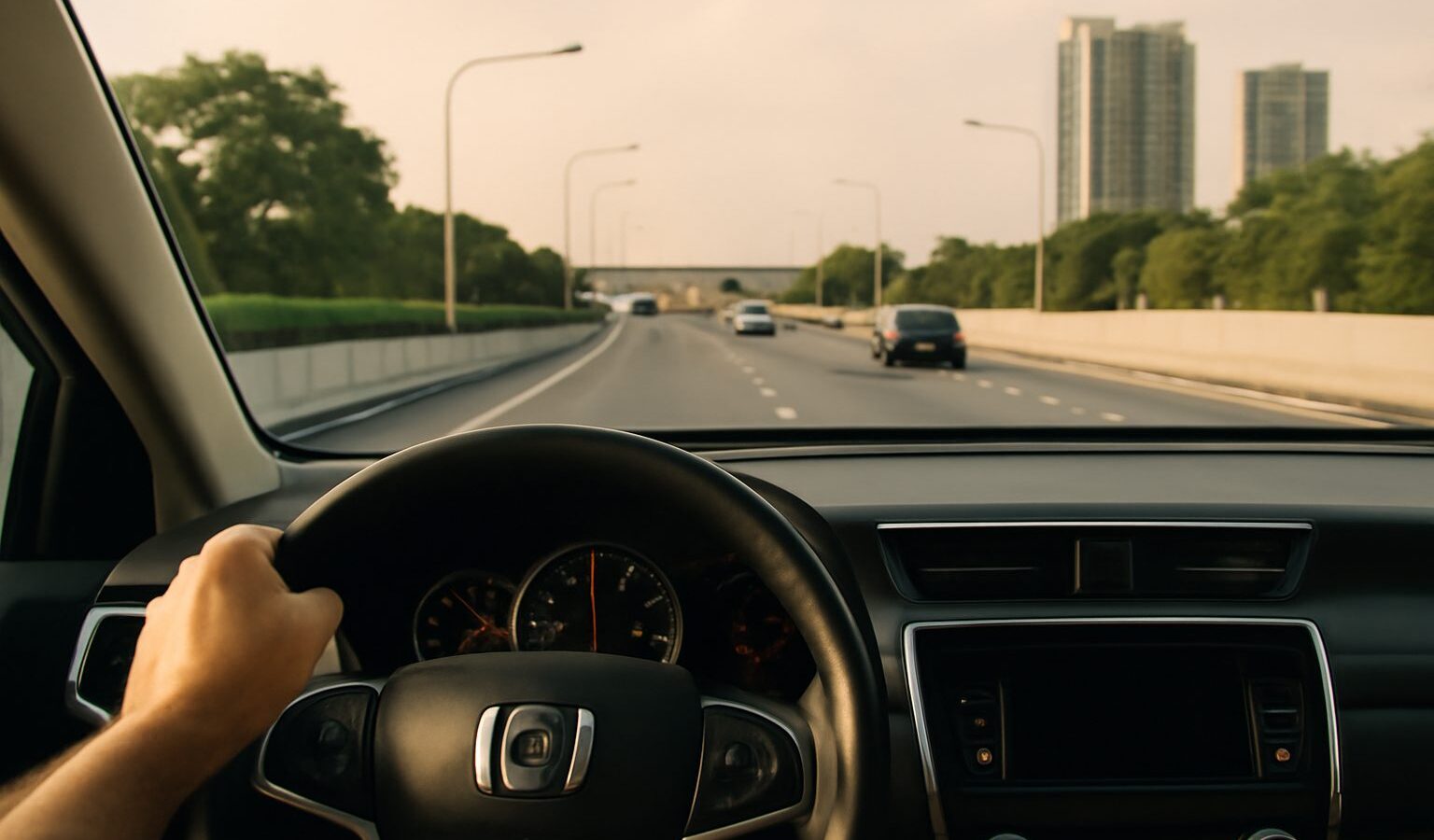
Singapore is small, but its expressway network does a lot of work, and driving it well is a skill worth building deliberately. Confident expressway driving Singapore style is less about speed and more about smoothness: reading traffic early, merging without drama and holding a sensible line so everyone around you can predict what you will do. The PIE, CTE, AYE and their neighbours move enormous volumes of traffic through tight interchanges, so a calm, courteous, rules-compliant approach keeps you and everyone else safe. This guide breaks the expressway into its parts, from joining the flow to leaving it cleanly.

Merging On With Confidence
The on-ramp is where nerves show most, yet it is largely a matter of matching speed. As you come down the slip road, look ahead and to your right, find a gap in the nearside lane, and adjust your speed on the ramp so you arrive at that gap already moving at roughly the pace of the traffic. Merging slowly forces others to brake and creates the very friction you are trying to avoid.
Signal early so drivers on the expressway can read your intention. Give a proper shoulder check to cover your blind spot, then ease across smoothly rather than darting. The expressway traffic generally has priority, so plan to slot in rather than expecting cars to move for you, though a considerate driver will often ease off to let you in. If the gap you picked closes, stay on the acceleration lane, keep pace, and take the next one. Never stop on the slip road unless traffic ahead has genuinely halted, because a stationary car facing fast-moving lanes is a hazard.
Lane Discipline and the Keep-Left Habit
Good lane discipline is the quiet skill that makes expressways flow. The general principle is to keep to the left and use the right-hand lanes for overtaking, returning left once you have passed. Cruising in the outer lane when the inner lanes are clear frustrates traffic behind and pushes others into weaving, which is where risk creeps in.
Choose a lane that matches your speed and the road ahead. If you plan to exit soon, move into the nearside lanes in good time rather than cutting across at the last moment. Watch the overhead gantries and directional signs, which give plenty of warning of lane drops and interchange splits. When you do overtake, do it decisively: check mirrors, signal, shoulder check, move out, pass, then move back. Lingering alongside another car in their blind spot helps nobody.
A steady lane position also makes you predictable, and predictability is the heart of safe driving. Avoid drifting, resist the urge to fill every gap, and let faster traffic pass on the correct side rather than blocking it.
Following Distance and Reading Traffic
Space is your best safety margin. A safe following distance gives you time to react to brake lights, debris or a sudden lane change ahead. The two-second rule is a simple gauge: pick a fixed point the car ahead passes, and you should reach it no sooner than two seconds later. In rain, poor light or heavy flow, stretch that gap further, because stopping distances grow sharply on a wet expressway.
Look well beyond the car directly in front. Reading three or four vehicles ahead lets you anticipate braking before it reaches you, so you lift off gently instead of stamping the pedal. Keep the following list in mind as you drive:
- Increase your gap in wet weather, spray or reduced visibility.
- Ease off, do not brake hard, when you see brake lights bloom ahead.
- Leave extra room behind heavy vehicles whose bulk hides the road.
- Never tailgate to hurry someone along; it removes your own safety margin.
If a driver behind sits too close, do not react by braking to make a point. Simply maintain your line, move left when safe, and let them pass.
Taking Exits Cleanly
Exits catch out drivers who commit late. Know your junction in advance, watch the distance markers on the overhead signs, and drift into the nearside lane early. When the exit slip road appears, signal, check your mirror and blind spot, and leave the through lane smoothly rather than braking on the expressway itself. Do your slowing on the slip road, where it will not surprise the traffic behind.
If you realise you have missed your exit, carry on to the next one and reroute calmly. A last-second swerve across a chevron-marked area is dangerous and unlawful, and the few minutes you save are never worth it. On unfamiliar interchanges, a navigation app helps, but keep your eyes on the road and let a passenger handle the screen where possible.
Wet Weather, Night and Motorway Safety
Singapore’s downpours turn a comfortable expressway into a demanding one in minutes. The following table compares how your key habits should shift between dry and wet conditions.
| Habit | Dry conditions | Wet or poor-visibility conditions |
|---|---|---|
| Following distance | Two-second gap | Four seconds or more |
| Speed | Steady with the flow | Ease off below the limit as needed |
| Headlights | Off or automatic | On for visibility, low beam in spray |
| Lane changes | Smooth and planned | Fewer, gentler, well signalled |
| Braking | Progressive | Extra early and lighter to avoid skids |
Beyond weather, keep your tyres in good condition, since tread clears water and worn tyres aquaplane far sooner. Take a break if you feel drowsy on a longer run, and never treat the expressway as a place to make up lost time. For the rules that govern all of this, defer to the Highway Code and the Traffic Police, and check current road-safety guidance through official LTA and Traffic Police channels rather than relying on assumptions. Drive to be predictable, leave yourself space, and the expressway becomes the easy, efficient road it is meant to be.
Explore more
Round out your road craft with our companion guide to parking skills and manoeuvres for the low-speed end of driving. Newer drivers will also find value in common mistakes new drivers make and in practising good driving etiquette and courtesy, which matters most where traffic moves fast.
Official sources: OneMotoring
Further reading: What to Do If You Miss Your Expressway Exit in Singapore · Using Adaptive Cruise Control · Driving in Singapore: A Guide to the Roads