
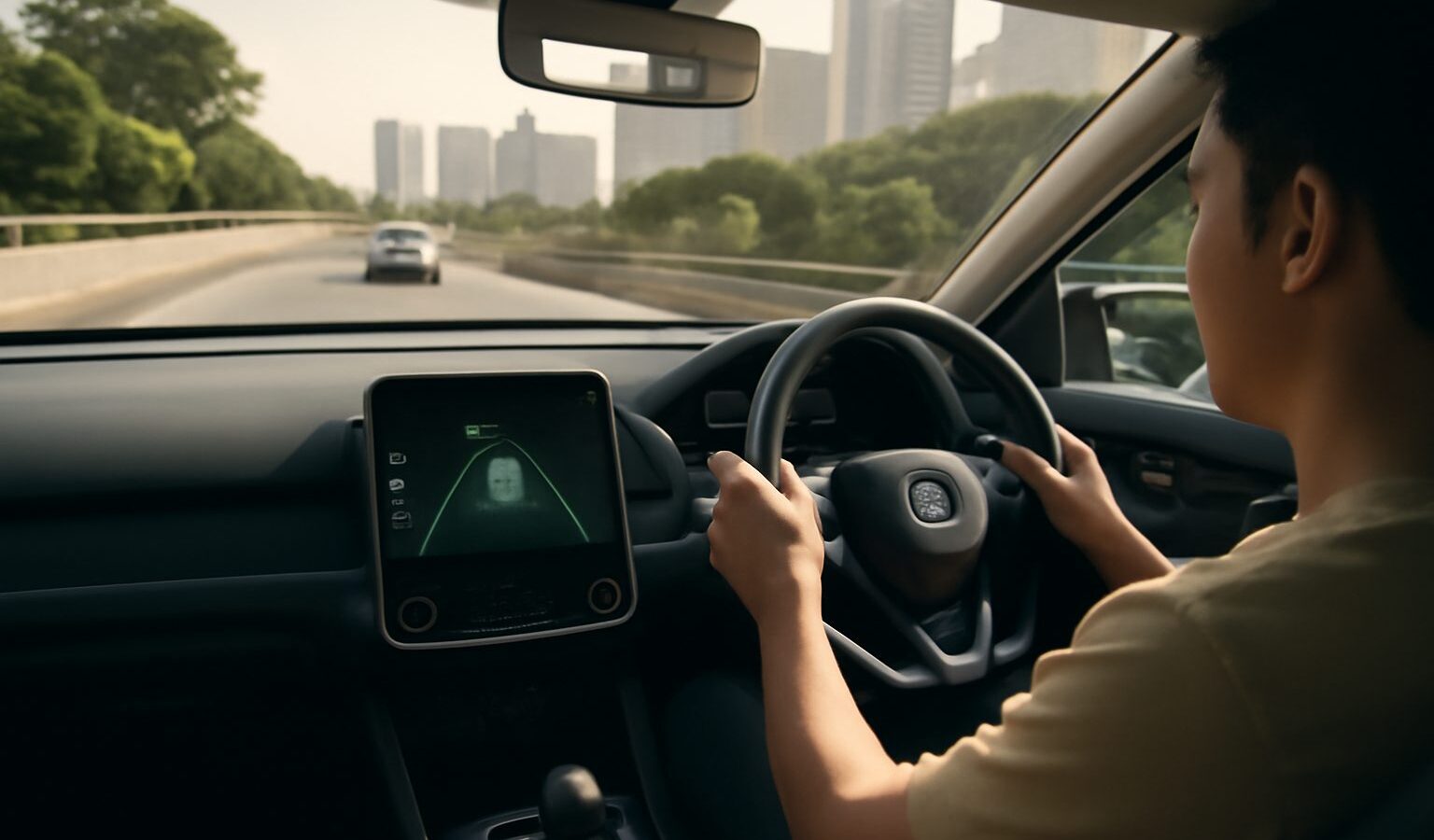
More new cars sold here arrive with adaptive cruise control as standard, and it can make expressway driving noticeably less tiring. Used well, adaptive cruise control singapore drivers rely on keeps a steady speed and a safe gap from the car ahead, easing off the pedal work on longer stretches like the PIE, KJE or the drive up to the Causeway. The key word, though, is aid. This is a driver assistance system, not self driving. You remain fully responsible for the car at all times. This guide explains how it works, where it helps, and where you must stay switched on.
What Adaptive Cruise Control Actually Does
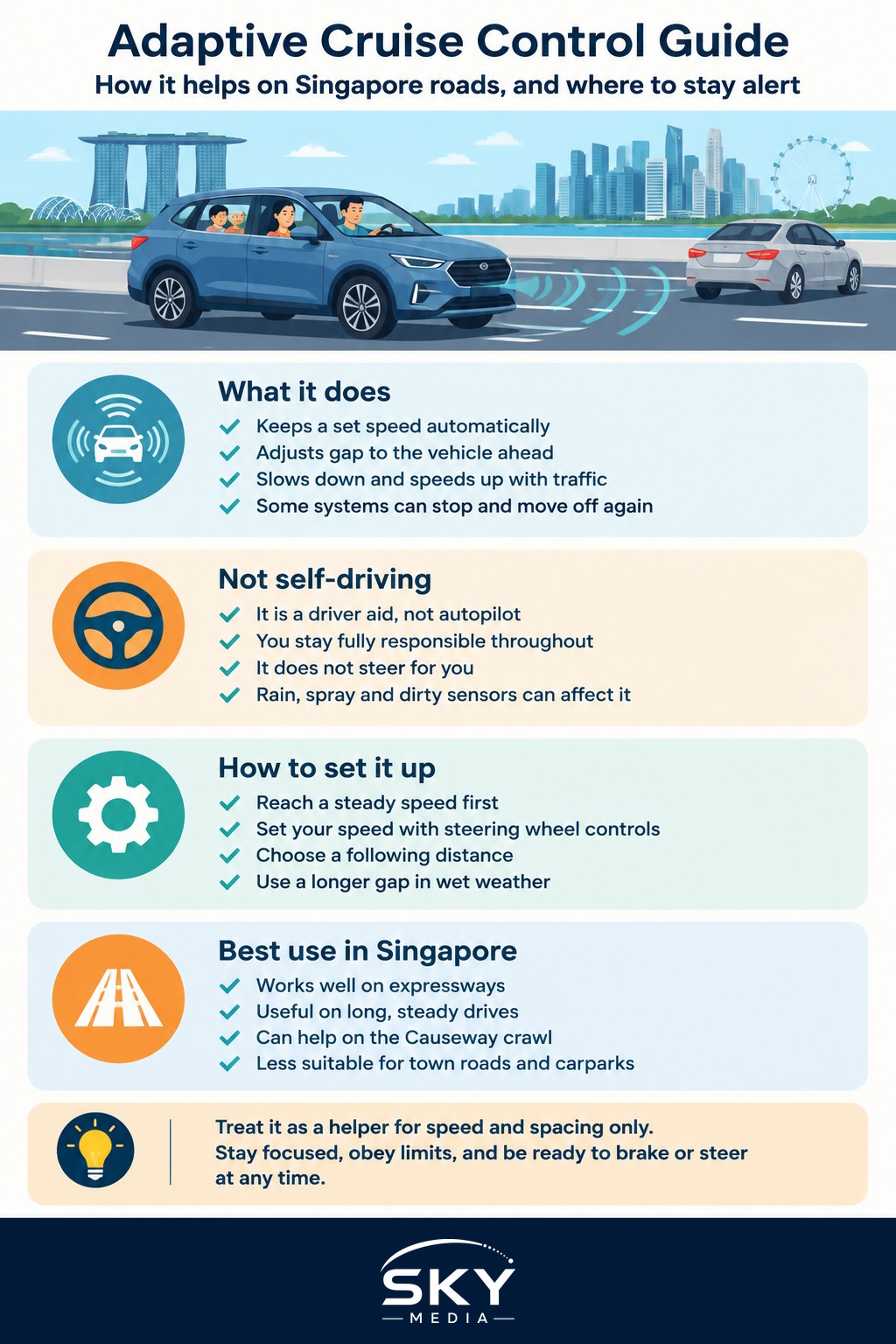
Ordinary cruise control holds a set speed. Adaptive cruise control goes a step further by using radar or a camera to watch the vehicle in front. You set your desired speed and a following distance, and the system automatically slows down when traffic ahead slows, then speeds back up to your set speed when the road clears. Many systems can bring the car to a full stop in slow traffic and move off again.
That is genuinely useful on a Singapore expressway, where speeds ebb and flow. Instead of constantly feathering the accelerator, you let the system manage the gap while you concentrate on steering, mirrors and what is happening further ahead. It pairs naturally with the wider skills in our guide to highway and expressway driving.
It Is an Assist, Not Autopilot
This is the part that matters most. Adaptive cruise control does not make your car drive itself. It cannot read every situation, and you must stay alert and in full control the entire time.
- It may not react well to a car cutting in sharply from an adjacent lane.
- It can be slow to spot a stationary object, such as a stopped vehicle after a bend.
- It does not steer, so lane keeping is entirely your job unless your car has a separate system, which is still only an assist.
- Heavy rain, spray and a dirty sensor can all reduce how reliably it works, and our climate serves up plenty of downpours.
Keep your hands on the wheel and your eyes on the road, ready to brake or steer yourself at any moment. If you feel the system reacting late, brake. You override it simply by pressing the brake pedal, which switches it off instantly. For the bigger picture on where the technology is heading and its current limits, our overview of modern car safety features is a good companion, as is a wider understanding of where truly driverless cars stand today.
Setting It Up Properly
Every car is slightly different, so the owner’s manual is the final word, but the general routine is consistent:
- Get up to a steady speed on the expressway, within the posted limit.
- Switch the system on and set your speed with the steering wheel controls.
- Choose a following distance. Most cars offer a few gap settings, from close to far.
- Pick a longer gap in wet weather or heavy traffic to give yourself more margin.
Always set a speed that respects the limit for that road. The system will happily hold whatever speed you dial in, so it is on you to keep it legal. Check current speed limits and rules with the Traffic Police and LTA rather than assuming, since limits differ by road and can change.
Where It Helps Most in Singapore
Adaptive cruise control earns its keep on longer, steady runs. The expressway network, late night drives with lighter traffic, and the approach roads to Tuas and Woodlands are all good candidates. On a trip across the Causeway, it can ease the tiring stop start crawl, though you must stay especially attentive in queues and at checkpoints. If you are planning a longer journey north, our guide to driving to Malaysia from Singapore covers the wider preparation.
It is less suited to busy town driving, tight carparks and constant junctions, where you are better off in full manual control. On any long drive, the system reduces fatigue but does not remove it, so our advice on staying alert on long drives still applies.
Common Mistakes to Avoid
The biggest error is trusting the system too much and letting your attention drift. Treat it as a helper for the pedals, nothing more. Do not use your phone, do not stop scanning the road, and never assume the car will stop for everything. Other pitfalls include setting the following gap too short in traffic, forgetting that the set speed can be higher than the current limit as you move between roads, and relying on it in heavy rain when sensors are less dependable.
The Bottom Line
Adaptive cruise control makes Singapore’s expressways more relaxing and can genuinely cut driver fatigue on longer runs. Just keep the right frame of mind. It is an assistant that manages your speed and gap while you do the driving. Stay alert, keep your hands on the wheel, obey the speed limits, and be ready to take over in a heartbeat. Used that way, it is a smart tool that makes you a calmer, safer driver.