
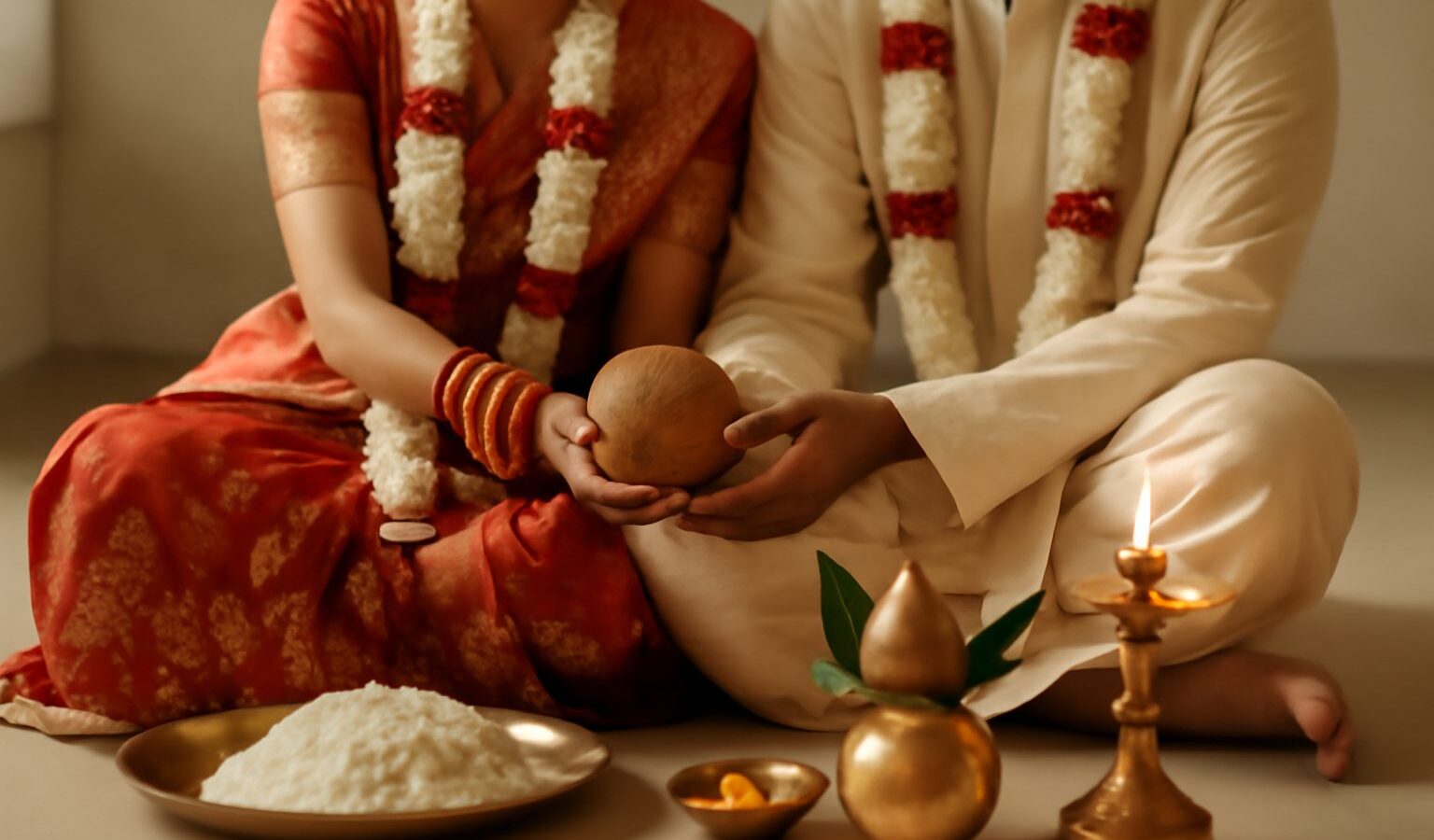
Hindu wedding rituals are among the most vivid and meaningful you will encounter in Singapore, rich in colour, fire, flowers and chanted verse. A Hindu wedding is not a single event but a sequence of sacred rites, each carrying deep symbolism about duty, partnership and the joining of two families. Because Hinduism spans many regions, languages and communities, the exact customs vary widely, and Tamil, North Indian, Telugu and other traditions each have their own flavour. This guide explains the rituals commonly seen here and how to take part respectfully, whether you are a guest or a couple planning your day.
What a Hindu Wedding Sets Out to Do
At its heart, a Hindu wedding is a sacred union witnessed by the divine, the sacred fire and the gathered community. It is understood not merely as a contract between two people but as a lifelong spiritual partnership and the joining of two families and their lineages. The rites invoke blessings for prosperity, harmony and children, and ask the couple to support each other in duty, love and shared purpose.
The ceremony is led by a priest, often called a pundit or, in Tamil tradition, a purohit, who chants verses in Sanskrit and guides the couple and families through each step. Because doctrine and the precise order of rites differ by community and family, the officiating priest and the family’s temple are the proper authorities on what any given ceremony requires. What follows describes commonly seen elements rather than a fixed sequence that every family keeps.
Key Rituals You Are Likely to See
Most Hindu weddings unfold beneath a mandap, a decorated canopy or pavilion, from Sanskrit, that serves as the sacred space for the ceremony. Within it, the agni, the sacred fire, is lit as the divine witness to the marriage. Several rites recur across traditions, though their names and details differ.
Early on, the bride is often welcomed and the families exchange greetings and gifts. The kanyadaan, in many North Indian ceremonies, is the giving of the bride by her parents. The couple’s hands or garments may be tied together, symbolising their union, in a rite sometimes called gathbandhan. Garlands are exchanged in the jaimala or maalai maatral, a joyful moment in which bride and groom place flower garlands on each other.
The most central rite in many traditions is the saptapadi, Sanskrit for “seven steps”, or the equivalent, in which the couple take seven steps together around or before the sacred fire, each step a shared vow for their life together, from nourishment and strength to friendship and lifelong companionship. The groom typically ties the mangalsutra, a sacred necklace or thali, around the bride’s neck to mark her married status, and vermilion or other auspicious markings may be applied. Rice, flowers and blessings from elders complete the joyful picture.
How Customs Vary by Community and Region
There is no single Hindu wedding. A Tamil ceremony, common among Singapore’s Indian community, differs from a Punjabi, Gujarati, Telugu or Bengali one in language, music, dress and the order of rites. Some ceremonies last a few hours; others span multiple days with pre-wedding rituals such as the application of henna and blessing gatherings at home.
The table below sketches a few elements and how they commonly appear across traditions. It is a general guide, not a description of any one family’s practice, and families observe these customs to different degrees.
| Element | Commonly seen form | Varies by |
|---|---|---|
| Sacred space | Mandap with agni, the sacred fire | Region and venue |
| Central rite | Saptapadi, the seven steps | Community tradition |
| Marriage symbol | Mangalsutra or thali tied by the groom | Regional custom |
| Attire | Bride in a sari, often red; groom in formal dress | Community and family |
| Duration | A few hours to several days | Tradition and choice |
Dress also varies, though the bride is frequently seen in a richly coloured sari or lehenga, often red or gold, adorned with gold jewellery, while the groom wears a dhoti, sherwani or suit depending on tradition. Music, from live nadaswaram and drums in Tamil ceremonies to other regional forms, sets the mood throughout.
Taking Part Respectfully as a Guest or Couple
Guests are warmly welcomed at Hindu weddings, and a little awareness makes the day comfortable for everyone. Dress modestly and colourfully, since bright colours are celebratory, though it is thoughtful to avoid pure white or black in some traditions and to ask if unsure. Follow the family’s lead on when to sit, stand or remove footwear, and ask quietly before photographing intimate ritual moments.
The ceremony can be long and the symbolism dense, so relax and enjoy the atmosphere rather than trying to track every step. Accept any prasadam, blessed food, or festive meal graciously, as sharing food is central to the celebration. If elders offer blessings, receive them warmly.
For couples, begin by speaking with your priest and your families about which rituals matter most, since the tradition is passed down through them and the temple. Confirm the auspicious timing, or muhurtham, through the proper channels, and remember that the religious ceremony and the legal registration of the marriage are separate matters in Singapore, handled through the Registry of Marriages, whose current requirements you should verify directly. Building a home together is part of the journey too, and our guide to preparing a bridal trousseau offers a practical starting point.
Singapore’s strength is the way its communities marry side by side, each with its own beauty. If you would like to explore others, our guides to the Sikh wedding and Anand Karaj and to the Muslim nikah ceremony sit naturally alongside this one. A Hindu wedding, whichever rites a family keeps, is finally a prayer for two lives to flourish together, and to witness it is a privilege.