
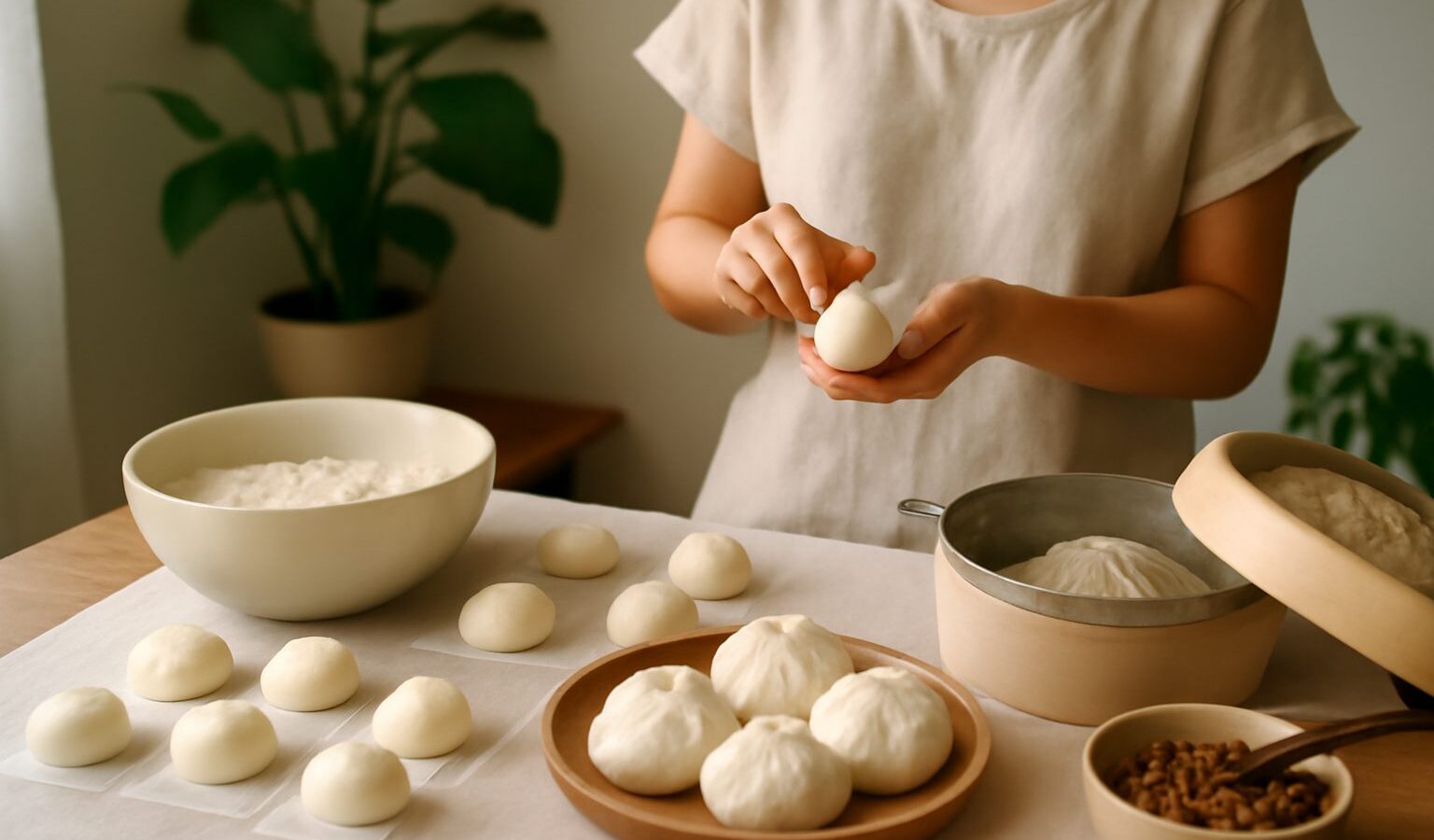
Pulling a tray of soft, pillowy buns out of a steamer for the first time is a small kitchen triumph. Home bao and pau making in Singapore is a gentle, hands-on hobby that turns flour, water, and a little yeast into fluffy filled buns you can shape any way you like. It looks intimidating from the outside, with all that pleating and steaming, but the core skills are simple and very repeatable. This guide is a friendly starting point for anyone curious about steamed buns.
Understanding Bao and Pau
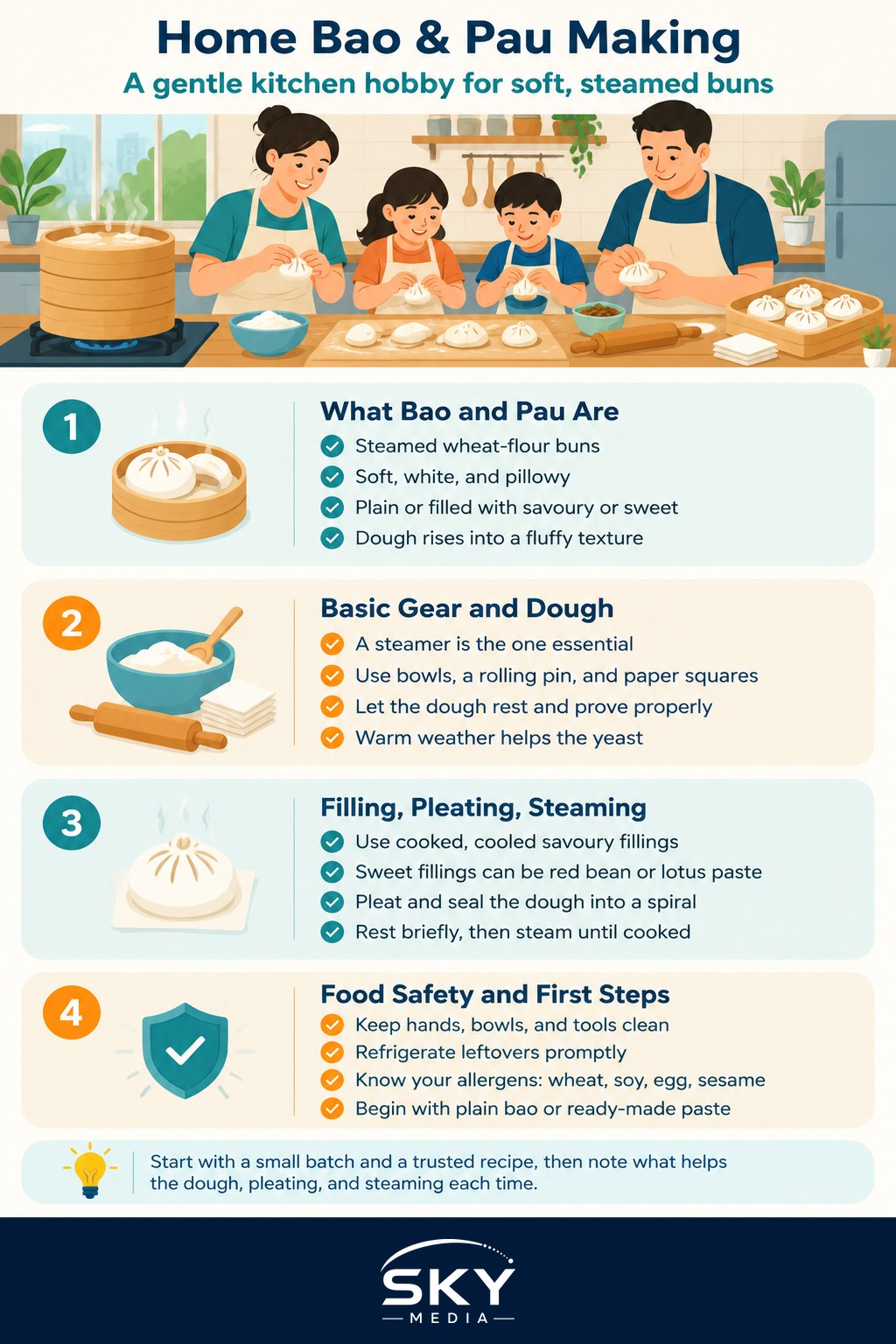
Bao and pau are steamed wheat-flour buns, soft and white, that come plain or wrapped around a filling. You have met them as char siew pau, tau sar filled buns, and the plain folded bao served with braised meats. The dough is a yeasted, slightly sweet mixture that puffs up during steaming into that signature cloud-like texture.
As a hobby, bao making is wonderfully forgiving in flavour and satisfying in process. The learning curve is mostly about two things: getting the dough soft and smooth, and learning to pleat and seal the buns. Both improve fast with practice. Because it relies on a steamer and gentle dough work, it pairs naturally with making local nyonya kueh at home, and the yeast-dough skills carry over from artisan bread baking at home.
The Gear and the Dough
Your one essential is a steamer. A tiered metal steamer, a bamboo steamer set over a wok, or a large pot with a rack all work. Beyond that you need mixing bowls, a rolling pin, some parchment or small paper squares to sit each bun on, and clean cloths.
The dough is a straightforward yeasted mixture. The most common beginner hurdles are dough that is too dry, and rushing the proving. Give the dough time to rest and rise in our warm climate, which actually helps yeast along. Knead until smooth, let it prove until puffy, then shape.
Here is a simple way to think about building your kit over time.
| Tier | Setup | Best for |
|---|---|---|
| Budget | Existing pot and rack, one bowl, paper squares | A first trial batch |
| Mid | Bamboo or tiered steamer, rolling pin, dough scraper | Regular weekend making |
| Premium | Larger multi-tier steamer, stand mixer for kneading | Frequent makers doing bigger batches |
Prices vary, so check current retail. A borrowed pot and a bit of parchment are all you truly need to learn.
Filling, Pleating, and Steaming
Fillings can be savoury, like a cooked char siew style meat, or sweet, like red bean or lotus paste. Cook and cool savoury fillings fully before wrapping so they do not make the dough soggy or leak during steaming.
Pleating is the craft people fall in love with. You place filling in the centre of a rolled round, then gather and twist the edges into a spiral seal. Your first buns will look lopsided, and that is completely fine. Many home makers find the rhythmic pleating as calming as folding origami and paper folding, just tastier. Rest the shaped buns briefly, then steam until they are puffed and cooked through.
A common beginner disappointment is wrinkled or collapsed buns. This usually comes down to proving, dough moisture, or opening the lid too abruptly. Following a tested recipe from a trusted source and taking notes each batch is the fastest way to smooth, white buns.
Food Safety and Handling
Steamed buns are relatively low-risk, but ordinary hygiene matters, especially with meat fillings and our warm, humid climate. This is general food-safety information, not medical or nutrition advice.
- Wash hands and keep bowls, boards, and utensils clean.
- Cook meat or egg fillings thoroughly, then cool them before wrapping. Do not leave fillings sitting out warm.
- Steam buns until fully cooked through, not just puffed on the outside.
- Cool leftovers, refrigerate promptly, and reheat by steaming until piping hot. Buns freeze well if wrapped properly.
- If a filling smells off or has been left out too long, when in doubt throw it out.
On allergens, bao dough contains gluten from wheat, and fillings may include soy, egg, sesame, shellfish, or nuts depending on the recipe. Let people know what is inside when you share.
Starting Small and Finding Community
The kindest start is a small batch of plain folded bao, or buns with a simple sweet paste you can buy ready-made. That lets you focus on dough and pleating without also juggling a filling recipe. Once those feel comfortable, add a cooked savoury filling.
For company and troubleshooting, many community clubs run occasional cooking sessions, and there are active online home-baking and home-cook groups where people share dough ratios and pleating videos. If steamed buns spark a wider baking interest, baking as a hobby points to plenty of related projects.
Home bao and pau making in Singapore rewards patience with the softest, most comforting buns imaginable. Start small, expect a few wonky first attempts, and enjoy the quiet satisfaction of steam rising off a tray you made yourself.
Frequently Asked Questions
Why did my steamed buns wrinkle or collapse after steaming? It usually comes down to proving, dough moisture, or opening the steamer lid too abruptly. Let the shaped buns rest briefly, steam gently, and wait a moment before lifting the lid. Taking notes after each batch is the quickest route to smooth, white buns.
Can I freeze homemade bao and reheat them? Yes, buns freeze well if wrapped properly. Cool them completely first, then reheat by steaming until piping hot all the way through. Buns with meat or egg fillings need particular care, so refrigerate or freeze them promptly after they cool.
What is the difference between bao and pau? They are essentially the same family of steamed wheat-flour buns, and the names are often used interchangeably, with pau a common local spelling. What matters more is the shape and filling, such as char siew pau, red bean buns, or plain folded bao served with braised meat.
Do I need a proper steamer to make bao at home? No. A tiered metal steamer or bamboo steamer over a wok works, but so does a large pot with a rack. A borrowed pot and some parchment squares for each bun are enough to learn, and you can upgrade later if you keep making them.
What is the easiest filling for a first batch of buns? Skip the filling entirely and make plain folded bao, or use a ready-made sweet paste such as red bean. That lets you focus on the dough and pleating first. Add a cooked, fully cooled savoury filling once the basics feel comfortable.
Further reading: Making Mochi and Daifuku at Home in Singapore