
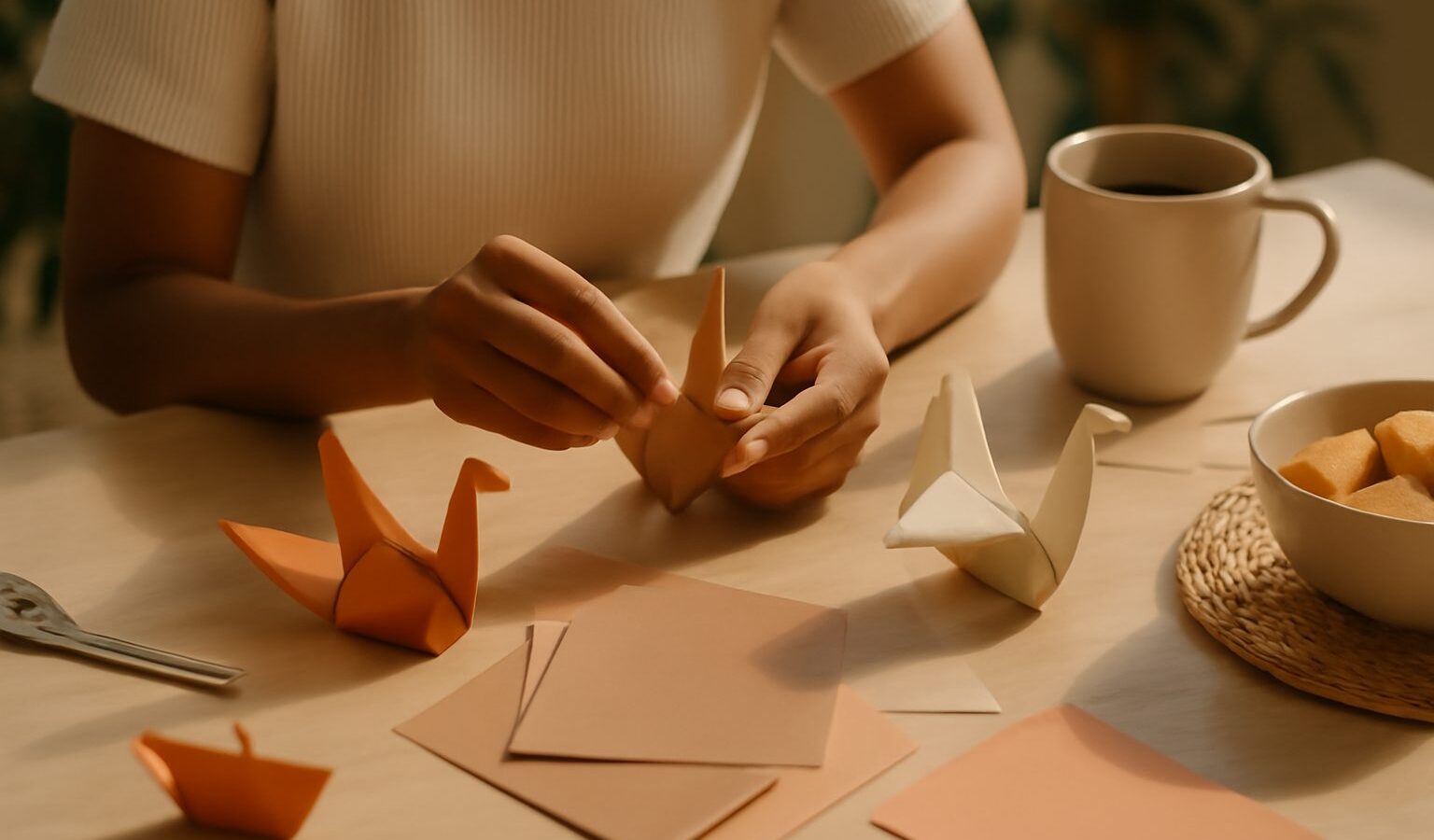
Origami is one of the friendliest crafts you can pick up. There is no expensive kit, no noise, and no mess to clear from the kitchen table. All you really need is a square of paper and a little patience, which makes it a lovely way to unwind after a long day. If you have ever wanted a quiet, screen-free hobby that fits neatly into a small flat, origami is a wonderful place to begin, and this guide will walk you through your very first folds.
The word itself comes from the Japanese for folding paper, and the craft has grown into a whole world of designs, from simple boxes to astonishing dragons. The good news for a beginner is that you do not need any of that ambition on day one. Start with a few basic models, get comfortable with clean creases, and you will be surprised how quickly your hands learn the rhythm.
Why Origami Suits Life in Singapore
Origami asks very little of your space, which is a real gift when you live in an HDB flat. You can fold at a coffee table, on your lap, or on a train home from work. There is nothing to plug in, nothing to sharpen, and nothing that will disturb the neighbours. When you are done, a finished piece takes up no more room than a coaster, and a whole collection fits in a shoebox.
The climate does play a small part. Our humidity can make paper feel soft and a little limp, which affects how sharply it holds a crease. Keep your paper in a sealed bag or a plastic box between sessions, and store finished models away from direct sun so the colours do not fade. If a sheet feels damp, leave it near a fan for a few minutes before you fold, and your creases will come out much crisper.
Origami is also gentle on the wallet, which matters for anyone testing whether a hobby will stick. A single pack of paper can carry you through weeks of practice, and every mistake simply becomes scrap for the next attempt. Few hobbies let you fail so cheaply and learn so much from it.
What You Need to Start
The honest answer is: almost nothing. You can begin today with any paper you can cut into a square, including the back of an old notepad or a flyer from your letterbox. That said, a few inexpensive bits will make the early days smoother and more enjoyable.
- Origami paper. Sold in packs at craft shops, art-supply stores, bookshops and online marketplaces, this thin square paper folds crisply and comes in bright colours. A beginner pack of small squares is plenty.
- A bone folder or a smooth spoon. Running a flat edge along each crease gives you sharp, professional-looking lines. A clean ruler works too.
- A cutting tool for squares. If you want to fold from ordinary paper, a pair of scissors or a craft knife with a ruler lets you make neat squares. Cut away from your body, keep blades capped, and store them well out of reach of young children.
- A flat, hard surface. A table or a large book gives you the firm base you need for clean folds.
You do not need any of the fancier extras yet. Wet-folding, foil paper and giant sheets can wait until you have a few models under your belt. Starting small and cheap is the whole point.
Learning the First Folds
Almost every origami model is built from a small set of basic folds and bases, so time spent here pays off everywhere. Begin with the two workhorses: the valley fold, where the paper folds towards you, and the mountain fold, where it folds away. Practise folding a square exactly in half, corner to corner and edge to edge, lining up the points before you press down. Accuracy at this stage is far more useful than speed.
Once those feel natural, try a couple of classic beginner models. The traditional paper boat and the simple box teach you square and rectangular folding. The paper crane, perhaps the most famous model of all, introduces the bird base and looks impressive while remaining very achievable. Follow a printed diagram or a slow video, pause often, and do not worry if your first crane looks lopsided. Everyone’s does.
A good habit is to fold the same model three or four times in a row. The first attempt teaches you the steps, and each repeat sharpens your creases and your confidence. Before long, your hands will remember the sequence and you can fold while chatting or listening to the radio.
Comparing a Starter Setup With an Upgrade
As you grow more confident, you may wonder what is worth buying next. This table sets a sensible beginner setup against the small upgrades keen folders tend to add later.
| Item | Beginner starter | Later upgrade |
|---|---|---|
| Paper | Small pack of thin origami squares | Larger sheets, patterned or duo-colour paper |
| Creasing tool | A clean spoon or ruler edge | A proper bone folder |
| Cutting | Household scissors | Craft knife, ruler and self-healing mat |
| Models | Boat, box, crane | Modular pieces and multi-sheet designs |
| Storage | A reused shoebox | Sealed boxes with silica gel for humidity |
There is no rush to move down the right-hand column. Plenty of skilled folders happily stay with a simple setup for years. Upgrade only when a specific model asks for it.
Common Beginner Mistakes
The most frequent stumble is rushing. Origami rewards slow, deliberate folds, and a crease pressed in the wrong place is hard to hide. Take an extra second to line up the corners before you flatten anything.
Another common issue is using paper that is too thick or too small. Thick paper resists neat creases and cracks at the folds, while a tiny square makes fiddly models even harder. For your first weeks, medium squares of thin paper give the best results. Beginners also tend to skip the crease-sharpening step, then wonder why their models look soft. Run a firm edge along every fold and the difference is immediate.
Finally, do not compare your early work to the dazzling pieces you see online. Those took years. Judge your crane against your last crane, not against a master’s.
How to Keep Improving
Once the basics feel comfortable, growth comes from steady, curious practice. Work through a beginner book or a trusted set of diagrams, tackling one new model a week. Learn to read the standard symbols for valley folds, mountain folds and reverse folds, and suddenly a whole library of designs opens up to you.
When you are ready to stretch, explore modular origami, where you fold many identical units and slot them into a larger shape, or try tessellations that create repeating patterns. Folding with others helps too. Craft groups, community-centre sessions and online folding communities are welcoming to beginners and full of encouragement. Share a photo of your work, ask questions, and enjoy watching your steady pile of paper animals grow.
Most of all, keep it light. Origami is meant to be a calm pleasure, not a test. A few folds while your kettle boils is a perfectly good session.
Explore more
If you enjoy working with paper, you will feel right at home with paper quilling for beginners, which turns thin strips into delicate coils. You might also like the tidy, page-based pleasures of bookbinding and journal making, or the bright, personal fun of card making and papercraft.