
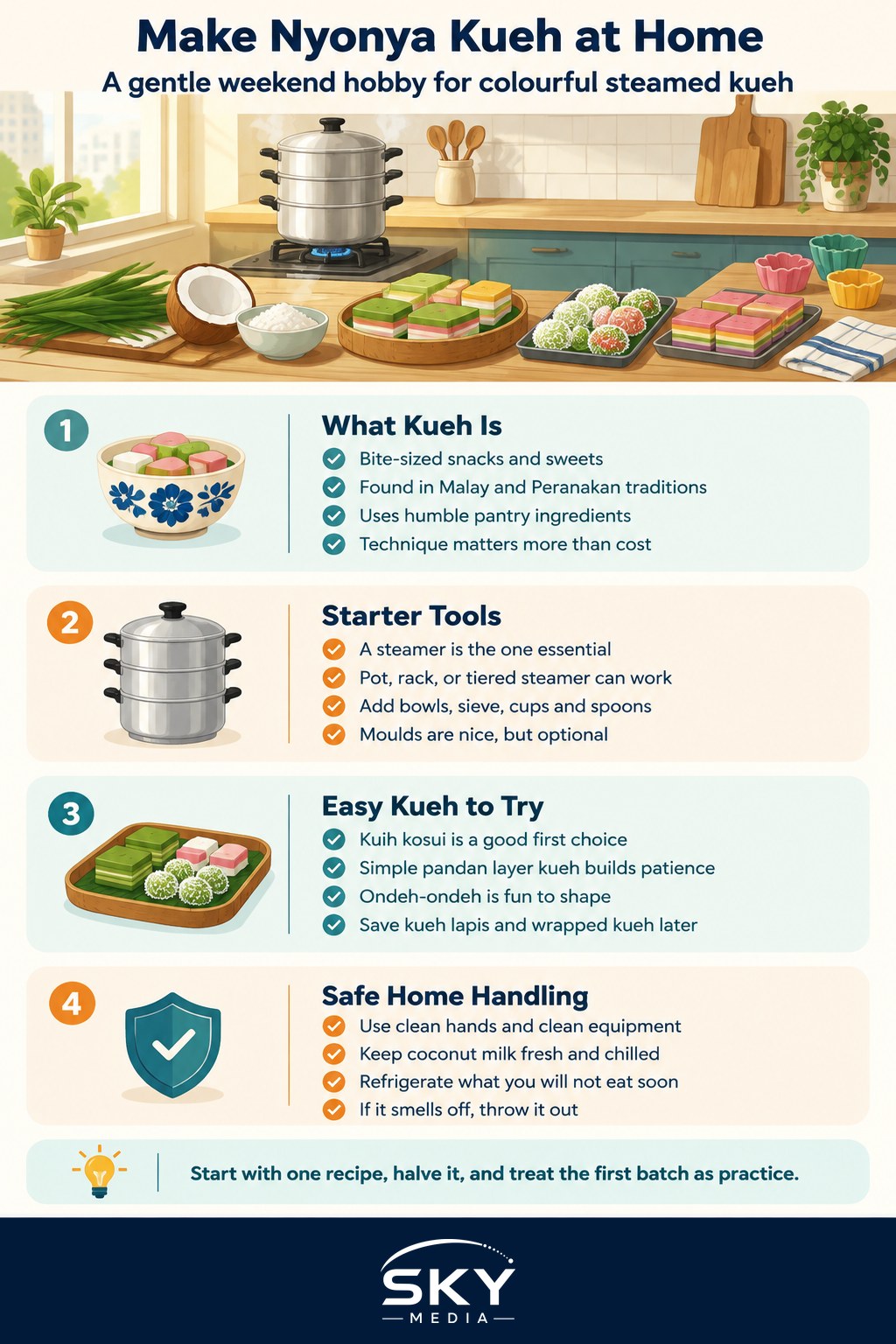
There is something deeply satisfying about steaming a tray of colourful, glutinous kueh in your own kitchen. Making nyonya kueh at home in Singapore is a relaxing weekend hobby that connects you to the flavours of your childhood, from pandan-green kuih salat to the striped layers of kueh lapis. You do not need a fancy kitchen or years of practice to start. You need a little patience, a steamer, and a willingness to accept that your first batch may look a bit rustic. That is part of the fun.
This guide is for the curious home cook who wants a gentle introduction. We will look at what kueh actually is, the simple gear that gets you going, a few beginner-friendly types, and the food-safety habits that keep your kitchen and your family safe.
What Is Nyonya Kueh and Why Try It
Kueh (also spelled kuih) is a broad family of bite-sized snacks and sweets found across the Malay, Peranakan, and wider Southeast Asian traditions. Nyonya kueh in particular leans on a handful of humble ingredients: glutinous rice flour, rice flour, coconut milk, palm sugar (gula melaka), pandan, and sometimes tapioca or mung bean. The magic is in the technique and the layering, not in expensive components.
For a hobby, kueh is forgiving in some ways and demanding in others. The flavours are simple and honest, so a small mistake will not ruin things. But steamed textures can be fussy, and getting a clean, wobbly set takes a few tries. Treat early batches as practice rather than perfection. Many home makers find the repetitive, meditative rhythm of measuring, mixing, and steaming genuinely calming after a long week.
If you already enjoy other kitchen crafts, this slots in nicely alongside hobbies like baking as a hobby or making kaya at home, since kaya pairs beautifully with several kueh.
The Starter Kit You Actually Need
You can begin with tools most Singapore kitchens already have. A steamer is the one essential. A tiered metal steamer, a wok with a steaming rack, or even a large pot with a trivet all work. Beyond that, you want mixing bowls, a fine sieve, measuring cups and spoons, and small trays or moulds. Traditional kueh moulds are lovely but optional at the start.
Here is a simple way to think about building up your gear over time.
| Tier | What you get | Best for |
|---|---|---|
| Budget | Existing pot plus rack, basic bowls, one small tray | Trying your first two or three batches |
| Mid | Dedicated tiered steamer, sieve, a couple of shaped moulds | Regular weekend making |
| Premium | Larger steamer, assorted traditional moulds, scale for precision | Frequent makers who want consistency |
Prices vary and it is worth checking current retail at kitchenware shops and wet-market supply stores. Do not rush to premium. A borrowed pot and a supermarket tray are enough to learn whether this hobby is for you.
Beginner-Friendly Kueh to Start With
Start with types that are hard to get badly wrong. Kueh that relies mainly on steaming a poured batter tends to be more beginner-proof than anything needing precise folding or wrapping.
- Kuih kosui or a simple steamed coconut-sugar kueh: mostly mixing and steaming.
- A basic pandan layer kueh: repetitive but calming, and it teaches you patience with thin layers.
- Ondeh-ondeh style balls with a gula melaka centre: fun to shape, though the molten filling means letting them cool a little before eating.
Save the tall, many-layered kueh lapis and delicate wrapped kueh for once your confidence grows. When you are ready to expand into other steamed and filled snacks, home bao and pau making is a natural next step that reuses your steamer skills.
Food Safety and Handling
Kueh is low-risk compared with cured or preserved foods, but coconut milk and cooked rice-flour mixtures can spoil, especially in our warm, humid climate. Keep your habits clean and simple.
- Work on clean surfaces with clean hands and clean equipment.
- Use fresh coconut milk within its use-by window, and do not leave batter sitting out in the heat.
- Cool finished kueh, then refrigerate what you will not eat within a few hours. Coconut-based kueh does not keep well at room temperature for long here.
- When reheating, steam gently rather than leaving kueh out all day.
- If something smells sour or off, or has been left out too long, when in doubt throw it out.
On allergens, common kueh ingredients include coconut, and some recipes use eggs, dairy, nuts, or gluten from wheat-based additions. If you are sharing with others, mention what went in. This is general information for safe home cooking, not medical or nutrition advice.
Always follow a tested recipe from a trusted source rather than guessing quantities, particularly for setting agents and steaming times, so your textures come out right and safely cooked.
Starting Small and Finding Your People
The kindest way to begin is with one recipe, one afternoon, and low expectations. Halve a recipe so a flop costs little. Take notes on what your steamer did, since every setup runs slightly differently. Photograph your results so you can see progress across batches.
For company, many community clubs and neighbourhood groups run occasional heritage cooking sessions, and there are active online home-cook communities where people swap tips and troubleshoot wobbly sets. If you enjoy the wider world of home food crafts, browsing cooking as a hobby can point you to related traditions to explore.
Making nyonya kueh at home in Singapore is really about slowing down and enjoying a small, colourful craft. Your layers will get neater, your gula melaka will run just right, and the smell of pandan steam in your kitchen will keep you coming back.
Frequently Asked Questions
Why did my steamed kueh turn out hard or rubbery? Steamed textures can be fussy, and a hard or rubbery set often comes from batter ratios or steaming times that were off. Follow a tested recipe from a trusted source and take notes on what your steamer did, since every setup runs differently.
Can I make kueh without special moulds? Yes. Traditional moulds are lovely but optional at the start. Small trays work for your first batches, and a pot with a rack or trivet can serve as your steamer. Move to shaped moulds once you know you enjoy the hobby.
How long can homemade kueh sit out in Singapore’s heat? Not for long. Coconut-based kueh does not keep well at room temperature in our warm, humid climate. Cool finished kueh, then refrigerate what you will not eat within a few hours, and throw out anything that smells sour or off.
What is the easiest nyonya kueh for a first-timer? Choose kueh made mostly by mixing and steaming a poured batter, such as a simple steamed coconut-sugar kueh or a basic pandan layer kueh. Save kueh lapis and delicate wrapped kueh for when your confidence grows.
How do I reheat kueh without drying it out? Steam it gently rather than leaving it out all day. A short steam restores softness without overcooking it. Reheat only what you will eat, and discard anything that has been left out too long.