
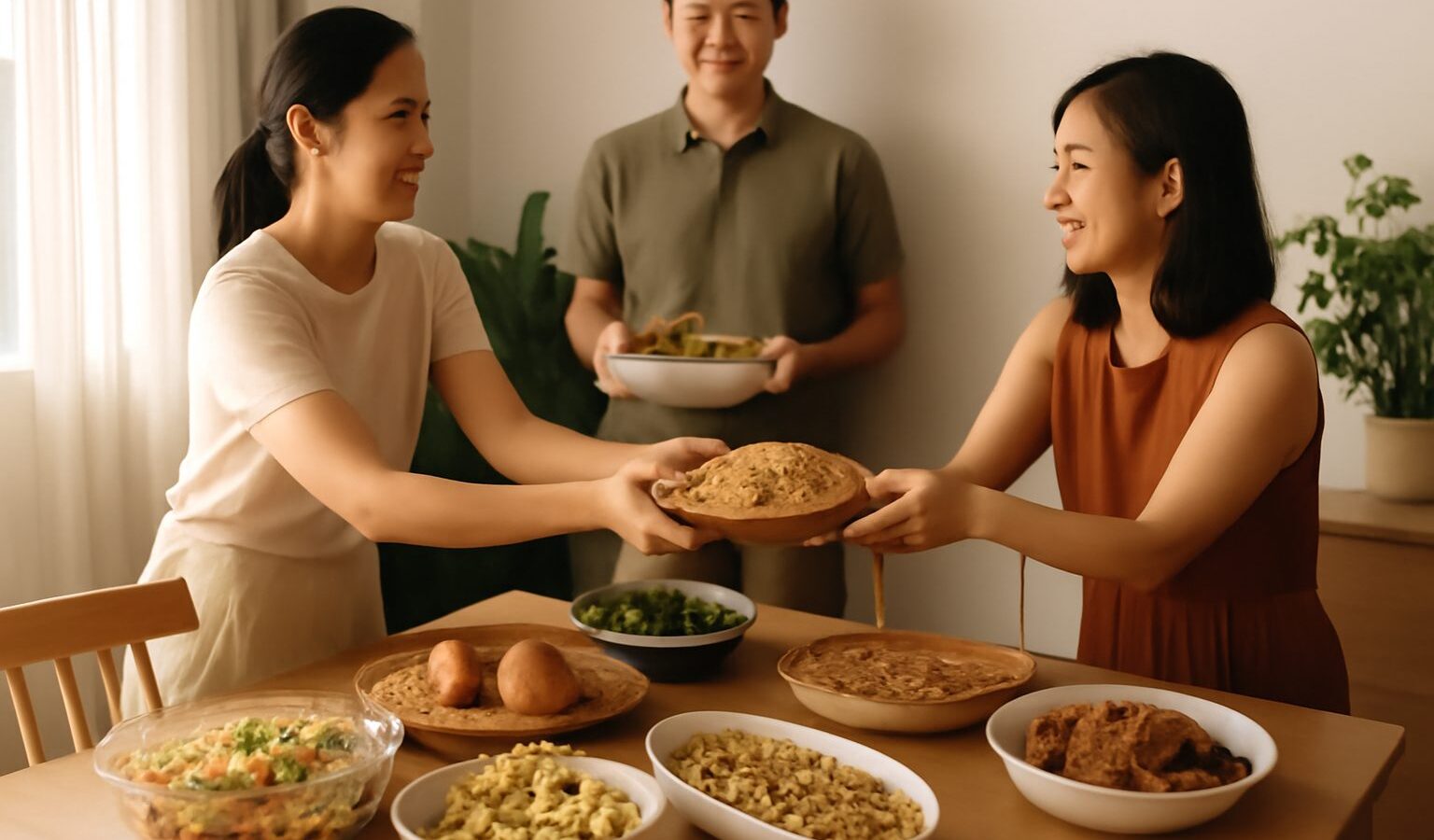
A potluck at home in Singapore is one of the easiest ways to gather friends, family or colleagues without one person cooking for everyone. Each guest brings a dish, the host provides the space, and you end up with a table that might run from curry puffs and bee hoon to lasagne and a pavlova.
The catch is that potlucks have their own logistics. Ten people arriving with ten containers can overwhelm a small HDB kitchen, the fridge fills up fast, and without some coordination you may end up with four desserts and no rice. This guide focuses on the planning that is specific to potlucks, from the sign-up list to reheating and keeping the corridor quiet at 11pm.

Set the Format Before You Send the Invite
A potluck works best when guests know exactly what is expected. Before you message the group chat, decide on a few basics.
- Headcount. Be realistic about how many people your living room, dining table and toilet can handle at once.
- Meal or snacks. A full dinner potluck needs mains and carbs. An afternoon gathering can lean on finger food, desserts and drinks.
- Theme, if any. “Comfort food”, “dishes from your hometown” or “everything under one colour” make potlucks more fun and reduce duplicates. For mixed groups of locals and newcomers, a hometown theme is a lovely way to share food cultures.
- What you will provide. Most hosts cover rice or bread, drinks, ice, plates and cutlery, plus one anchor dish so the meal is never empty.
- Timing. Give a clear start time and a soft end time. This helps guests plan reheating and helps you keep noise in check later.
Coordinate Dishes With a Simple Sign-Up List
The single biggest potluck problem is imbalance. A shared list fixes it.
Create a simple note in your group chat, or a shared document or spreadsheet, with categories and slots. Ask each person to write their name and dish next to a category. A typical spread for 10 to 12 guests might include:
- 2 to 3 mains (one chicken or fish, one meat-free)
- 2 carbs or sides (fried rice, noodles, bread, roasted potatoes)
- 1 to 2 vegetable dishes or salads
- 1 to 2 snacks or finger foods
- 1 to 2 desserts
- Drinks and ice, often covered by the host or a non-cook
Ask guests to note a few details next to their dish:
- Dietary info, such as whether it contains pork, lard, alcohol, beef, nuts, seafood or dairy.
- Whether it needs reheating, chilling or nothing at all.
- Portion size, so you can spot gaps early.
If some guests eat halal, are vegetarian or avoid beef, plan for it openly. For Muslim guests, the respectful approach is to ask what they are comfortable with. Some prefer food from halal-certified sources or homes, so a few people may choose to bring their own dish, and some will only eat certain items. Label every dish clearly and keep serving spoons separate.
Plan Your Fridge, Oven and Counter Space
Local kitchens are compact, and potlucks stress them in a way a normal dinner party does not. Map out your space before the day.
| Dish type | What the host should prepare | Guest reminder |
|---|---|---|
| Cold dishes (salads, desserts, jellies, cut fruit) | Clear one or two fridge shelves the day before; keep ice packs ready | Bring chilled in a cooler bag, arrive close to start time |
| Hot dishes needing reheating (stews, curries, casseroles) | Free up stove burners or plan an oven or microwave queue | Bring in a pot or oven-safe dish that can go straight on heat |
| Fried or crispy items (spring rolls, karaage, fritters) | Set aside a tray and oven or air fryer slot to re-crisp | Pack loosely so they do not steam and go soggy |
| Room-temperature food (bread, kueh, chips, cakes) | Keep a shaded counter clear, away from the stove | Bring covered, ready to plate |
| Drinks and ice | Fill a cooler box or pail with ice instead of using the freezer | Bring chilled if possible, or let the host know if bottles need space |
A few extra tricks for small homes:
- Use your dining table as the buffet, and clear the kitchen counter for reheating only.
- Borrow a second rice cooker or slow cooker to keep a dish warm without hogging the stove.
- Set up a drinks station away from the food so guests do not crowd the kitchen.
- Put out a “used dishes” tub so containers do not pile up in the sink.
Keep Food Safe in Singapore’s Heat
Warm, humid weather means cooked food can spoil faster than people expect when it sits out. Singapore Food Agency (SFA) has general food safety guidance on its website, and the main points apply at home too.
- Keep hot food hot and cold food cold. Reheat until steaming throughout, and keep cold dishes chilled until serving.
- Do not leave perishable food out for long. Bring dishes out in smaller batches and top up from the fridge or stove.
- Be careful with high-risk items such as raw seafood, sushi, egg-based desserts, cream and mayonnaise salads. They are best served chilled and eaten early.
- Reheat once. Guests should ideally bring food cooked on the day and reheat it only once at your place.
- Cover food to keep flies away, especially if windows or doors are open.
Ask guests to arrive within a set window so dishes are not travelling across the island in the afternoon heat for longer than needed.
Be a Neighbour-Friendly Host
Most Singaporeans live in high-density HDB flats or condominiums, where your gathering is a few walls away from someone else’s evening.
- Give a heads-up. A quick note to immediate neighbours goes a long way, especially if guests will be coming and going.
- Keep corridors clear. Shoes, strollers and coolers piled outside the door can block a shared corridor, which is a fire safety concern and annoys neighbours. Bring them inside or line them neatly against your wall.
- Watch the noise later in the evening. Close windows if you have music or karaoke, and move loud conversations indoors.
- Check condo rules. If you are in a condo, the MCST (Management Corporation Strata Title, the body that manages the estate) may have house rules on visitors, parking and noise. If you plan to use a function room instead, book it through management and follow its terms.
- Plan visitor parking. HDB car parks and condo visitor lots can fill quickly. Encourage public transport or ride-hailing.
- Dispose of rubbish properly. Bag waste securely and use the refuse chute or bin centre. Large volumes of bottles and cans can go into recycling bins.
Wrap Up Without Leftover Chaos
The end of a potluck is where many hosts get stuck washing other people’s containers at midnight. A bit of planning helps.
- Have disposable or reusable takeaway boxes ready so guests can pack leftovers.
- Encourage people to take their own dishes home, even unwashed, rather than leaving them to be returned later.
- Label containers with masking tape and a marker when guests arrive, so nothing gets mixed up.
- Refrigerate leftovers promptly and eat them within a sensible time.
Make It a Regular Thing
Once your group has done one smooth potluck, the next is easier. Keep the sign-up template, rotate the hosting home, and try a new theme each time. If you want to build an evening around the food, ideas from our guide to hosting a game night at home pair naturally with a potluck spread. For a sit-down evening where you cook most of the food yourself, see how to host a simple dinner party at home, and for festive gatherings with guests dropping in through the day, our festive open house guide covers the different rhythm that involves.
Frequently Asked Questions
How much food should each guest bring to a potluck? One dish is usual, sized for the headcount and balanced through a sign-up list. A spread for 10 to 12 guests might have two or three mains, a couple of carbs, vegetables, snacks and desserts, with the host covering rice, drinks and plates.
How do I handle halal and vegetarian guests at a potluck? Ask what they are comfortable with, since some prefer halal-certified sources or may bring their own dish. Label every dish clearly, note ingredients like pork, lard or alcohol on the sign-up list and keep serving spoons separate.
What can I do about limited fridge and stove space in a small HDB kitchen? Clear fridge shelves the day before, use a cooler box with ice for drinks, and borrow a rice cooker or slow cooker to keep dishes warm. Serve from the dining table and keep the kitchen counter only for reheating.
Should I tell my neighbours before hosting a potluck? A quick heads-up goes a long way, especially if guests will be coming and going. Keep the corridor clear, since piled shoes and coolers are a fire safety concern, and close windows if you play music late.
How do I stop potluck leftovers and containers becoming a mess? Have takeaway boxes ready, label containers with masking tape on arrival and encourage guests to take their own dishes home, even unwashed. Refrigerate leftovers promptly and eat them within a sensible time.
Further reading: What to Bring to an Easter Potluck in Singapore · Hosting Iftar at Home Without Overspending in Singapore · How to Plan a Chinese New Year Potluck Reunion · How to Host a BBQ at a Pavilion or Chalet in Singapore