
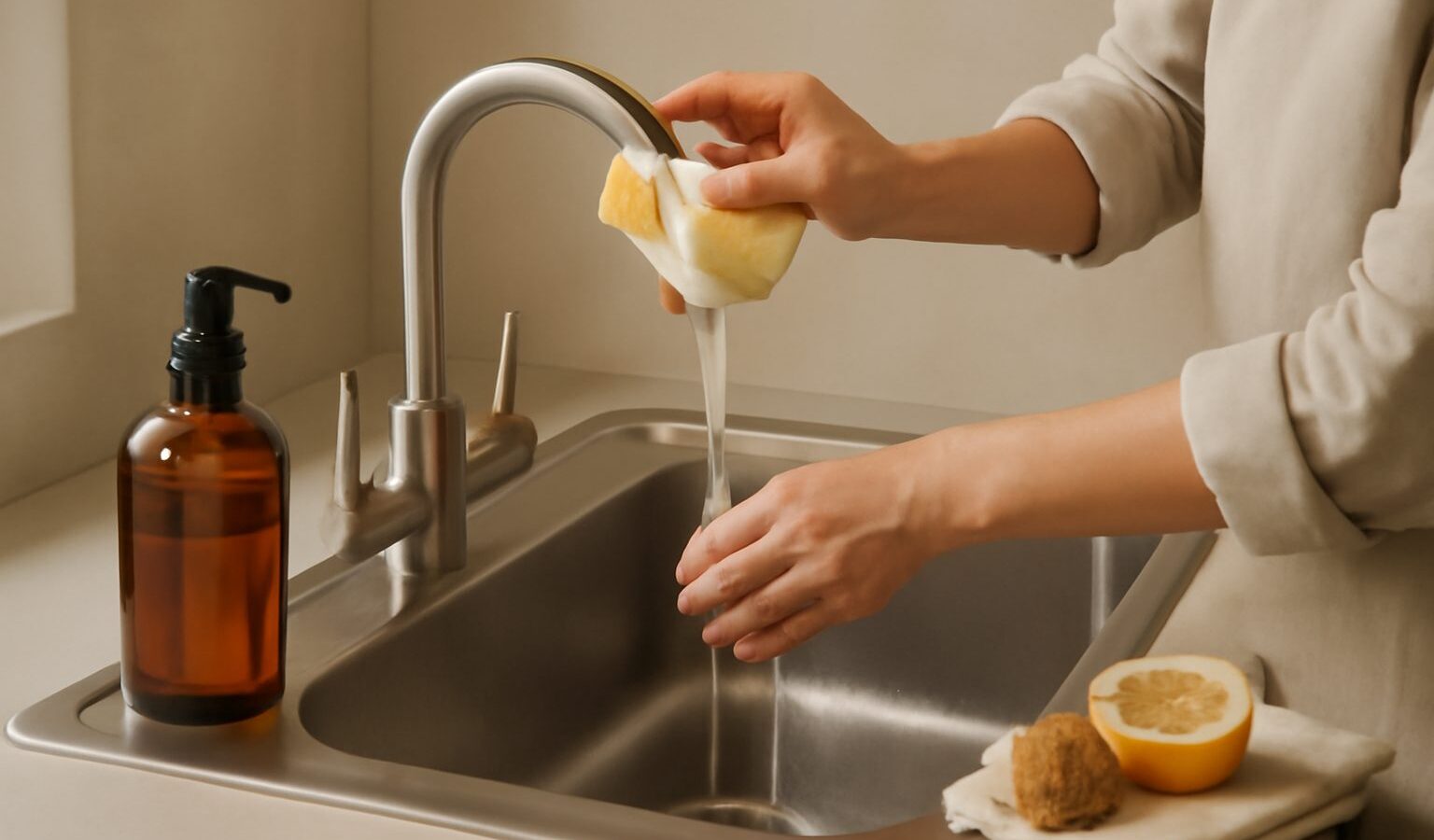
The kitchen sink is one of the busiest spots in any home, and in our climate it is also one of the quickest to grow grime, water spots and even mould. Food residue, grease and standing water combine with warm, humid air to create the perfect conditions for bacteria and odours. Learning the right routine for cleaning kitchen sink singapore households rely on keeps the area hygienic, keeps your taps shining, and stops that stale drain smell before it starts. This guide covers tools, safe products, a full step-by-step, and how to handle the limescale that our hard water leaves on everything.
Before you begin, clear the sink of dishes, put on gloves, and open a window or switch on the kitchen ventilation.
Tools and safe products
You do not need anything exotic. A soft sponge or microfibre cloth, a non-scratch scrubbing pad, an old toothbrush for tight spots, a dish soap or all-purpose cleaner, and white vinegar for limescale will handle almost everything. Baking soda is useful for gentle scrubbing and for freshening the drain. Keep a dry cloth handy too, because drying is what actually prevents water spots and mould.
Match the cleaner to your sink material. Stainless steel is the most common in Singapore kitchens and it scratches, so avoid harsh abrasive powders and steel wool, which leave permanent marks and create grooves where grime collects. A soft pad and a mild cleaner are all it needs. Composite granite and ceramic sinks each have their own care needs, so if in doubt, use a mild cleaner and a soft cloth rather than anything aggressive, and always test a strong product on a small hidden area first.
The safety rule is the same as anywhere in the home. Never mix cleaning products, and in particular never combine bleach with vinegar, ammonia or any other cleaner, because the fumes can be dangerous. Use one product at a time, rinse thoroughly, keep the space ventilated, and keep your gloves on throughout.
Step by step: sink, taps and drain
Work from the taps down to the drain so gravity carries the grime away rather than back over cleaned areas.
Start by rinsing the whole sink with warm water to clear loose debris. Then apply a little dish soap or all-purpose cleaner to your sponge and wash the entire basin, including the sides and the rim under the lip where grease hides. Use the old toothbrush around the edges, the seams and the base of the taps, which are the spots most people miss and where black grime tends to gather.
For the taps themselves, wipe the whole fixture with your soapy cloth, then focus on the handles and the spout. The tap is a high-touch point handled with dirty hands all day, so it deserves proper attention. If your tap or the sink surface has a cloudy white film or chalky build-up, that is limescale from our hard water. Soak a cloth in white vinegar, wrap it around the affected part of the tap, and leave it for a while to dissolve the deposit, then wipe and rinse. For heavier build-up and the methods that work best, our guide to removing hard water stains and limescale goes into more depth. Do not use vinegar on any part you are unsure about, and never mix it with bleach.
Next, tackle the drain and plughole. Lift out the strainer, clear any trapped food, and scrub it with the toothbrush. To freshen the drain and cut odours, pour in a little baking soda followed by hot water. This gentle approach is safer than harsh drain chemicals for routine upkeep. Wipe the strainer dry before replacing it.
Finish by drying the whole sink and the taps with a clean cloth. This final step is the one that makes the difference in Singapore, because leaving the surface wet is what causes water spots on stainless steel and gives mould the moisture it needs. A buffed, dry sink looks clean and stays clean longer.
Frequency and the tropical angle
A quick wipe and rinse of the sink after washing up each day, plus drying the basin at night, keeps things under control with very little effort. Give the sink, taps and drain a more thorough clean once or twice a week, and descale the taps whenever you notice the white film returning, which in our hard-water conditions can be surprisingly often.
Humidity is the reason a kitchen sink needs more care here than in a cooler climate. Standing water in the basin or a permanently damp sponge encourages mould and bacteria in warm air, so wring out and air your sponge, and do not leave it sitting in a puddle. Keeping the kitchen well ventilated helps everything dry faster, and our guide to improving airflow and ventilation at home explains how. When you want to take things further, our article on how to deep clean your kitchen covers the appliances, worktops and hidden spots, and fitting the sink into a wider home cleaning routine keeps it from ever getting out of hand.
Clean daily in small doses, descale the taps regularly, dry the surfaces, and never mix your products. Do that and your sink and taps will stay hygienic and gleaming all year round.