
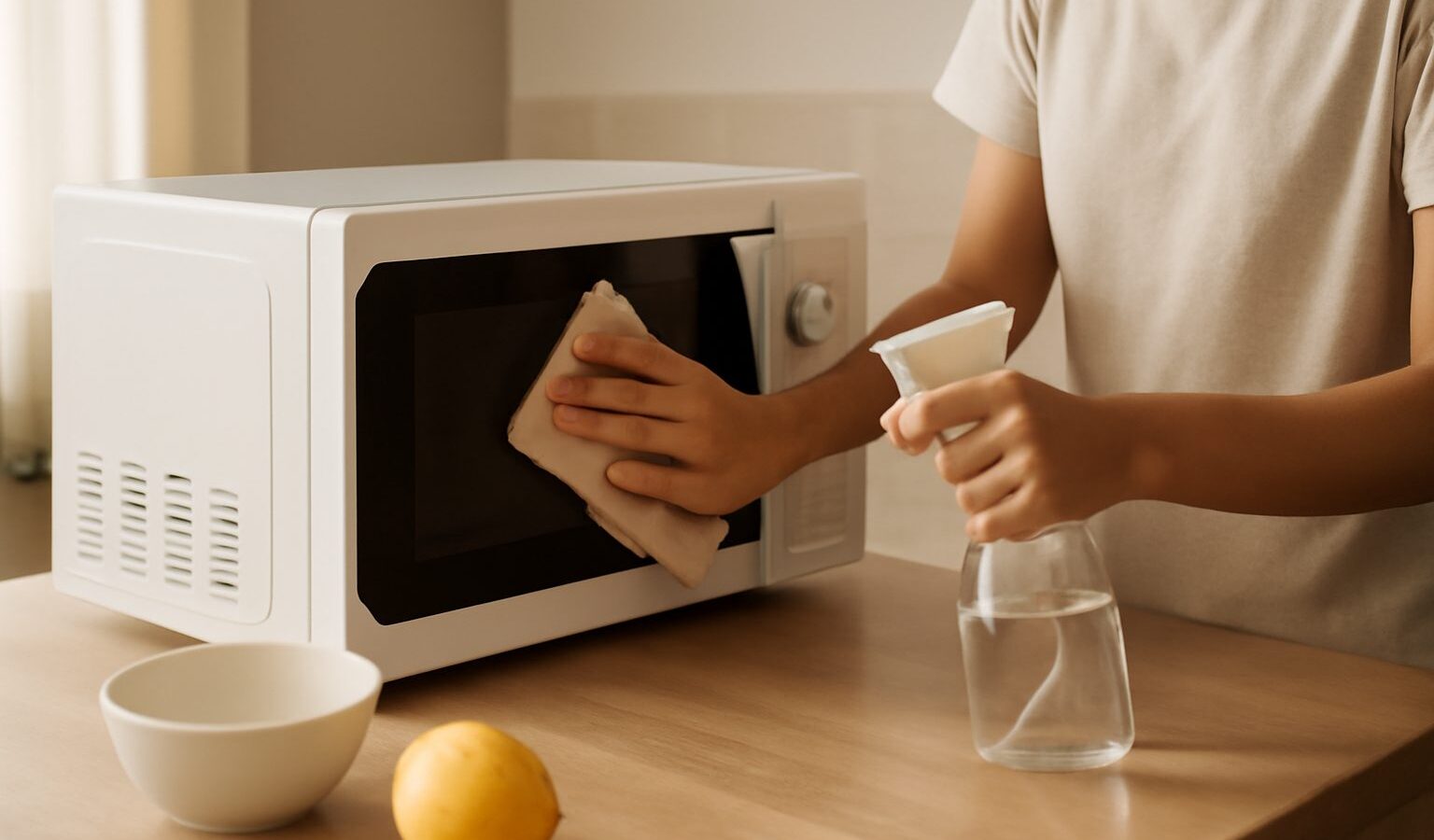
A microwave hides its mess well until you open the door to reheated splatter and a stale smell. Knowing how to clean your microwave properly takes only a few minutes and uses items you already own. The secret is steam, which softens dried food so it wipes away without scrubbing.
Why Steam Works So Well
When food heats up, tiny droplets of sauce, soup, and oil burst onto the walls and ceiling of the cavity. Once they cook on, they turn hard and dark. Scrubbing dried gunk with a dry cloth is slow and scratches the interior. Steam solves this by loosening the grime first. You heat a bowl of water until it boils, the vapour fills the cavity and settles on every surface, and the softened residue lifts off with a gentle wipe. It is the gentlest and fastest method there is.
Safety First
- Unplug the microwave before you wipe the interior, especially around the door seal and vents.
- Never use metal scourers, knives, or abrasive powders, which scratch the interior coating and can create sparking hotspots later.
- Never mix bleach with vinegar or any other cleaner. The combination releases toxic fumes. For a microwave you only need water, vinegar, and mild dish soap.
- Ventilate the kitchen while you work, as the vinegar steam has a strong smell that clears quickly.
- Let the cavity, turntable, and roller ring dry fully before you close the door. Trapped moisture in our humidity encourages musty odours.
The Steam Method Step by Step
This is the core routine and it handles most everyday messes.
- Fill a microwave-safe bowl with about 250ml of water. Add two tablespoons of white vinegar or a few slices of lemon to cut grease and freshen the smell.
- Place the bowl inside and heat on high for four to five minutes, until the water boils and the window fogs up.
- Leave the door shut for another three to five minutes. Do not open it yet. The trapped steam is doing the work.
- Open carefully, as the bowl and steam are hot. Remove the bowl with a cloth or oven mitt.
- Take out the glass turntable and roller ring. Wash them in warm soapy water like ordinary dishes, then set them aside to dry.
- Wipe the interior with a damp microfibre cloth or sponge, starting from the ceiling and working down the walls to the floor. The softened residue should come away easily.
- Wipe the inside of the door and the rubber seal gently. Do not soak the seal.
- Dry every surface with a clean cloth and leave the door open for a few minutes before replacing the turntable.
Tackling Baked-On Splatter
For stubborn dark patches that survive the steam, make a paste of bicarbonate of soda and a little water. Dab it onto the spot, wait five minutes, then rub with a damp sponge. Bicarbonate of soda is a mild abrasive, so it lifts crusty bits without scratching. Wipe away all traces afterwards, as leftover powder dries to a white film.
Removing Smells
Microwaves absorb odours from curry, fish, and reheated leftovers. To deodorise, run the lemon-water steam cycle above, then leave the door open to air out. For a lingering smell, place an open cup of bicarbonate of soda inside overnight with the microwave switched off. It absorbs odours by morning.
Cleaning the Outside
The exterior collects fingerprints, oil, and dust, particularly around the handle and control panel.
- Wipe the door, handle, and body with a cloth dampened with warm water and a drop of dish soap.
- Clean the control panel gently. Spray cleaner onto the cloth, never directly onto the buttons, so liquid does not seep inside.
- Vacuum or brush the rear vents to clear greasy dust that can trap heat.
How Often to Clean
| Task | Frequency | Why it matters |
|---|---|---|
| Quick wipe of interior | After spills or weekly | Stops splatter baking on hard |
| Full steam clean | Every 1 to 2 weeks | Keeps cavity fresh and grease-free |
| Wash turntable and ring | Weekly | Removes crumbs and sticky residue |
| Deodorise | As needed | Clears strong food smells |
| Clean exterior and vents | Monthly | Prevents dust build-up and overheating |
A short weekly wipe means you almost never face a hardened, smelly mess.
Simple Habits That Help
- Cover food with a microwave-safe lid or a sheet of kitchen paper. This one habit prevents most splatter.
- Wipe fresh spills straight away while they are still soft.
- Do not slam the door, as the seal and latch wear out over time.
- Keep the vents clear so the appliance runs cool and efficiently.
A Word on the Turntable
The glass plate is dishwasher safe in most models, but let it cool before washing. A cold plate cracks if you plunge it into hot water, and a hot plate cracks in cold water. Give it a moment to reach room temperature first. While the plate is out, wipe the roller ring and the recessed drive coupler underneath, where crumbs and dried spills love to collect. A clean coupler helps the plate turn smoothly and stops that annoying grinding noise.
Choosing the Right Cloth
The tool matters as much as the method. A microfibre cloth grabs grease and grime far better than a paper towel, which tends to smear and leave lint behind. Keep two cloths on hand: one damp for cleaning and one dry for the final buff. Rinse the damp cloth in warm soapy water as you go, so you are lifting grime away rather than spreading it around the cavity. Avoid coloured sponges that can leave dye marks on a light interior.
Enjoy a Fresh Microwave
Cleaning a microwave is one of the quickest wins in the kitchen. A bowl of water, a splash of vinegar, and five minutes of steam turn a grimy cavity into a fresh one. Build the steam cycle into your weekly routine and you will never dread opening that door again.
Explore more: Deep clean your kitchen · Clean your oven and stovetop · Cleaning hacks for a tropical home