
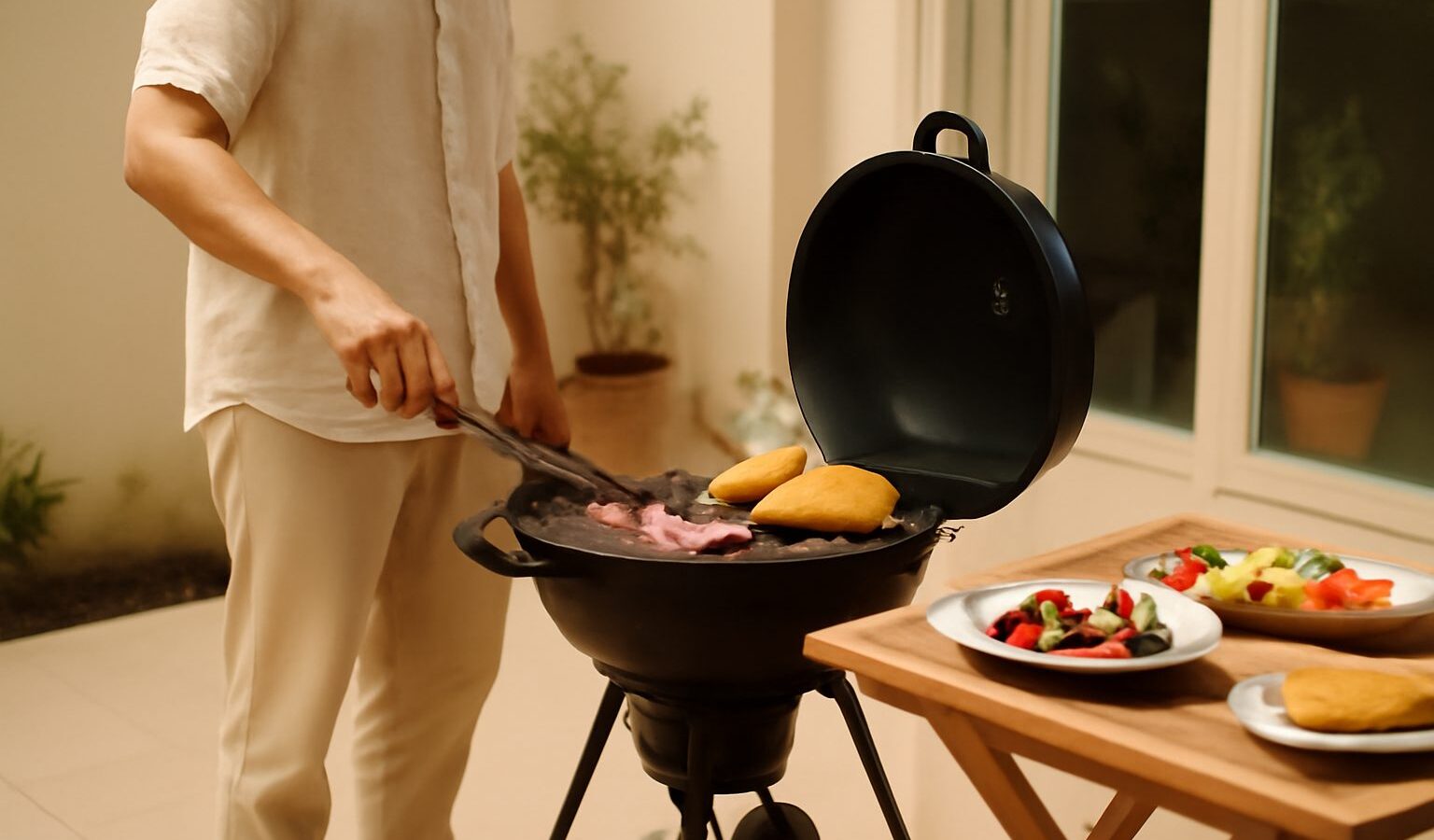
There is something about the smell of food over live fire that turns an ordinary weekend into a proper occasion. The good news is that grilling at home in Singapore is very achievable, whether you have booked an HDB or park BBQ pit, own a small kettle grill, or simply want to sear a few skewers on a tabletop electric grill in your kitchen. This guide walks you through the gear, the technique and the safety habits that matter most, so your first cookout is a success rather than a scramble.
Where You Can Grill and What You Need
Start with the question of location, because it shapes everything else. Open flame and charcoal are not allowed on most HDB balconies or in corridors, so for charcoal cooking you should book a designated HDB or park BBQ pit through the official channels and follow the site rules. If you want to grill more casually at home, an electric tabletop grill or a contact grill is the practical choice for a small HDB kitchen, since there is no open flame and far less smoke. Always check your specific block and tenancy rules before lighting anything, and never grill in an unventilated indoor space.
For equipment, keep it simple to begin. You want long handled tongs, a wide spatula, heatproof gloves, a wire brush for cleaning the grate, and a foil tray or two. The single most useful tool is an instant read meat thermometer, which takes the guesswork out of doneness and keeps everyone safe. If you are still building your kit, our guide to essential kitchen tools for beginner cooks covers the basics worth buying first.
Charcoal gives you that smoky flavour but needs time. Light it early using a chimney starter or firelighters, never petrol or lighter fluid near food, and wait until the coals are covered in grey ash before you cook. That usually takes twenty to thirty minutes. Build a two zone fire by banking most of the coals to one side. The hot side sears, the cooler side finishes food gently without burning, and this simple layout solves most beginner problems.
Technique, Temperatures and Common Pitfalls
Good grilling is mostly about heat control and patience. Pat your food dry, oil the food rather than the grate, and lay it down over the hot zone. Resist the urge to keep flipping. Let a crust form, then turn once. Thicker cuts should be seared over the hot zone and then moved to the cooler side to cook through with the lid down if your grill has one.
Marinades add huge flavour, especially for satay style skewers, chicken wings and prawns. A little sugar in the marinade helps caramelisation but burns quickly, so keep sugary items over the cooler zone and watch them closely. For deeper flavour and juicier results, read our notes on how to marinate meat and seafood well before you start.
Food safety is where you must not cut corners. Cook poultry until it is fully done with no pink meat and juices that run clear, aiming for an internal temperature of 74C at the thickest part. Chicken thighs are more forgiving than breasts and stay juicy even when fully cooked, which makes them ideal for beginners. Minced meat patties should reach 71C, while whole cuts of beef or lamb can be cooked to your preference, from about 55C for medium rare upward. Fish is ready when it flakes easily and turns opaque. Always use a clean plate and clean tongs for cooked food, never the same ones that touched raw meat, to avoid cross contamination.
A few common pitfalls to avoid. Flare ups happen when fat drips onto flames, so keep a spray bottle of water handy and move food to the cool zone rather than dousing everything. Do not press burgers with the spatula, as you squeeze out the juices. Give food a few minutes to rest after grilling so the juices settle. And never leave a hot grill or live coals unattended, keep children and pets well away, keep flammable items at a distance, and douse charcoal fully with water when you are done so nothing reignites.
Tropical humidity means charcoal can absorb moisture and light poorly, so store it sealed and dry. On humid evenings, keep the lid on more to hold heat steady. Finally, plan your menu around the fire. Grill quick items like prawns and vegetables while the fire is hottest, then move to slower chicken pieces as the coals mellow.
Grilling rewards a relaxed approach, so start with a few reliable items, get comfortable with your heat zones, and build from there. When you are ready to feed a crowd, our guide to hosting a backyard or balcony BBQ will help you plan the whole evening. Note common allergens at your gathering too, as satay sauces often contain peanuts and many marinades contain soy and gluten.