

A good marinade is the difference between dry, bland chicken and juicy, deeply flavoured satay. Marinating meat in Singapore is something we do instinctively for dishes like char siew, tandoori, sambal fish and grilled chicken wings, but a lot of home cooks are just guessing at the ratios. Once you understand what each ingredient in a marinade actually does, you can build one for anything in your fridge without a recipe, and get restaurant-level flavour at home.
The core idea is simple. A marinade seasons the surface, adds flavour, and can tenderise. It is not magic and it does not soak deep into a thick piece of meat, but done right it makes a real difference to taste and texture.
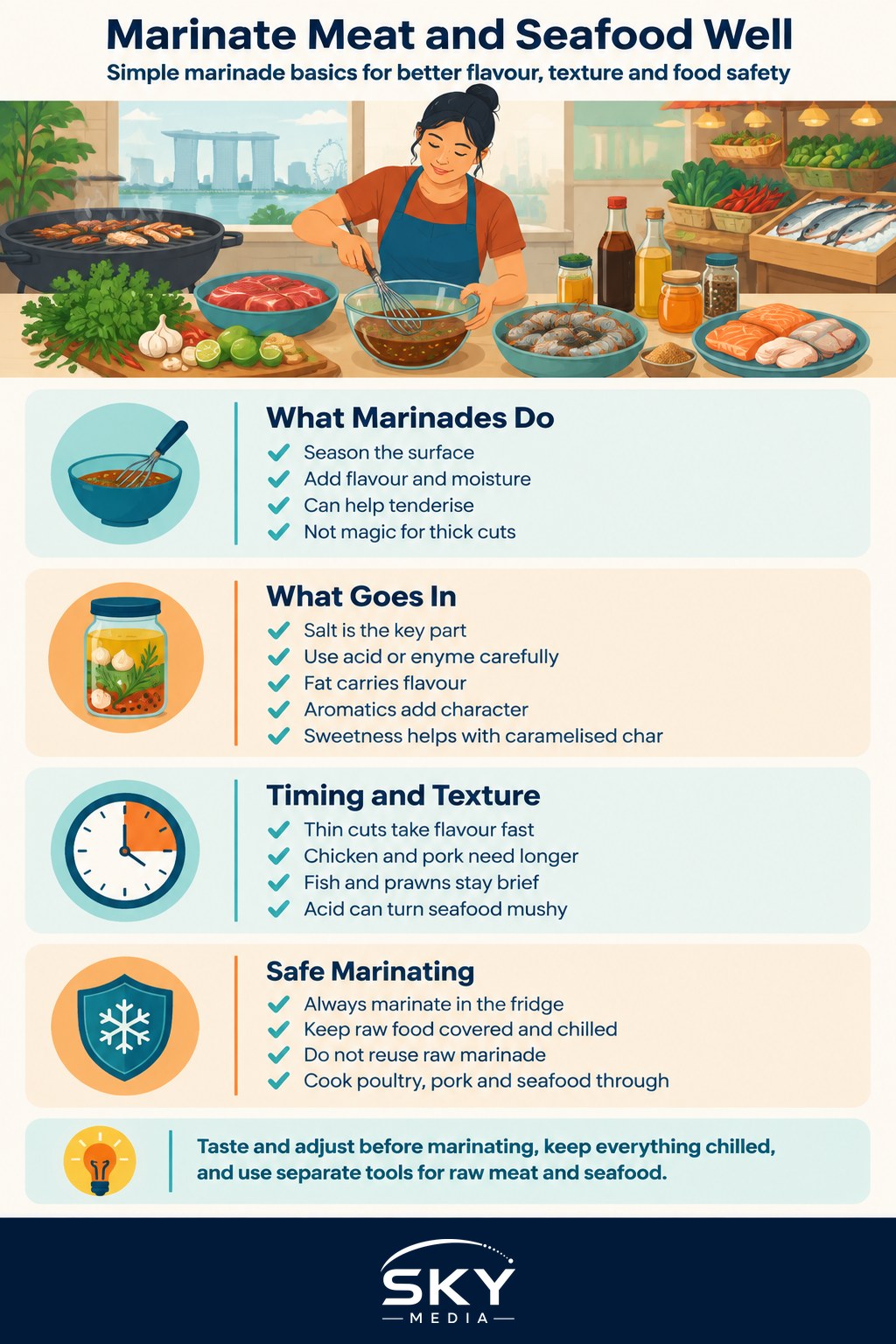
What a marinade is actually made of
Every good marinade balances a few working parts. Learn the roles and you can improvise endlessly with what is in the pantry.
- Salt is the most important element. It seasons and helps the meat hold moisture. This can be table salt, light or dark soy sauce, fish sauce, or oyster sauce.
- Acid or enzyme tenderises the surface and adds brightness. Think lime or calamansi juice, vinegar, yoghurt, or fruit like pineapple and papaya. Use these in moderation and for the right length of time.
- Fat carries flavour and keeps things from drying out, usually oil, coconut milk or yoghurt.
- Aromatics and sweetness give character: garlic, ginger, shallots, lemongrass, chilli, curry powder, five-spice, and sugar or gula melaka for that caramelised char.
A reliable everyday ratio to remember is roughly two parts savoury salty base, one part fat, one part sweet, plus aromatics and a little acid. From there you can steer it towards satay, char siew, or a simple grilled fish.
Getting the timing right
More time is not always better, and this is where people go wrong. Different proteins want very different marinating windows, and acid especially can overdo it.
Thin cuts and small pieces take flavour quickly. Chicken thigh, pork strips and prawns are well seasoned in thirty minutes to a few hours. Tougher, thicker cuts benefit from longer, several hours or overnight, especially with yoghurt or a soy-based marinade.
Seafood is the delicate one. Acidic marinades start to change the texture of fish and prawns quickly, essentially cooking the surface as in ceviche. Keep fish in an acidic marinade brief, often just fifteen to thirty minutes, or it turns mushy. If you want a longer soak for seafood, keep the acid low and lean on aromatics and oil.
| Protein | Good marinating time | Watch out for |
|---|---|---|
| Prawns and squid | 15 to 30 minutes | Acid turns them rubbery or mushy |
| Fish fillets | 15 to 30 minutes | Delicate flesh breaks down fast |
| Chicken pieces | 1 to 4 hours, or overnight | Fine for long soaks in yoghurt or soy |
| Pork and beef strips | 2 hours to overnight | Needs longer to take flavour |
| Thick cuts and whole birds | Overnight | Surface only; slash to help it in |
Because a marinade mostly seasons the surface, scoring thick pieces or using thinner cuts helps flavour reach more of the meat.
Food safety is not optional here
This part matters, and in our climate it matters more. Always marinate in the fridge, never on the kitchen counter. Meat and seafood left out in Singapore’s heat sit in the danger zone where bacteria multiply fast, and a couple of hours on the counter is genuinely risky. Cover the bowl or use a sealed bag or box, and keep it chilled the whole time.
A few firm rules keep you safe:
- Use separate boards, knives and bowls for raw meat and seafood, and wash your hands and surfaces after handling them.
- Never reuse raw marinade as a sauce. It has been in contact with raw meat. If you want a sauce from it, boil it hard first, or set aside some clean marinade before it touches anything raw.
- Cook everything through. Poultry, pork and seafood should be cooked properly, no pink chicken and no translucent prawns.
- When in doubt, throw it out. If marinated meat has sat too long or smells off, do not risk it.
For anything to do with food safety, the Singapore Food Agency is the authority to follow rather than kitchen folklore.
Building marinades for local favourites
Once you have the framework, our local dishes are within easy reach at home. A few starting points to riff on:
Satay-style chicken: lemongrass, shallots, garlic, turmeric, coriander, a little sugar and oil. Blend to a paste, coat the chicken, and leave it several hours before grilling for that smoky, caramelised edge.
Char siew pork: a sweet-savoury mix of dark and light soy, honey or maltose, a touch of five-spice, garlic and a little fermented bean paste. This wants an overnight soak to build deep colour and flavour.
Sambal or turmeric fish: rub the fish with turmeric, salt and a bit of chilli, then keep it short before frying or grilling so the flesh stays firm.
Yoghurt chicken: yoghurt with ginger, garlic, chilli and garam masala tenderises beautifully over a long soak, perfect for the grill or oven.
You will find all these ingredients easily. The wet market and supermarket carry lemongrass, galangal, turmeric, curry powders and the full range of soy and bean sauces, usually along the same aisle. Buy a small starter set of pantry sauces and you can marinate something different every week.
Do not expect perfection on the first go. Taste your marinade before it goes on, adjust the salt and sweetness, and note what you liked for next time. Marinating rewards a bit of practice more than any strict recipe, and within a few tries you will be building them by feel.
Explore more
Marinating is only the start of a great meal. Turn your marinated meat into a tender braise with our guide to braising meat until tender, fire up the wok with stir-frying basics, and serve it all over a bowl of fluffy stove-top rice.
Frequently Asked Questions
Can I freeze meat or seafood in its marinade? Yes, and it is a handy way to prepare ahead. Pour the marinade over the raw meat in a sealed freezer bag, press out the air and freeze. Thaw in the fridge and cook thoroughly. Very acidic marinades are better added closer to cooking time.
Is it okay to marinate in a metal bowl? Use glass, ceramic or food-grade plastic, or a sealed bag, especially with acidic marinades, because acid can react with some metals and affect taste. Stainless steel is generally fine for short marinades. Cover the container and keep it chilled.
Is a store-bought marinade as good as a homemade one? It can be convenient, and a good one saves time, but they are often salty or sweet, so taste before adding more seasoning. Making your own gives you control over salt, sugar and spice. Check labels for allergens such as shellfish, soy or nuts.
Why did my marinated chicken turn mushy instead of tender? Too much acid or fruit enzymes, such as pineapple or papaya, for too long can break down the surface. Shorten the time, use less acid, or add it nearer to cooking. Yoghurt and soy-based marinades are gentler for long soaks.
Can I marinate meat while it is still frozen or thawing? It is better to thaw first, in the fridge, since frozen meat will not take up flavour and a thawing surface can warm up in the heat. Once thawed, pat it dry, marinate in the fridge and cook it soon. Do not refreeze raw meat once it has thawed and been marinated.
Further reading: How to Defrost Meat and Seafood Safely