
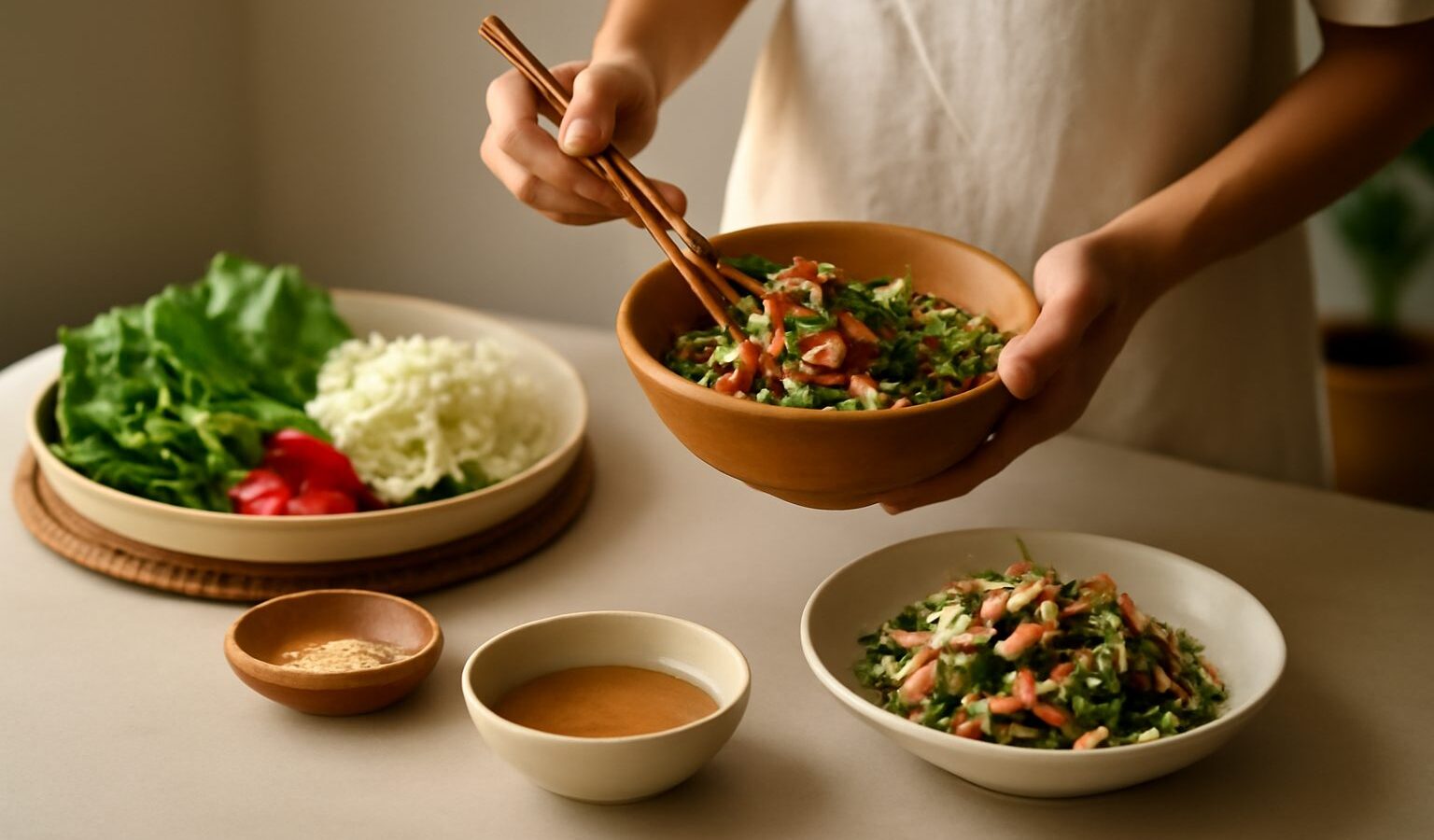
Asian salads are bright, punchy, and refreshing, built on the balance of sour, sweet, salty, and spicy that runs through so much of our region’s cooking. Kerabu, the Malay and Peranakan style of salad, is a perfect example. Learning to make kerabu in Singapore, along with other Asian salads, is a rewarding way to eat more vegetables and to cool down in our warm weather. This guide covers ingredients, dressings, method, and the food-safety points that matter when working with fresh and raw produce.
What Makes an Asian Salad
Unlike a Western salad built on leaves and a creamy or oil-based dressing, Asian salads tend to be about texture and a sharp, aromatic dressing. Kerabu, Thai yam, Vietnamese goi, and many others share a similar logic. You combine crunchy raw or lightly blanched vegetables with fresh herbs, sometimes a protein, and a dressing that hits sour, sweet, salty, and spicy notes all at once. The result is light, fragrant, and full of flavour without needing much oil.
The beauty of this style is flexibility. Once you understand the balance, you can build a salad from whatever is fresh and in season. If you want to make sure your vegetables shine, our guide on how to cook vegetables so they taste good in Singapore is a useful companion.
Fresh Ingredients to Build With
Start with a base of crunchy vegetables. Popular choices include:
- Shredded cabbage, long beans, cucumber, carrot, or bean sprouts.
- Green mango, green papaya, or pomelo for a tangy, juicy element.
- Sliced onion or shallot, and fresh chilli for heat.
Add plenty of fresh herbs, which are essential to the character of these salads. Mint, coriander, Thai basil, laksa leaf, also called daun kesum, and torn kaffir lime leaf all work beautifully. For extra texture and flavour, toss through toasted grated coconut, known as kerisik, fried shallots, crushed peanuts, or toasted sesame seeds.
For protein, kerabu often includes cooked prawns, shredded chicken, or flaked cooked fish, while a Thai-style salad might use squid or minced meat. Vegetarians can use tofu, tempeh, or simply a generous mix of vegetables and herbs. A word on allergens here: peanuts, sesame, and shellfish such as prawns and squid are common in these salads and are frequent allergens, so flag them clearly when serving guests.
Making the Dressing
The dressing is the heart of an Asian salad, and it comes together in minutes. The aim is a balance of four tastes, which you adjust to your liking.
- Sour, from lime juice, calamansi, or tamarind.
- Sweet, from a little palm sugar or ordinary sugar.
- Salty and savoury, from fish sauce, or from light soy sauce and salt for a vegetarian version.
- Spicy and aromatic, from fresh chilli, and often garlic, shallot, or a little pounded belacan for a kerabu.
A simple starting point is to mix lime juice, fish sauce, and palm sugar in roughly equal parts, then add pounded chilli and garlic to taste. Taste as you go and adjust. If it is too sharp, add a touch more sugar; if it is flat, add more lime or fish sauce. This tasting-and-adjusting is the whole skill, and it is far more forgiving than baking. Those who enjoy tangy, pickled flavours may also like our guide on how to make achar and pickles in Singapore, which shares the same love of sourness.
The Method, Step by Step
Making the salad is quick, which is part of the appeal.
- Prepare your vegetables by washing them thoroughly and slicing or shredding them finely and evenly, so everything mingles well.
- Cook any protein fully. Poach or grill prawns, chicken, or fish until properly done, then cool them before adding.
- Toast your aromatics, such as grated coconut, sesame seeds, or peanuts, until fragrant, then set aside.
- Mix the dressing in a large bowl and taste for balance.
- Toss everything together just before serving, adding the crunchy toppings last so they stay crisp. Dressing too early makes the vegetables soggy and can draw out water.
Serve immediately for the best texture and freshness. A kerabu is at its most vibrant the moment it is tossed.
Food Safety With Fresh and Raw Ingredients
Because these salads rely on raw vegetables and often on seafood, a few precautions matter, especially in our climate. Wash all vegetables, herbs, and fruit thoroughly under running water before use, and buy the freshest produce you can. If you are using seafood such as prawns or squid, make sure it is fresh, kept properly chilled until you cook it, and cooked through unless you are following a recipe with reliably sourced sashimi-grade seafood. Keep raw and cooked ingredients separate to avoid cross-contamination, and use clean boards and knives.
Once assembled, do not leave the salad at room temperature for long, as the heat and humidity can spoil fresh ingredients quickly. Refrigerate any leftovers promptly and enjoy them the same day, as dressed salads do not keep well. Anyone who is pregnant, very young, elderly, or has a weakened immune system should be especially careful with raw seafood and stick to thoroughly cooked options.
Enjoying the Results
Asian salads and kerabu are among the most refreshing things you can make at home, and they suit Singapore’s weather perfectly. Master the balance of sour, sweet, salty, and spicy, build from fresh crunchy vegetables and herbs, and handle your ingredients safely, and you will have a dish that is light, healthy, and bursting with flavour. Best of all, once you have the method, every plate can be a little different depending on what looks good at the market that day.