
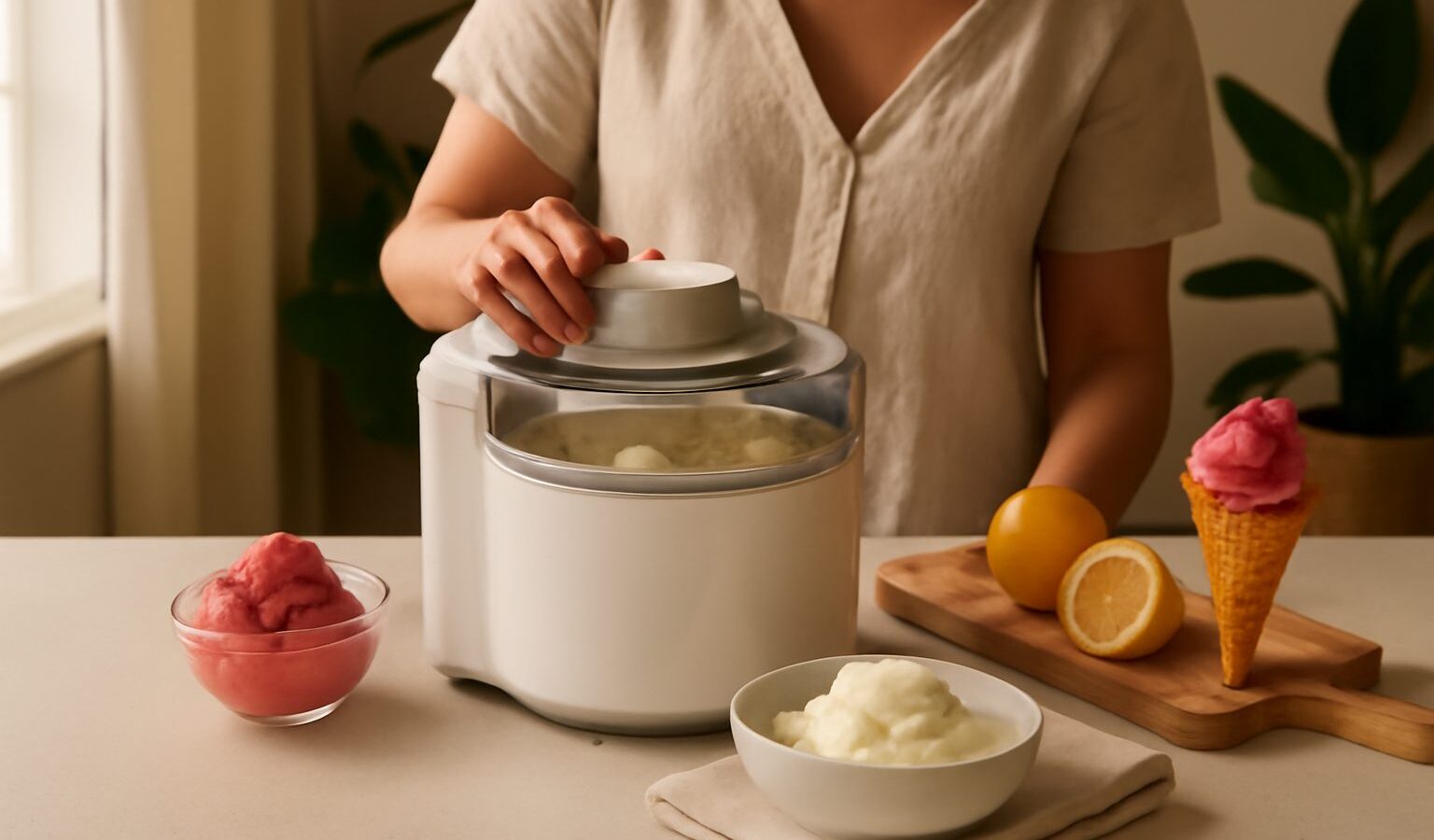
Few things beat the tropical heat like a scoop of ice cream you made yourself, and it is far more achievable than most people think. Homemade ice cream in Singapore can be as simple as a no churn method that needs only a freezer, or as classic as a proper custard base if you own a machine. Sorbet is even easier and naturally dairy free. This guide covers both, with the safe chilling steps that matter and the small tricks that keep everything scoopable in our warm climate.
Ice Cream With or Without a Machine
There are two main routes to ice cream at home. The custard style, sometimes called French, uses egg yolks for a rich, smooth result, and it churns in a machine. The no churn style skips both the eggs and the machine, using whipped cream folded with sweetened condensed milk, and it sets in the freezer with no churning at all. Both are excellent, so choose based on your equipment and how much effort you fancy.
For a custard base, gently heat 300ml of milk and 300ml of cream until steaming but not boiling. In a separate bowl whisk four egg yolks with about 100g of sugar, then slowly pour the warm milk into the yolks while whisking. Return everything to low heat and stir constantly until it thickens enough to coat the back of a spoon, which is around 82C. Do not let it boil or the eggs will scramble. This base contains dairy and egg, two common allergens, and any nut or other flavourings you add should be flagged for guests too.
The safe cooling step is critical and often rushed. Once your custard has thickened, cool it quickly by setting the bowl over a larger bowl of iced water and stirring, rather than leaving it on the counter in our warm kitchens where bacteria can grow. Then cover and chill it fully in the fridge for several hours or overnight before churning. A cold base churns better and is safer to eat. If you have an ice cream machine, churn the cold custard until thick, then freeze until firm. If you like custard technique in general, our guide to cooking perfect eggs every way explains gentle heating well.
For the no churn route, whip 300ml of cold cream to soft peaks, fold in a 380g tin of sweetened condensed milk and a little vanilla, then freeze in a tub for about six hours. The trapped air keeps it soft without churning. Fold in crushed biscuits, chocolate or fruit before freezing if you like. This version is quick, forgiving and perfect for a small HDB kitchen with limited gadgets.
Sorbet, Tropical Weather and Common Pitfalls
Sorbet is the easiest frozen dessert and a natural fit for Singapore, since it showcases local tropical fruit and contains no dairy or egg. The basic idea is fruit, sugar and a little water or lemon juice. Make a simple syrup by dissolving equal parts sugar and water, cool it, then blend it with fruit puree such as mango, pineapple, calamansi or soursop. Taste and balance the sweetness and acidity, then churn in a machine or freeze in a tub, stirring vigorously every thirty minutes for a few hours to break up ice crystals. That regular stirring is what gives you a smooth sorbet without a machine.
Our climate creates two real challenges, and both have simple fixes. First, home freezers work harder against the heat, so give your mixtures plenty of freezing time and try not to open the freezer door too often. Second, homemade ice cream can freeze rock hard because it lacks the stabilisers of shop bought tubs. The fix is a touch of sugar or a spoonful of alcohol such as vodka in the base, which lowers the freezing point and keeps it scoopable. Always let a tub sit out for a few minutes to soften slightly before serving, especially straight from a cold freezer.
A few pitfalls to watch. Icy, grainy texture usually means the mixture was not cold enough before freezing or was not stirred often enough, so chill thoroughly and stir regularly. An overly sweet sorbet will not freeze firmly, since sugar lowers the freezing point, so balance it carefully. On the safety side, cool any custard quickly as described, keep it chilled, and never leave a dairy or egg base sitting out in the heat. Just as important, do not refreeze ice cream that has fully melted, as the texture suffers and it is no longer safe once it has been warm for long. Store your frozen desserts in a sealed tub with a layer of baking paper pressed onto the surface to stop ice crystals forming.
Making frozen treats at home is genuinely fun and endlessly customisable, and it turns a hot afternoon into a small celebration. Once you are comfortable, a homemade dessert is a lovely finish to a meal, and our guide to hosting a simple dinner party at home shows how to bring it all together.