
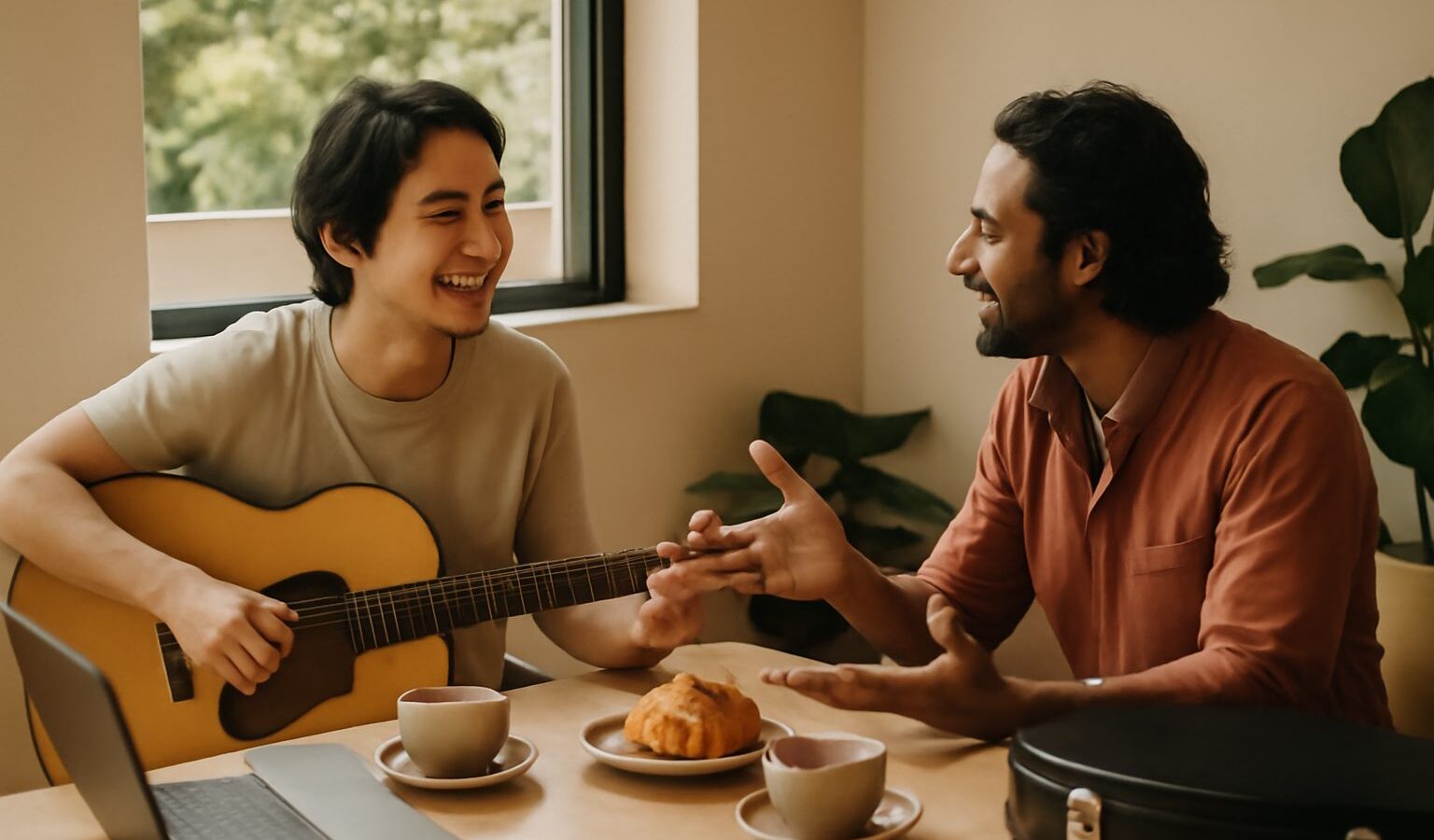
For many musicians, the word networking feels awkward, as if it means schmoozing at events and handing out business cards. In reality, networking as a musician is much simpler and kinder than that. It is about building genuine relationships with people who make music, support music, and love music, and being someone others want to work with. In a scene as compact as Singapore’s, those relationships open more doors than any single skill. This guide covers how to build them honestly and where to start.
What Networking Really Means
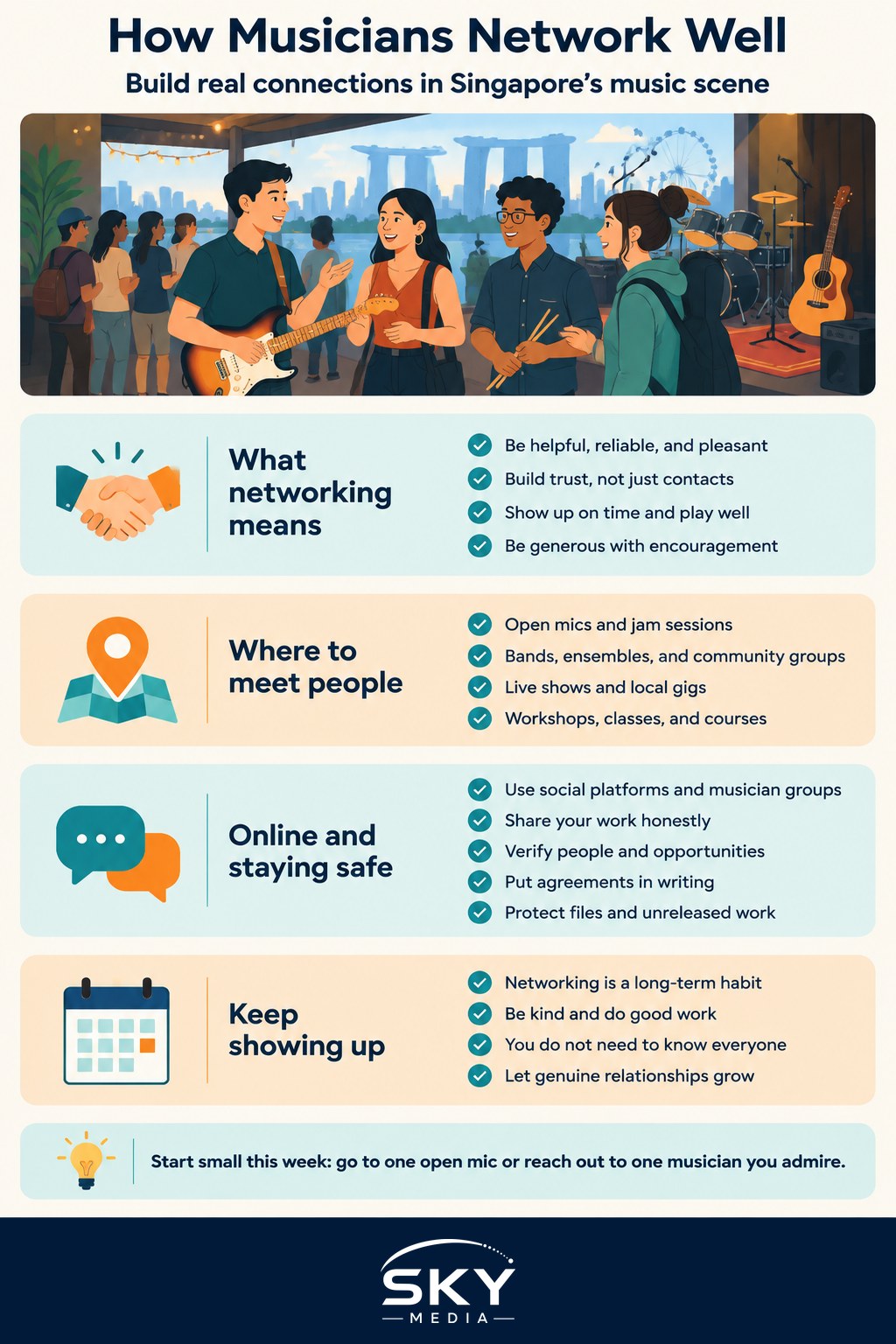
At its heart, networking is just connecting with people and being helpful, reliable, and pleasant to be around. Musicians tend to hire, recommend, and collaborate with people they know and trust, so the goal is not to collect contacts but to earn a good reputation. Someone who shows up on time, plays their part well, and treats others with respect will be remembered far more warmly than someone who simply talks a lot about themselves.
That means your musicianship and your character are your best networking tools. Be prepared, be generous with encouragement, and be easy to work with. Over time, people naturally think of you when opportunities come up. This is also why doing good work in any setting matters, whether that is a rehearsal, an open mic, or a casual jam.
A useful mindset is to give before you ask. Share a gig you cannot take, recommend a friend for a project, or simply show up to support other people’s performances. Goodwill compounds, and a scene where musicians look out for one another lifts everyone.
Where to Meet People in Singapore’s Scene
You cannot build relationships in isolation, so the practical work of networking is mostly about showing up. Singapore’s music community gathers in plenty of accessible places, and the more you are present, the more naturally connections form.
Some welcoming entry points:
- Open mics and jam sessions, where you can play, listen, and meet regulars. Our guide to open mics and busking is a friendly place to start.
- Bands, ensembles, and community groups, which build deep connections through regular playing. See joining a band or jamming for how to find one.
- Live shows and local gigs, where simply being in the audience and chatting afterwards builds familiarity.
- Workshops, classes, and courses, where you meet peers and teachers at once.
Getting to know the wider live music scene also gives you context, so you understand who is playing, which spaces host music, and where you might fit. The more you understand the landscape, the more naturally you can find your people within it.
When you do meet someone, keep it human. Ask about their music, listen genuinely, and follow up in a low pressure way. A short, warm message after meeting is worth more than a stack of business cards.
Building Relationships Online and Staying Safe
A lot of connecting now happens online, through social platforms, musician groups, and messaging. Used well, this extends your reach beyond the people you meet in person. Share your work honestly, engage with others generously, and let people see that you are active and reliable. Our guide to how to promote your music on social media covers doing this authentically rather than spammily.
As your circle grows, a bit of caution keeps things healthy, especially when money or bookings enter the picture. Sensible habits include:
- Verifying people and opportunities before committing, particularly for paid work from strangers.
- Putting agreements in writing, so expectations and fees are clear on both sides.
- Being wary of anyone who pressures you to pay upfront, promises unrealistic returns, or wants to rush things off normal channels.
- Protecting your own files and unreleased work until you trust a collaborator.
Most people in the scene are genuine, but treating your musical business seriously protects both your money and your reputation.
Keep Showing Up
Networking as a musician is not a one time effort, it is a habit of being present, being kind, and doing good work over the long run. You do not need to be an extrovert or know everyone, you just need to keep showing up and treating people well. Start small this week, go to one open mic or reach out to one musician you admire, and let genuine relationships grow from there. The connections you build honestly today are the opportunities you will be grateful for tomorrow.
Frequently Asked Questions
How can a shy or introverted musician network without feeling drained? Aim for a few real conversations rather than working the whole room. Small settings such as a jam night, a rehearsal or a workshop suit quieter people, and talking about the music itself keeps things easy. Follow-up messages afterwards let you connect at your own pace.
How do I approach a musician I admire without being annoying? Be specific and brief. Mention something you genuinely liked about their work, say who you are and ask for nothing big at first. A thoughtful comment after a show or a short message works better than a long request. If they reply, let the conversation grow naturally.
How do I stay in touch with contacts without seeming pushy? Keep it light and useful. Share a relevant gig, congratulate them on something they did or send a quick thanks after a collaboration. Reaching out only when you need something tends to feel transactional, so a friendly message now and then goes a long way.
How do I collaborate with other musicians without falling out over credit? Talk about it early and put the key points in writing, including who contributed what, how credit will appear and how any income will be shared. A short message thread is better than nothing. If the project becomes serious, consider asking a lawyer familiar with music or copyright.
Do I need business cards or a website to network as a musician? Neither is essential. What matters more is that people can find and hear your music easily, such as through a social profile, a short demo or a few clips. A card or simple page can be a handy extra, but it will not replace being reliable and friendly.
Further reading: How to Collaborate With Musicians Online · How to Get Gigs as a Musician in Singapore