

That pile of clothes you no longer wear is worth more than the space it takes up. Reselling preloved fashion is one of the most satisfying ways to declutter, since you clear your wardrobe, put a little money back in your pocket, and give a good piece a second life instead of sending it to landfill. In Singapore we are lucky to have easy resale platforms and a healthy secondhand culture. The catch is that doing it well takes a bit of honesty and care. This guide walks through pricing, photos, truthful listings, and staying safe, so your first sale is a smooth one.
Decide What to Sell and Where
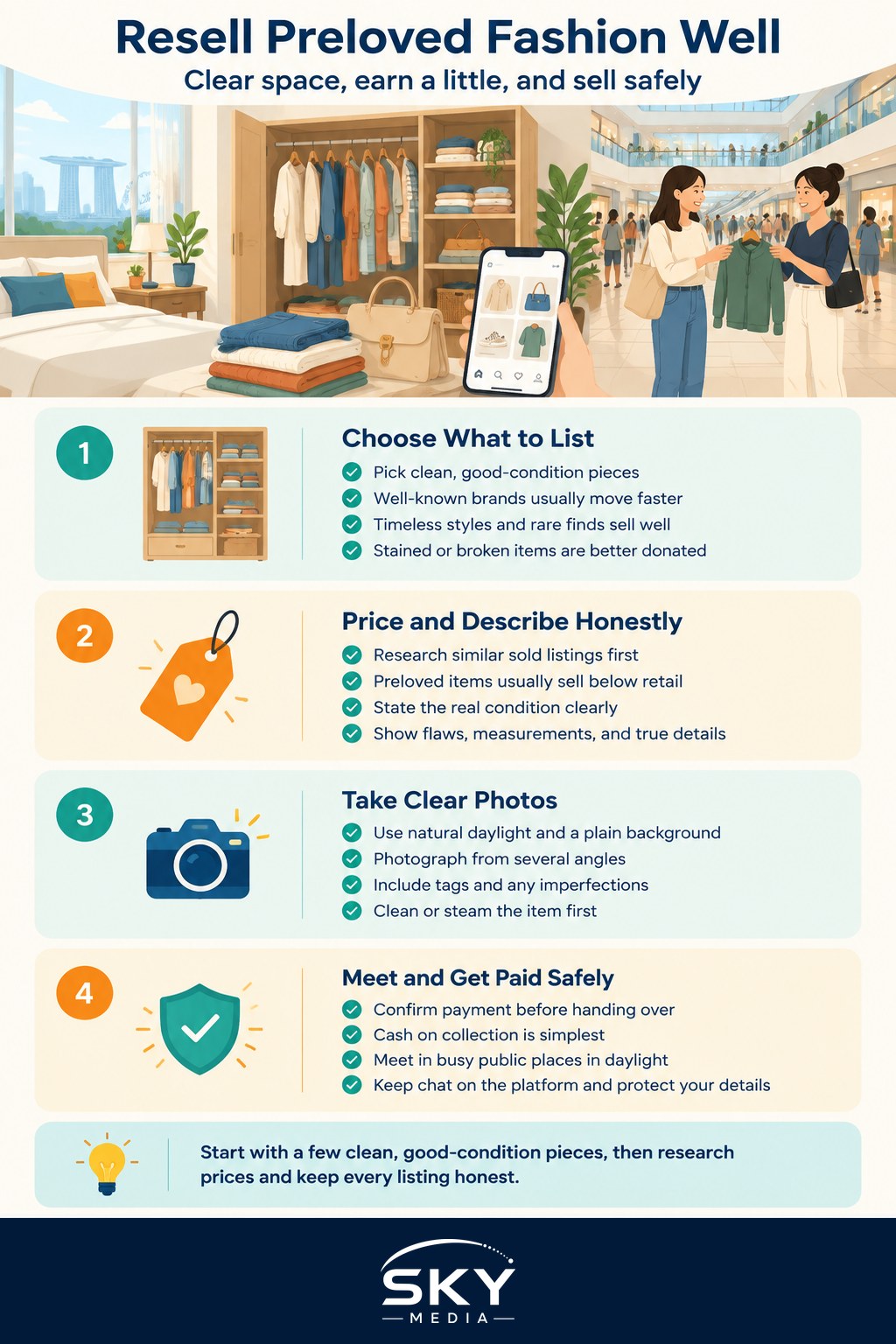
Not everything is worth listing. Start by pulling out pieces that are clean, in good condition, and still wanted by other people. Well-known brands, timeless styles, and items that are hard to find tend to move faster than heavily worn fast fashion. Anything stained, pilled, or broken is usually kinder to donate or recycle than to sell, and our notes on where to donate or sell old clothes cover those options.
Where you sell depends on the item. General resale marketplaces and community apps are great for everyday clothes and casual brands. For designer and luxury pieces, a specialist route often gets a better price and adds a layer of trust, which is where a luxury consignment service comes in. Consignment shops handle the selling and verification for you in exchange for a cut, so weigh the convenience against the fee. Selling it yourself keeps more of the money but means more work. Neither is wrong, so pick what matches your time and patience.
Price It Honestly and Write a Truthful Listing
Good pricing starts with research, not guessing. Search the same or similar items already listed to see the range buyers are actually paying, and remember that a listed price is not always the sold price. Preloved items sell at a fraction of retail, and that is normal, so let go of what you originally paid. If you want a quick sale, price a touch below the crowd. If you are patient, start higher and be ready to negotiate.
Then comes the part that matters most: tell the truth. A trustworthy listing does more for you than any clever wording, because buyers reward honest sellers with smooth deals and good reviews. When you write, include:
- The real condition. State honestly whether it is like new, gently used, or well loved, and describe any flaws plainly.
- Every flaw, shown clearly. Photograph stains, pilling, loose threads, missing buttons, or scuffs up close. Hiding a fault leads to disputes, returns, and bad feedback.
- Accurate measurements. List the actual size and, ideally, flat measurements, since sizing varies between brands. Our guide to taking your measurements helps you do this properly.
- Honest details. Do not claim a piece is a brand it is not, and never present a replica as genuine.
For photos, use natural daylight, a plain background, and several angles including tags and any imperfection. Clean or steam the item first. A neat, well-lit photo of an honestly described piece sells faster than a glamorous shot that oversells.
Stay Safe When You Meet and Get Paid
Most transactions go fine, but a little caution protects you from the small number that do not. Scams on resale platforms usually follow familiar patterns, so knowing them keeps you calm and in control.
- Verify payment before you hand anything over. For meetups, cash on collection is simplest. If paying digitally, confirm the money has actually landed in your account, not just that a buyer showed you a screenshot, which can be faked.
- Be wary of overpayment and off-platform tricks. Anyone who offers to pay more than you asked, pushes you to a strange payment link, or wants to move the chat off the platform is a red flag. Genuine buyers do not need any of that.
- Meet in safe, public places. Choose a busy spot such as an MRT station or a mall in daylight, and bring someone along if a deal is large. Trust your instincts and walk away if something feels off.
- Never share sensitive details. No buyer needs your bank login, one-time passwords, or identity documents to pay you.
- Keep the conversation in writing. Keeping the chat on the platform gives you a record if a dispute arises.
If a deal feels rushed or too good, slow down. A real buyer will wait for you to be comfortable.
Make It a Habit
Reselling works best as a rhythm rather than a one-off clear-out. Every time you declutter your wardrobe, set aside a small resale pile and list a few pieces while they are still in demand. Clothes lose value the longer they sit unworn, so selling sooner usually means a better price and a nicer item for the buyer.
A quick word on sustainability, kept honest. Reselling genuinely helps a garment stay in use for longer, which is a real, practical good. It does not cancel out the impact of buying new, so treat it as a sensible habit rather than a badge. The most useful mindset is simply to buy less, choose better, and pass on what you no longer wear.
Final Thoughts
Reselling preloved fashion rewards patience and honesty more than anything else. Choose the right pieces, price them with a quick bit of research, write a listing that tells the whole truth including the flaws, and protect yourself with safe meetups and verified payment. Do that and you will clear space, earn a little, and send your old favourites on to someone who will love them next. Start with just a few items this week, and the habit will pay off every season.
Frequently Asked Questions
How do I know what price to set for my preloved clothes? Search for the same or similar items already listed to see the range buyers pay, and remember a listed price is not always the sold price. Preloved pieces sell for a fraction of retail. Price slightly below the crowd for a quick sale, or higher if you can wait.
Is it better to sell on a marketplace or through consignment? It depends on your time and the item. Marketplaces keep more of the money with you but involve more work, while consignment handles selling and verification for a cut. Designer pieces often fetch better prices and trust through a specialist route.
Which clothes should I donate rather than try to sell? Anything stained, pilled or broken is usually kinder to donate or recycle than to sell. Sell pieces that are clean, in good condition and wanted by others, such as timeless styles, well-known brands or items that are hard to find.
How do I spot a scam when selling clothes online? Be wary of buyers who overpay, push a strange payment link, or want to move the chat off the platform. Confirm the money has actually landed in your account instead of trusting a screenshot, and never share bank logins or one-time passwords.
What photos help preloved clothes sell faster? Use natural daylight, a plain background and several angles, including tags and any flaws up close. Clean or steam the item first. A neat, well-lit photo of an honestly described piece sells faster than a glamorous shot that oversells.
Further reading: How to Shop Vintage and Archive Fashion