
There is nothing quite like an aerial shot to make a video feel cinematic. A slow rise over the treetops or a smooth glide along the coast can turn an ordinary project into something memorable. Shooting drone video in Singapore is genuinely rewarding, but it comes with real responsibilities. This is not like other filming, because you are operating an aircraft in one of the most tightly managed airspaces in the region. Get the rules right first, then focus on the craft. This guide covers both, starting with the part you absolutely cannot skip.
Know and Follow the Rules First
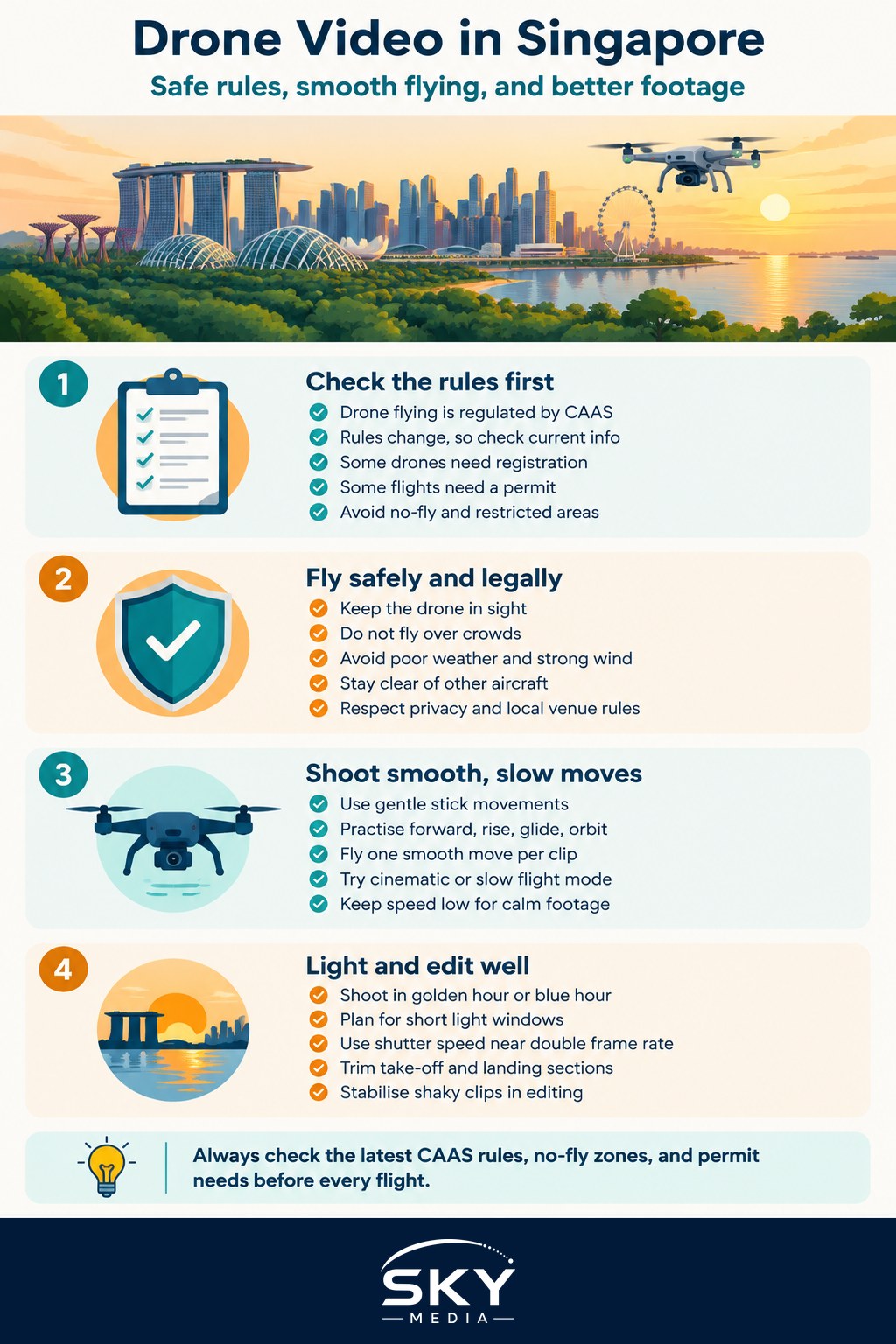
Before anything else, understand that flying a drone in Singapore is regulated by the Civil Aviation Authority of Singapore, known as CAAS. The rules are strict, they are enforced, and they change over time, so you must check the current requirements yourself before every project rather than relying on old advice from a forum or a video.
In general terms, and always subject to the latest official information, you should be aware of the following. Drones above a certain weight need to be registered, and certain flights require a permit. There are rules on how high and how far you may fly, and requirements to keep the drone within your line of sight. Large parts of Singapore are no-fly zones, including areas near airports, military sites, and other protected locations. Flying in a prohibited or restricted area, even by accident, can carry serious penalties.
So the practical steps are simple. Check the current CAAS regulations and any registration or permit requirements before you fly. Use the official channels and any recognised airspace map to confirm that your intended location is actually allowed. If a permit is needed for your flight, obtain it in advance. And if you are ever unsure whether a spot is legal, do not fly there. There is no shot worth the risk.
Safety sits alongside the law. Never fly over crowds, never fly where you could endanger people or property, and never fly in poor weather or strong wind. Keep well clear of other aircraft. Singapore’s tropical weather can turn quickly, so watch the sky and land early if conditions change. Respect people’s privacy too, and follow NParks and venue rules if you are near parks or private property. If you want a fuller overview of the local picture, our companion article on drone photography and the rules in Singapore is a good starting point, though it too should be read as general guidance rather than the final word. Always confirm with the current official sources.
Fly Smoothly for Cinematic Footage
Once you are flying legally and safely, the secret to good drone video is slowness and smoothness. Beginners tend to fly too fast and jerk the sticks, which gives shaky, frantic footage. The best aerial shots feel calm and deliberate, as if the camera is gliding on rails.
Make gentle, gradual stick movements. Ease into a move, hold it steady, and ease out. Practise a few core shots until they feel natural. A simple forward push over a landscape, a slow rise to reveal a scene, a sideways glide past a subject, and a slow orbit around a fixed point will already give you a strong variety of footage. Fly one smooth move per clip rather than trying to do everything at once.
Use your drone’s cinematic or slow flight mode if it has one, as this softens the controls and reduces sudden movements. Keep your speed low and let the scenery do the work. Because your battery and legal flying time are limited, plan each shot before you take off so you are not hovering aimlessly and wasting power.
Composition still matters up here. The rule of thirds and composition basics apply just as much from the air, so place horizons, coastlines, and roads thoughtfully within the frame. Look for leading lines like rivers and paths, and for patterns that only reveal themselves from above.
Light and Settings
Timing your flight for good light transforms drone footage. The harsh overhead sun near the equator flattens everything and creates hard shadows, while the soft glow of golden hour and blue hour gives depth, warmth, and long shadows that make a scene sing. These windows are short in Singapore, so arrive early and be set up before the light peaks, always keeping within legal flying times and conditions.
On the camera side, aim for smooth, natural motion by keeping your shutter speed roughly double your frame rate, which usually means fitting neutral density filters in bright daylight. Shoot in a flat colour profile if your drone offers one, as it gives you more room to grade later. Keep your movements slow enough that the footage stabilises cleanly.
Bring It Together in the Edit
Great drone clips shine when they are cut well. Trim the wobbly take-off and landing sections and keep only the smoothest middle of each move. If a clip still has minor shake, learning how to stabilise shaky footage in your editor can rescue it. String your shots together with an eye for pacing, letting each aerial view breathe rather than cutting too quickly.
Fly Responsibly and Keep Learning
Drone video is one of the most exciting skills you can pick up, but the golden rule never changes: rules and safety come first, creativity second. Check the current CAAS regulations before every flight, respect no-fly zones and permits, and never fly where it is prohibited or unsafe. With that foundation in place, practise your slow, smooth moves and study the light, and your aerial footage will keep getting better. Fly legally, fly safely, and enjoy the view.
Frequently Asked Questions
Do I need a permit to fly a drone for a paid video job? It can depend on the flight and the drone, so check before you accept the job. Commercial or event flights may need approval beyond ordinary hobby rules. Confirm the current requirements with CAAS and get any permit well in advance.
How can I check whether a location is a no-fly zone? Use CAAS’s official information and a recognised airspace map to confirm the spot before you travel. Airports, military sites and other protected areas are restricted. If you are unsure, treat the location as off limits and choose another.
Is it okay to fly a drone over a park or a crowd? Never over crowds, and parks have their own rules to respect. Check NParks and venue requirements first, keep the drone away from people and property, and follow the current CAAS regulations. If it feels risky, skip the shot.
Why is my drone footage shaky even with a gimbal? Fast or sudden stick movements are the usual cause, plus wind. Use the drone’s cinematic or slow mode, ease into and out of each move, and land early if conditions are gusty. Minor shake can be stabilised in editing.
Do I need ND filters for drone video in Singapore’s bright sun? They are strongly advised for smooth, natural-looking motion in bright daylight. Without them, you may need a very fast shutter speed that makes movement look choppy. Choose a strength that lets your shutter stay close to double your frame rate.
Further reading: Choosing a Drone for Beginners