
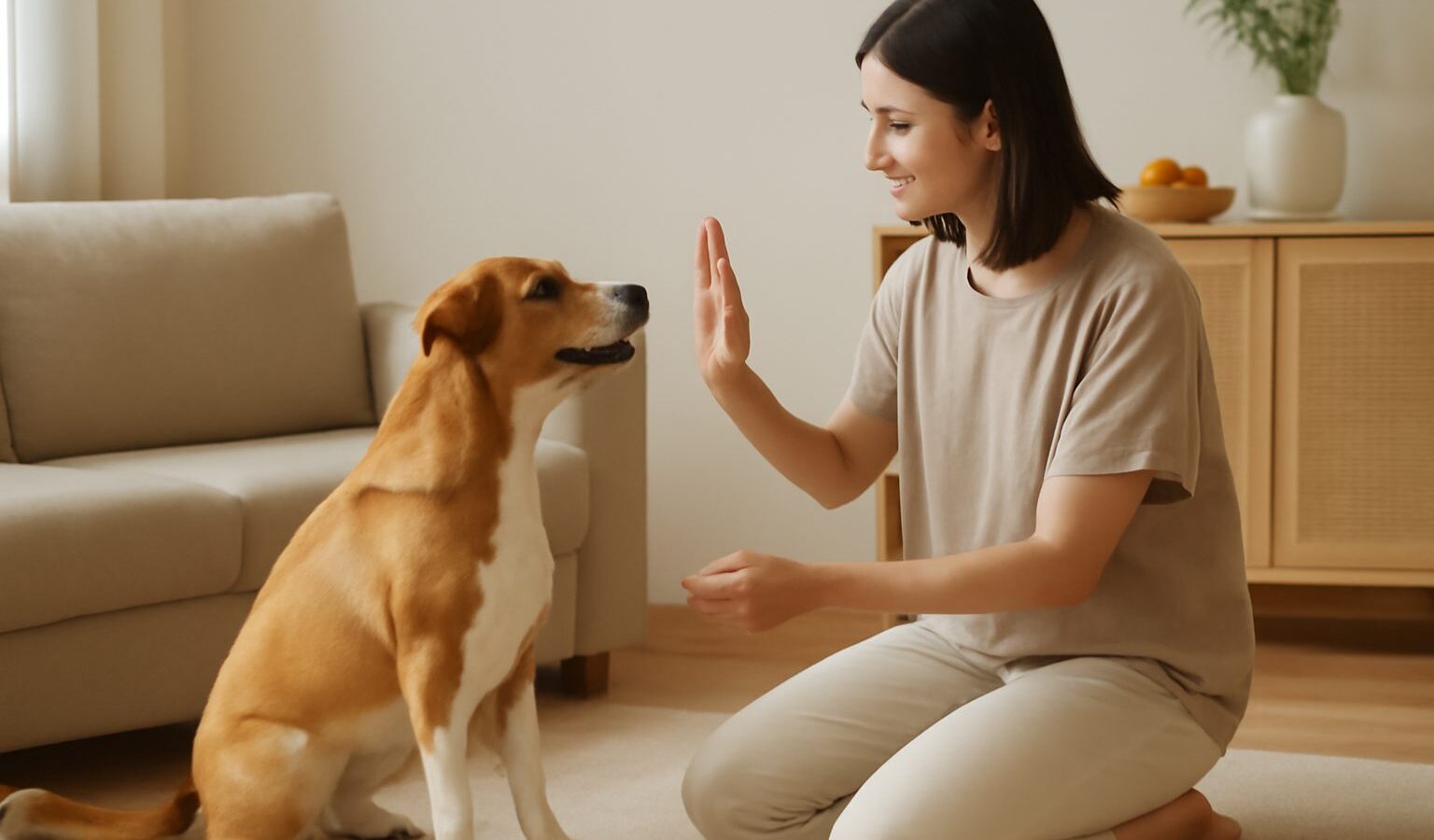
A bouncing, happy dog leaping up to say hello can be endearing, until it knocks over a child, muddies a visitor’s clothes or startles a neighbour in the lift. Dealing with dog jumping up is one of the most common requests among owners in Singapore, and the good news is that it is very fixable with patience and kind, positive methods. There is no need for shouting, knees to the chest, or any harsh correction. Instead, you teach your dog that keeping four paws on the floor is what earns the attention it craves.
A quick local reminder first. In close-quarters HDB and condo living, shared corridors and lifts mean a jumping dog can easily bother others, so a calm greeting is part of being a considerate owner. All dogs must be licensed and microchipped, HDB flats allow only approved breeds and generally one dog per flat, and you should check current AVS and HDB rules.
Why Dogs Jump Up
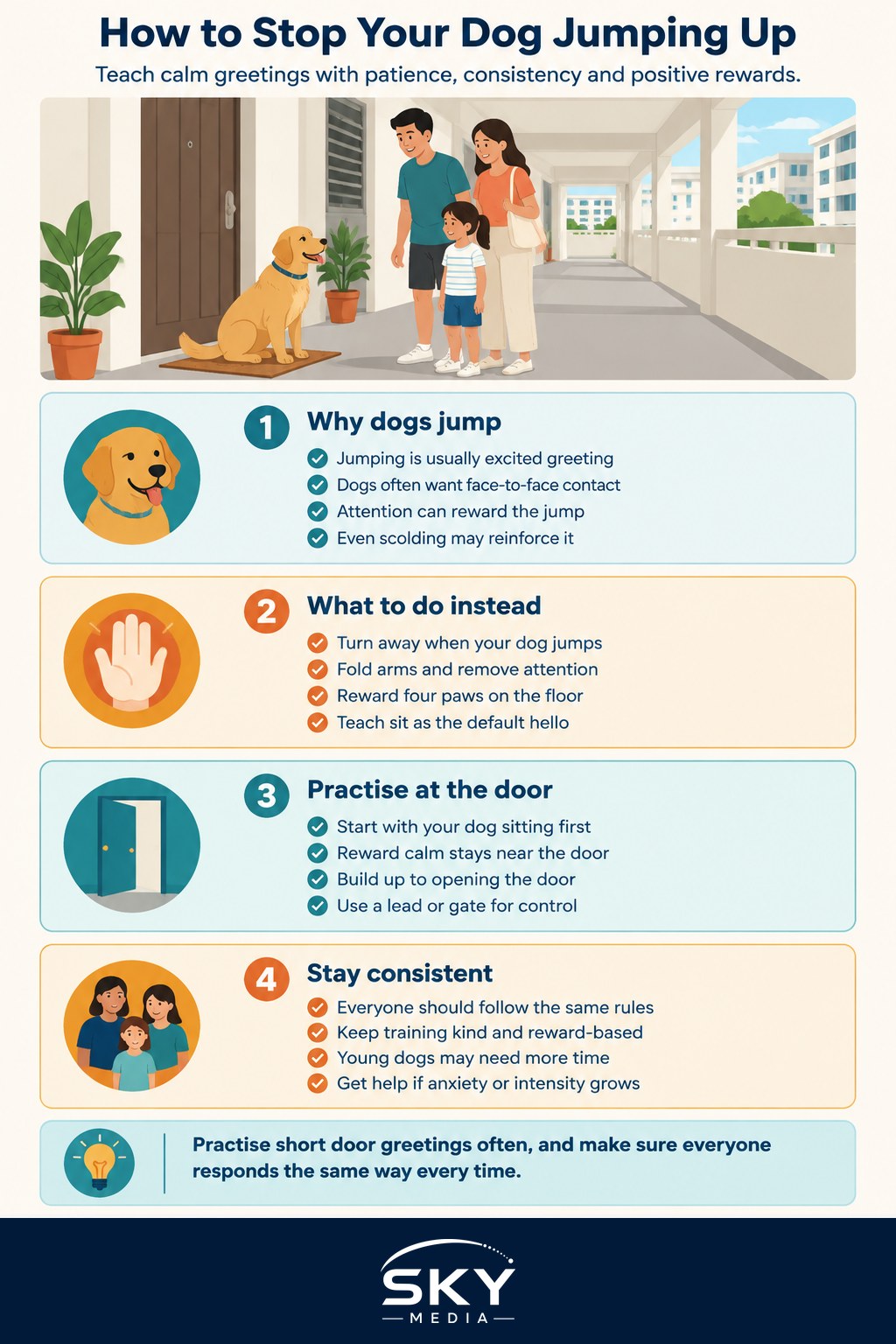
Understanding the “why” makes the fix much easier. Most dogs jump up to greet us, and often to get closer to our faces, which is how dogs naturally say hello to one another. It is usually an excited, friendly behaviour rather than a dominant or naughty one.
The reason it persists is simple: it works. When a dog jumps and we look at it, touch it, talk to it, or even push it away, we have given it attention, which is exactly what it wanted. Even scolding can count as a reward to a sociable dog. So the behaviour gets reinforced without us realising. To stop dog jumping up for good, we flip that equation: jumping makes attention disappear, while calm, grounded behaviour makes attention appear. Learning to read your dog helps too, and our guide to reading your dog’s body language can help you spot the excitement building before the leap.
Positive Methods That Work
The core principle is reward what you want and quietly remove the reward for what you do not. Here is a practical approach you can use at the door and around the home.
- When your dog jumps, turn away, fold your arms, and remove all attention. No eye contact, no talking, no touching. Become boring.
- The instant all four paws are on the floor, calmly praise and reward.
- Teach and reward an alternative behaviour, such as sitting, so your dog has a clear job to do when it wants to say hello. A sitting dog cannot jump.
- Reward generously for keeping paws down, especially in exciting moments like greetings.
Consistency across everyone in the household is essential. If one person allows jumping while others do not, the behaviour will stubbornly persist because it still pays off sometimes. Everyone, including visitors where possible, needs to follow the same rules. This kind of clear, reward-based teaching pairs well with the marker method in our guide to clicker training your dog.
Practising Greetings at the Door
The front door is usually the hardest spot, because arrivals are the most exciting moment of a dog’s day. Practise deliberately rather than only in the heat of a real visit.
Start by asking your dog to sit a little distance from the door. Reach for the handle. If your dog stays sitting, reward. If it breaks the sit and jumps, calmly reset and try again, making the step easier. Build up gradually to opening the door, then to a family member coming in, and eventually to guests. Keeping a lead on for controlled practice can help you manage the situation without any pulling or corrections.
For real-life visits while your dog is still learning, set it up to succeed. You might use a baby gate, keep your dog on a lead, or give it a settled spot to go to. Teaching a reliable “settle” is invaluable here, and our guide to teaching your dog to settle and relax walks you through it. A dog that has had enough exercise and mental stimulation also finds it easier to stay calm, so daily dog walking and exercise genuinely helps.
Staying Patient and Consistent
Some dogs, especially young, bouncy or under-exercised ones, will take longer than others, and that is completely normal. Avoid the temptation to revert to punishment if progress feels slow. Harsh methods can create fear or confusion and often make greetings more fraught, not less. If your dog jumps out of anxiety rather than excitement, or the behaviour is intense and hard to manage, a qualified, reward-based trainer or behaviourist can help you tailor a plan.
Remember that every family member and regular visitor is part of the training. The more consistent everyone is, the faster your dog learns that calm behaviour is what opens the door to cuddles and fuss.
A Caring Wrap-Up
Stopping dog jumping up is really about redirecting a friendly, enthusiastic behaviour into a polite one, using kindness and consistency rather than force. Ignore the jump, reward four paws on the floor, teach a sit as the default greeting, and get everyone in the household on the same page. With patience and practice, especially at that exciting front door, your dog will learn that the calmest way to say hello is also the most rewarding, which makes life easier for you, your guests and your neighbours alike.
Further reading: How to Stop Destructive Dog Chewing