
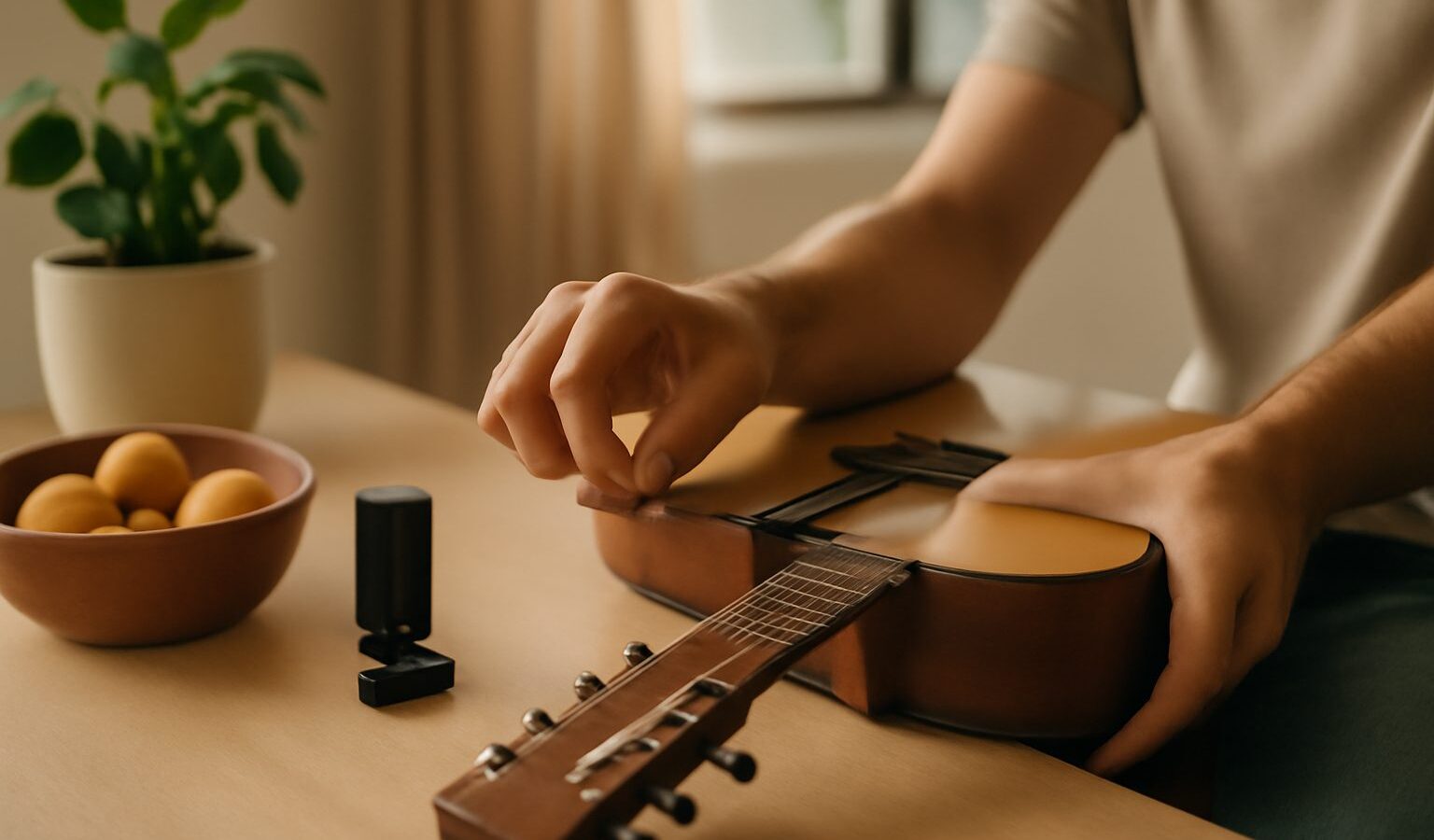
Nothing makes music sound worse than an instrument that is out of tune, and nothing makes practice more rewarding than one that rings true. Whether you play guitar, ukulele, violin, or something else with strings, tuning your instrument in Singapore is a small daily ritual that pays off every single time you play. The best part is that it is a skill anyone can learn. Modern tuners make it almost foolproof, and with a bit of practice you will start to hear when a note is off before you even reach for a device. This guide covers the tools, the methods, and the habits that keep you sounding your best.
Why Tuning Matters and What Affects It
An in-tune instrument is the foundation of everything else. You can practise chords, scales, and songs perfectly, but if the strings are not tuned to the correct pitches, it will always sound wrong, and your ear will slowly get used to the wrong thing. Tuning first also trains your listening, which feeds directly into skills like ear training for musicians and learning to play songs by ear.
Several everyday things knock an instrument out of tune. Temperature and humidity are big ones, and Singapore has plenty of both. When you move from an air-conditioned room to a warm corridor, the wood and strings react and the pitch drifts. New strings stretch and settle over their first few days. Bumping the tuning pegs, playing hard, or simply leaving the instrument overnight can all shift things a little. This is completely normal. It is why musicians check their tuning at the start of every session rather than assuming it stayed put.
Using a Tuner: The Easiest Way to Start
For a beginner, an electronic tuner is your best friend. There are three common kinds:
- Clip-on tuners attach to the headstock and sense the vibration of the instrument. They work well even in a noisy room because they feel the string rather than hear it.
- Tuner apps run on your phone and listen through the microphone. They are free or cheap and perfectly good for quiet home practice.
- Pedal or desktop tuners are common for electric players who plug in.
Whichever you use, the process is the same. Play one string, look at the display, and it will tell you the note it hears and whether you are too low (flat) or too high (sharp). Turn the tuning peg slowly to bring the note to the centre. A gentle tip that saves broken strings: it is safest to tune up to a note rather than down to it. If you have overshot and the string is too high, loosen it below the target, then slowly tune up into place. This keeps the string seated and reduces the chance of snapping.
Take real care here, because strings are under tension and can be sharp. Never wind a string far past its correct pitch, as an over-tightened string can break and whip back. Keep your face a little away from the strings as you tune, especially on instruments with thin, high strings. Turn the peg in small movements and let the tuner guide you.
If you are unsure which note each string should be, that information is easy to find for your specific instrument, and a good teacher can show you in minutes. Speaking of which, working with a music teacher in Singapore early on can save you from picking up bad habits.
Learning to Tune by Ear
Tuners are wonderful, but learning to tune by ear is a skill worth building over time. It deepens your listening and means you are never stuck if your battery dies mid-jam.
The classic method for a string instrument is to tune one string to a fixed reference, then tune the others in relation to it. You play a note on one string and match the same pitch on the neighbouring string, listening carefully. When two notes are slightly out of tune with each other, you hear a wavering, pulsing sound. As you bring them together, that pulsing slows down and then disappears, leaving a smooth, single tone. Chasing that smoothness is the heart of tuning by ear.
Do not worry if this feels impossible at first. Almost nobody gets it straight away, and your ear improves faster than you think. A good approach is to tune with your electronic tuner, then try to hear why each string sounds right. Over weeks and months, your brain starts to recognise the correct pitches on its own. Relative pitch like this is very trainable, and you can read more about how it develops in this guide on developing perfect and relative pitch.
Simple Habits That Keep You in Tune
- Tune at the start of every practice session, before you play a note of anything else.
- Check again after ten or fifteen minutes, since strings settle as you play, especially new ones.
- Retune when you move between very different rooms, like from air-con to outdoors.
- Turn pegs slowly and in small amounts, tuning up into the note.
- Keep your instrument stored somewhere with steady temperature and away from direct sun or damp, which helps it hold tune.
Tuning is not a chore, it is the moment your instrument gets ready to sing. Spend a minute or two on it every time you play, protect your ears and fingers by tuning gently, and you will build both a better sound and a sharper musical ear. Once tuning becomes second nature, you can put all your energy into the far more enjoyable business of actually making music.