
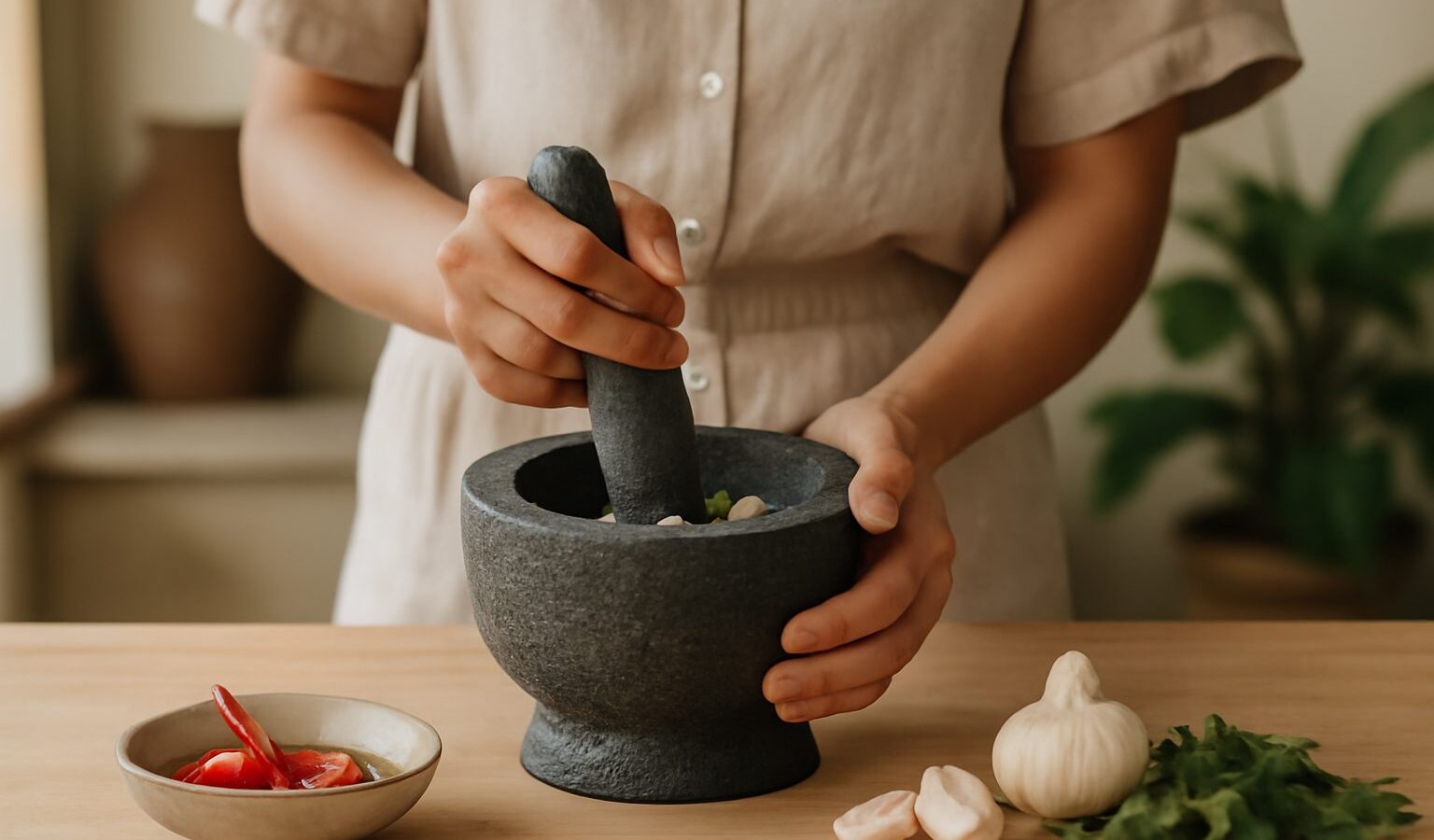
There is a reason so many Singaporean kitchens still keep a heavy stone bowl within arm’s reach of the stove. A mortar and pestle, or batu lesung as it is known locally, coaxes flavour out of ingredients in a way no machine can quite match. When you crush garlic, chilli and shallots by hand, you tear the cells rather than slice them cleanly, releasing oils and aromas that build the backbone of a good rempah. If you have only ever used a blender, learning to use a mortar and pestle properly will change the way your sambal, curry pastes and marinades taste.
This guide walks you through choosing a mortar, seasoning a brand new granite one, the actual pounding technique, and how to keep it in good condition for years. None of it is difficult. It simply rewards a little patience and a willingness to get your hands dirty.
Choosing and Seasoning a New Mortar
Most kitchens in this region reach for a granite mortar and pestle because it is heavy, rough enough to grip ingredients, and tough enough to handle hard spices. Thai granite sets are widely available and much loved for exactly this reason. You will also see smooth ceramic or marble versions, but these are gentler and better suited to soft herbs and small jobs rather than a full chilli paste. Weight is your friend here. A heavy mortar sits still on the counter and does much of the work for you.
A brand new granite mortar needs to be seasoned before you cook with it. Fresh stone sheds fine grit and dust, and you do not want that ending up in your food. Start by rinsing it under running water and scrubbing the inside with a stiff brush, no soap. Then season it by pounding a handful of dry, cheap ingredients you can throw away afterwards. A common method is to grind uncooked rice into a rough powder, tip it out, and repeat two or three times. You will notice the rice turning grey at first as it picks up loose grit. Keep going until the ground rice comes out clean and white.
After the rice, many cooks do a final round with a rough paste of garlic, chilli and a little salt, pounding it well and then discarding it. This helps settle any last dust and starts building the character of the stone. Rinse thoroughly and your mortar is ready. This seasoning step is worth doing properly, because it protects both the flavour of your food and your peace of mind.
The Pounding Technique
The single biggest mistake beginners make is trying to smash ingredients with brute force. This sends chilli and garlic flying and tires your arm within a minute. Good pounding is more of a controlled press and grind than a violent bash.
Start with the harder and drier ingredients first, such as lemongrass, galangal, dried chilli or whole spices, because they take the most work to break down. Add softer items like shallots, garlic and fresh chilli later. A pinch of coarse salt is a genuinely useful trick. The salt grains act as an abrasive that grips slippery ingredients and speeds up the whole process.
Hold the pestle comfortably and use a firm downward tap to crack the ingredient, then follow through by pressing and rotating the pestle against the side and base of the bowl. Think tap, then grind, then scrape the contents back into the centre with a spoon and repeat. Cup your free hand over the top of the mortar to stop pieces jumping out, keeping your fingers well clear of the striking zone. Work in small batches rather than overloading the bowl. You are aiming to build a paste gradually, and rushing only makes more mess.
Take your time and you will feel the texture change under the pestle, moving from chunky to coarse to a fragrant, glistening paste. That transformation is exactly what you are after, and it is why hand-pounded rempah smells so much livelier than anything from a machine.
Mortar and Pestle Versus a Blender
Plenty of home cooks own both a mortar and pestle and a food processor, and each has its place. The table below sets them side by side so you can decide which to reach for.
| Feature | Mortar and pestle | Blender or food processor |
|---|---|---|
| Flavour release | Excellent, crushes and bruises cells | Good, but tends to slice cleanly |
| Best for | Rempah, sambal, small spice batches | Large volumes, smooth purees |
| Texture control | Precise, stop whenever you like | Can over-process quickly |
| Effort and speed | Slower, more physical | Fast, hands-off |
| Cleaning | Rinse and brush, no soap for stone | More parts to wash |
Neither is strictly better. For a quick weeknight blend of a large curry base, a machine wins on speed. For a small, punchy sambal or a fragrant spice paste where flavour is everything, the stone bowl earns its keep.
Cleaning and Long-Term Care
Caring for a granite mortar is refreshingly simple, but it does have one firm rule. Do not use soap on porous stone. Granite can absorb detergent, and you may find your next batch of paste tasting faintly of washing up liquid. Instead, rinse the mortar under warm water straight after use and scrub it with a stiff brush or a rough handful of coarse salt to lift out stubborn residue.
For strong smells such as garlic or dried shrimp, grind a little coarse salt with a squeeze of lime or lemon, then rinse it away. This natural scrub freshens the stone without soap. Once clean, always dry the mortar fully before storing it, ideally upside down or in an airy spot, so no moisture lingers in the stone.
A few sensible habits will keep your mortar sound for decades. Avoid dropping the pestle from a height or striking the rim, as chips can form where the stone is thinnest and a loose fragment is never welcome in your food. If you ever spot a chip inside the bowl, remove any loose grit before using it again. Store the pestle inside the mortar or beside it so the two stay together, and keep the set on a stable surface where it will not get knocked.
Treated well, a good granite mortar and pestle becomes a lifelong kitchen companion. It asks for nothing more than a rinse and a brush, and in return it gives you the truest, freshest flavours your cooking can offer. Once you feel the difference in a hand-pounded rempah, you may find yourself reaching for the stone far more often than the plug.
Explore more
How to Make Sambal Chilli from Scratch
How to Make Satay at Home
How to Make Nasi Lemak at Home
How to Make Stock and Broth from Scratch