
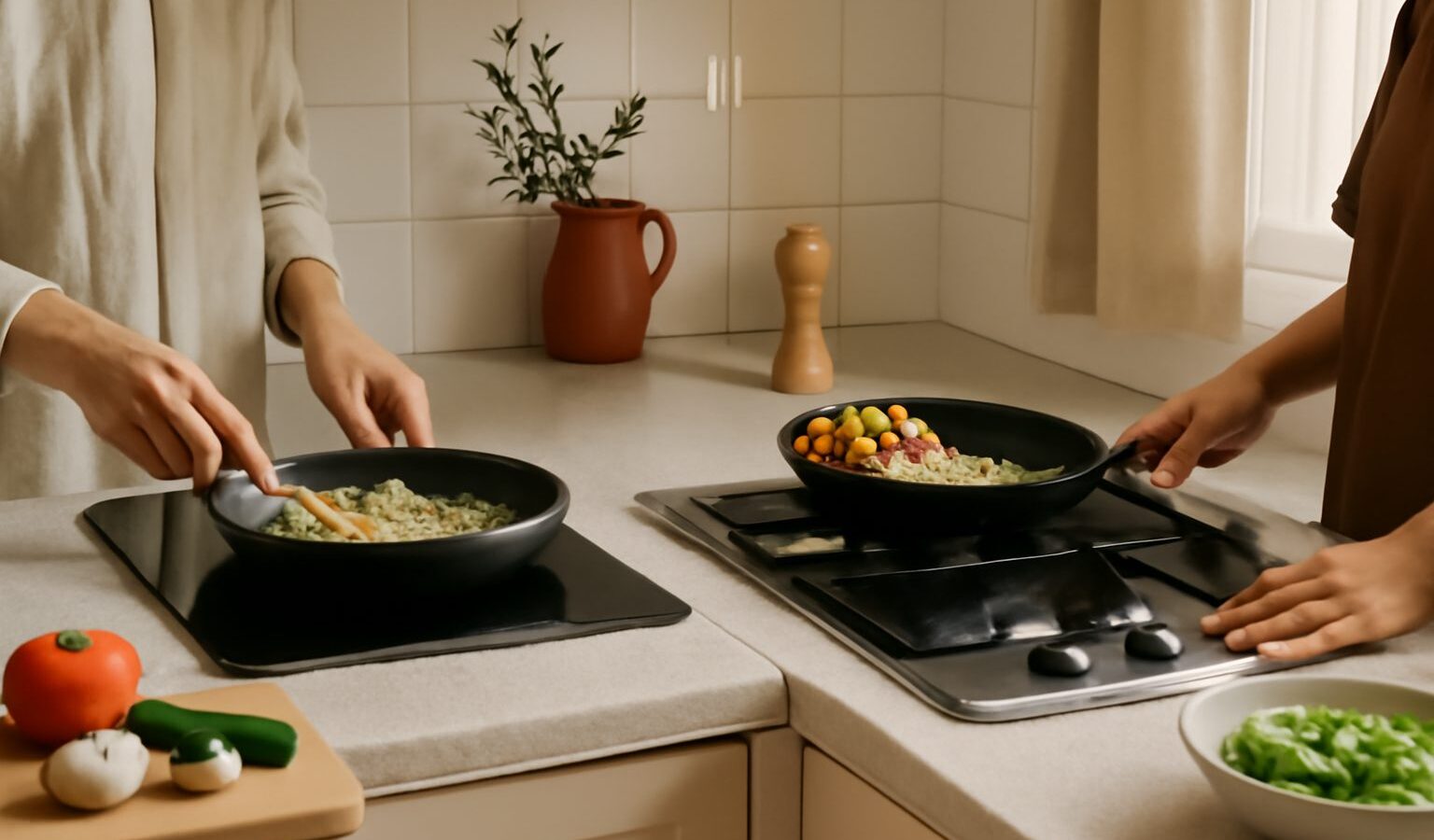
The induction vs gas debate has no single winner, only trade-offs that matter differently depending on your flat, your cookware and how you cook. Gas gives you a visible flame and instant familiarity; induction gives you speed, safety and a surface you can wipe clean in seconds. This guide lays out the honest pros and cons so you can decide with your own kitchen in mind.
How each one works
A gas hob burns town gas or LPG under your pan, heating the cookware through an open flame. An induction cooktop uses an electromagnetic field to heat the pan itself directly, so the glass surface stays relatively cool except where the pan sits. That basic difference explains almost every advantage and drawback that follows.
Speed and control
Induction is genuinely fast. Because it heats the pan directly with very little wasted energy, it can boil water noticeably quicker than gas and responds instantly when you change the setting. Gas also responds instantly and gives cooks a visible flame to judge by, which many home cooks and anyone who does a lot of wok work strongly prefer. For high heat stir frying with a round bottomed wok, a traditional gas burner still has an edge unless you buy an induction hob designed for wok cooking.
Safety in a home
Safety is where induction pulls ahead. There is no open flame, no combustion, and the surface only heats where a compatible pan sits, so a stray tea towel or a child’s hand is far less likely to be burned. Many induction hobs switch off automatically when the pan is removed or after a period of inactivity. Gas carries the familiar risks of a live flame and, if a burner is left unlit, gas leakage. Good ventilation and a flame failure device reduce that risk, but induction remains the safer default for families with young children or elderly members.
Cookware compatibility
This is the catch with induction. It only works with ferromagnetic cookware, meaning pans a magnet sticks to, such as cast iron and most stainless steel. Pure aluminium, copper and many older or specialist pans will not work unless they have a magnetic base. Gas is indifferent; it heats almost any pot or pan, including your favourite round bottomed wok. Before switching to induction, test your existing pans with a magnet. If half your collection fails, budget for replacements when comparing the true cost.
The HDB and BTO reality
Where you live shapes the decision more than anything. Many newer BTO flats are built without a town gas supply, effectively steering residents towards induction or electric cooking. Older estates commonly have piped town gas, while some homes rely on LPG cylinders. If your flat has no gas point, induction is the practical choice and avoids the hassle and recurring delivery of cylinders. If you already have a reliable town gas supply and love cooking with a flame, gas remains perfectly sensible. Always check what your unit actually provides before you buy.
Compare the trade-offs
| Factor | Induction | Gas |
|---|---|---|
| Heat up speed | Very fast, boils quickly | Fast, instant flame |
| Safety | Cool surface, auto shut off | Open flame, leak risk |
| Cookware | Magnetic pans only | Almost any cookware |
| Cleaning | Wipe flat glass easily | Grates and burners to scrub |
| Wok cooking | Needs a dedicated hob | Traditional strength |
| Supply needed | Power socket and circuit | Town gas or LPG |
Running cost and efficiency
Induction transfers most of its energy straight into the pan, so very little heat is wasted and the kitchen stays cooler, which also eases the load on your air conditioning or fan. Gas loses more heat to the surrounding air. Which is cheaper to run depends on the relative prices of electricity and gas at the time, and both change. As a rule, induction is the more efficient converter of energy, though gas tariffs can be competitive. Look at the energy label on induction models and weigh the one off cost of new cookware into the sum. Over many years the differences are usually smaller than people assume.
Installation and the kitchen itself
Induction needs a suitable power supply; higher powered hobs may require a dedicated electrical circuit, so check your consumer unit and consult a licensed electrician. It sits flush and suits a clean, modern worktop. Gas requires a certified installer to connect it safely to your town gas or cylinder supply, plus adequate ventilation. Both should be paired with a proper hood to clear steam, grease and, in the case of gas, combustion by products. Whichever you choose, plan the hob and hood together rather than as an afterthought.
Cleaning and daily living
An induction cooktop is a flat sheet of glass, so spills wipe away once cool and there are no grates to dismantle. Take care not to drag heavy pans, which can scratch it, and clean sugary spills promptly. Gas hobs need their grates, caps and burners removed and scrubbed, and grease finds every crevice. If low effort cleaning appeals, induction wins comfortably here.
So which should you choose
Choose induction if your flat lacks gas, if safety and easy cleaning are priorities, or if you want the fastest everyday boil and a cooler kitchen, and you are willing to use magnetic cookware. Choose gas if you already have town gas, love cooking with a visible flame, do a lot of high heat wok work, or want to keep a mixed collection of pots and pans. Neither is wrong. The right answer in the induction vs gas question is simply the one that fits your supply, your cookware and how you like to cook.
Explore more: Kitchen hob and hood guide · Energy efficient appliances · Lowering your electricity bill at home