
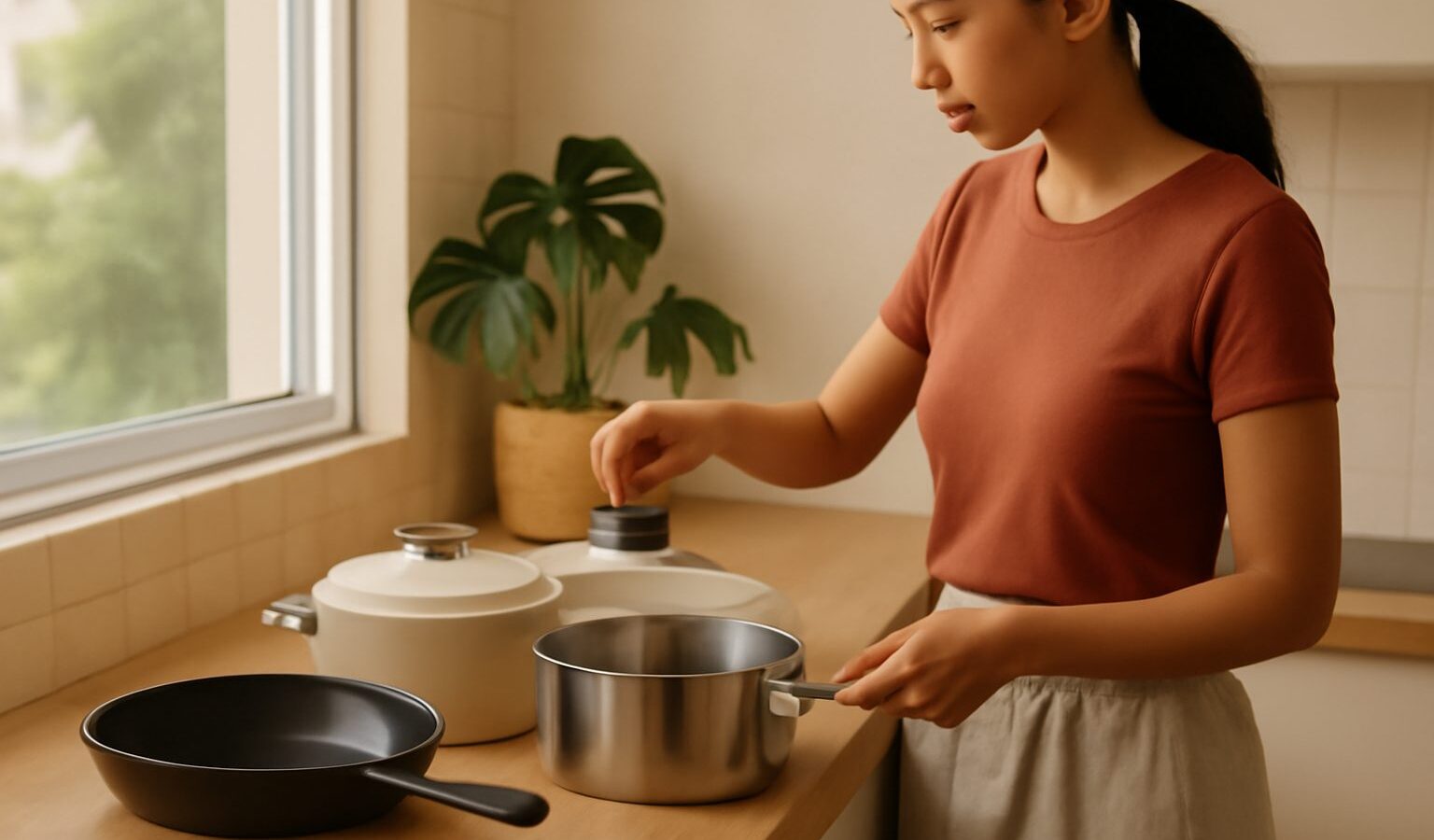
Walk into any department store or homeware shop and the cookware aisle can be overwhelming: shiny stainless sets, pastel ceramic pans, heavy black cast iron and endless non-stick options. The best cookware in Singapore is not one brand or one material. It is the set that matches your hob, your cooking habits and the realities of a compact, humid kitchen.
This guide compares the four main materials, non-stick, stainless steel, ceramic-coated and cast iron, and explains how each behaves on induction and gas hobs. It deliberately skips woks and knives, which deserve their own deep dives, and focuses on everyday pots and pans.
Start With Your Hob: Induction or Gas
Your hob decides more than you might think.
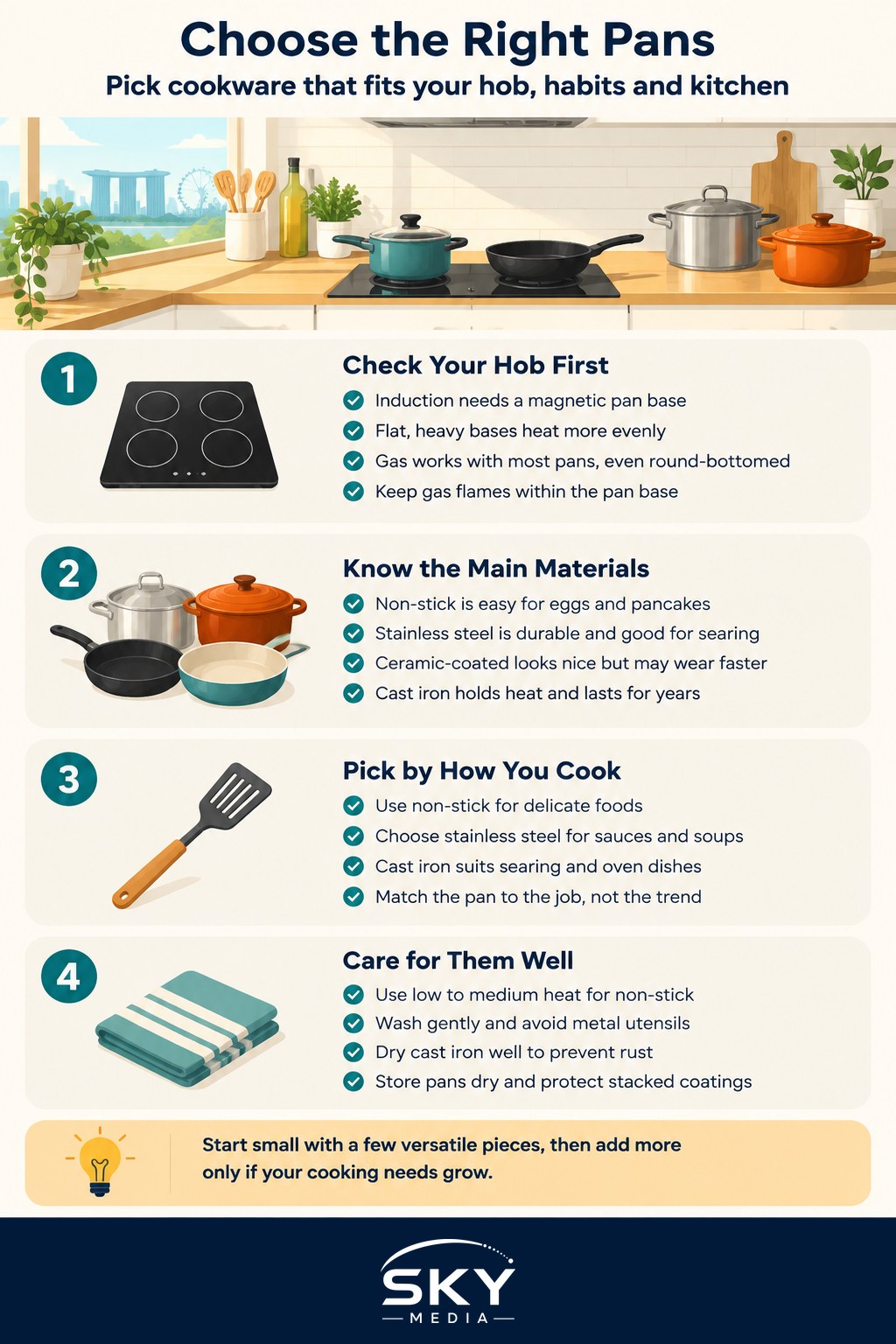
Induction hobs are now common in new HDB flats, condos and renovations because they are easy to clean and heat quickly. They work by creating a magnetic field, so the pan base must be magnetic. A simple test: if a fridge magnet sticks firmly to the bottom of the pan, it should work on induction. Many products are also marked with an induction symbol, often a coil icon. Pure aluminium, copper, glass and many older pans will not work unless they have a magnetic plate bonded to the base.
Induction also rewards flat, heavy bases that sit fully in contact with the glass. Warped or thin bases can heat unevenly or fail to register.
Gas hobs are more forgiving. Almost any pan works, including round-bottomed ones and lightweight aluminium. The main thing to watch is flame size: keep the flame within the base of the pan, since flames licking up the sides waste heat and can damage handles and coatings.
If you might switch from gas to induction in a future renovation, buying induction-compatible pans now saves you replacing them later.
The Four Main Materials Compared
Here is a quick overview before we look at each one in detail.
| Material | Induction friendly? | Strengths | Trade-offs |
|---|---|---|---|
| Non-stick (PTFE-type coating) | Only if it has a magnetic base | Easy for eggs, fish, pancakes; light | Coating wears over time; avoid very high heat |
| Stainless steel (clad or with encapsulated base) | Usually yes | Durable, good for searing and sauces | Food can stick until you learn heat control |
| Ceramic-coated | Only if it has a magnetic base | Slick when new; no PTFE | Non-stick quality often fades faster |
| Cast iron (bare or enamelled) | Yes | Excellent heat retention; lasts decades | Heavy; bare iron needs rust care in humidity |
Non-Stick: The Everyday Workhorse
Non-stick pans are the most popular choice for home cooks, and for good reason. Fried eggs slide out, omelettes fold neatly, and cleaning takes seconds.
To get the most out of them:
- Use low to medium heat. Manufacturers generally advise against heating an empty non-stick pan on high, since it can damage the coating. Follow the instructions that come with your pan.
- Use wooden or silicone utensils, not metal, to avoid scratches.
- Hand wash where possible, even if the label says dishwasher safe, since gentle cleaning extends coating life.
- Replace when the surface is badly scratched or peeling. Treat non-stick as a semi-consumable item rather than a lifetime buy.
A good strategy is to own one or two quality non-stick frying pans for delicate foods, and use other materials for everything else.
Stainless Steel: Built to Last
Stainless steel pots and pans are durable, do not react with acidic foods like tomato or tamarind, and can handle high heat. They are ideal for searing meat, making sauces, boiling noodles and simmering soups.
Look for:
- Clad construction, where layers of stainless steel sandwich an aluminium or copper core for even heating, or a thick encapsulated base on pots.
- Riveted, sturdy handles that stay cooler and will not loosen.
- Tight-fitting lids, useful for steaming and braising.
The learning curve is about sticking. Preheat the pan properly, add oil, and let proteins release naturally before flipping. Stuck-on residue usually lifts with a soak and a non-scratch scrub. Stainless steel stockpots and saucepans are often the most cost-effective long-term buy in a kitchen.
Ceramic-Coated: Attractive but Check the Details
Ceramic-coated pans use a mineral-based, sol-gel coating rather than traditional PTFE non-stick. They are often marketed for their colours and their “PTFE-free” label.
Points to consider:
- Non-stick performance can fade with regular use, sometimes sooner than traditional non-stick.
- Moderate heat helps, as does avoiding oil sprays, which can build up residue on the surface.
- Base matters for induction. Many ceramic pans are aluminium bodies, so check for a magnetic base.
Ceramic-coated cookware can be a nice option if you prefer to avoid PTFE, as long as you accept that it may need replacing.
Cast Iron: Heavy, Hardy and Humidity-Sensitive
Cast iron holds heat beautifully, making it excellent for searing, shallow frying, baking and dishes that go from hob to oven. There are two kinds:
- Bare cast iron needs “seasoning”, a layer of baked-on oil that builds up a natural non-stick surface.
- Enamelled cast iron has a glass-like coating, needs no seasoning and is great for stews and braises.
Singapore’s humidity is the main challenge for bare cast iron. After washing, dry it thoroughly, warm it briefly on the hob to drive off moisture, then wipe on a very thin layer of oil. Store it in a dry, ventilated spot rather than a closed cabinet near the sink. Enamelled versions avoid most rust worries but can chip if dropped, so handle with care. Both are heavy, so think about who in the household will be lifting them, and whether your hob glass can handle a heavy pan being placed down carefully.
Building a Practical Starter Set
Rather than buying a large boxed set, many cooks are happier assembling a few versatile pieces:
- A non-stick frying pan for eggs, fish and pancakes.
- A stainless steel saucepan with lid for sauces, rice and small soups.
- A stainless steel stockpot for soups, noodles and bone broth.
- A stainless or cast iron sauté pan or skillet for searing and shallow frying.
- Optional enamelled casserole for slow braises like curries and stews.
Add a wok separately if you stir-fry often. For quick dinners that make the most of one good pan, see our easy one-pan meals for busy weeknights.
Care, Storage and Safety Tips
- Match pan size to burner or induction zone for efficient heating.
- Use pan protectors or cloths between stacked pans to protect coatings.
- Let hot pans cool before washing, since a sudden temperature shock can warp metal.
- Clean thoroughly and dry to prevent food residue and rust. Our guide to kitchen cleaning and food safety basics covers daily habits.
- Keep handles turned inward on the hob, especially with children around.
Whichever materials you choose, buy for how you actually cook. A few well-chosen pans, cared for properly, will serve a Singapore kitchen far better than a cupboard full of pieces you never use.
Frequently Asked Questions
How can I tell if my old pans will work on an induction hob? Stick a fridge magnet to the bottom of the pan. If it holds firmly, the pan should work. Pure aluminium, copper and glass pans will not work unless they have a magnetic plate bonded to the base. Many induction-ready pans also carry a coil symbol.
How do I stop bare cast iron from rusting in humid weather? Dry it thoroughly after washing, warm it briefly on the hob to drive off moisture, then wipe on a very thin layer of oil. Store it in a dry, ventilated spot rather than a closed cabinet near the sink. Enamelled versions avoid most rust worries.
How often should non-stick pans be replaced? Treat them as semi-consumable rather than a lifetime buy. Replace a pan when its surface is badly scratched or peeling. You can extend its life with low to medium heat, wooden or silicone utensils and gentle hand washing, even if the label says dishwasher safe.
Is it worth buying a boxed cookware set? Often not. Many cooks are happier assembling a few versatile pieces, such as a non-stick frying pan, a stainless saucepan with lid, a stainless stockpot and a skillet. Buy for how you actually cook rather than filling a cupboard with pieces you never use.
Why does food stick to my stainless steel pan? Usually because the pan was not preheated properly or the heat was off. Preheat, add oil, and let proteins release naturally before flipping. Stuck-on residue normally lifts with a soak and a non-scratch scrub, so there is no need to scrape hard.
Further reading: How to Choose a Dish Drying Rack for a Small Singapore Kitchen · Choosing a Kitchen Scale · Choosing an Electric Steamboat or Hot Pot