

Many older couples in Singapore stay close, affectionate and physically intimate well into their seventies and beyond. Yet sexual health for the elderly is rarely discussed at the kopitiam, in the family chat group or even at the doctor’s consultation room. That silence can leave people feeling that something is wrong with them when they are simply going through normal changes. This guide looks at physical intimacy for long-term and newer couples alike: what tends to change with age, how health conditions and medicines play a part, how to talk about it, and where to get discreet, professional help.
This is general information, not medical advice. For anything specific to your body, your medicines or your relationship, speak to your doctor, a polyclinic or a trained counsellor.
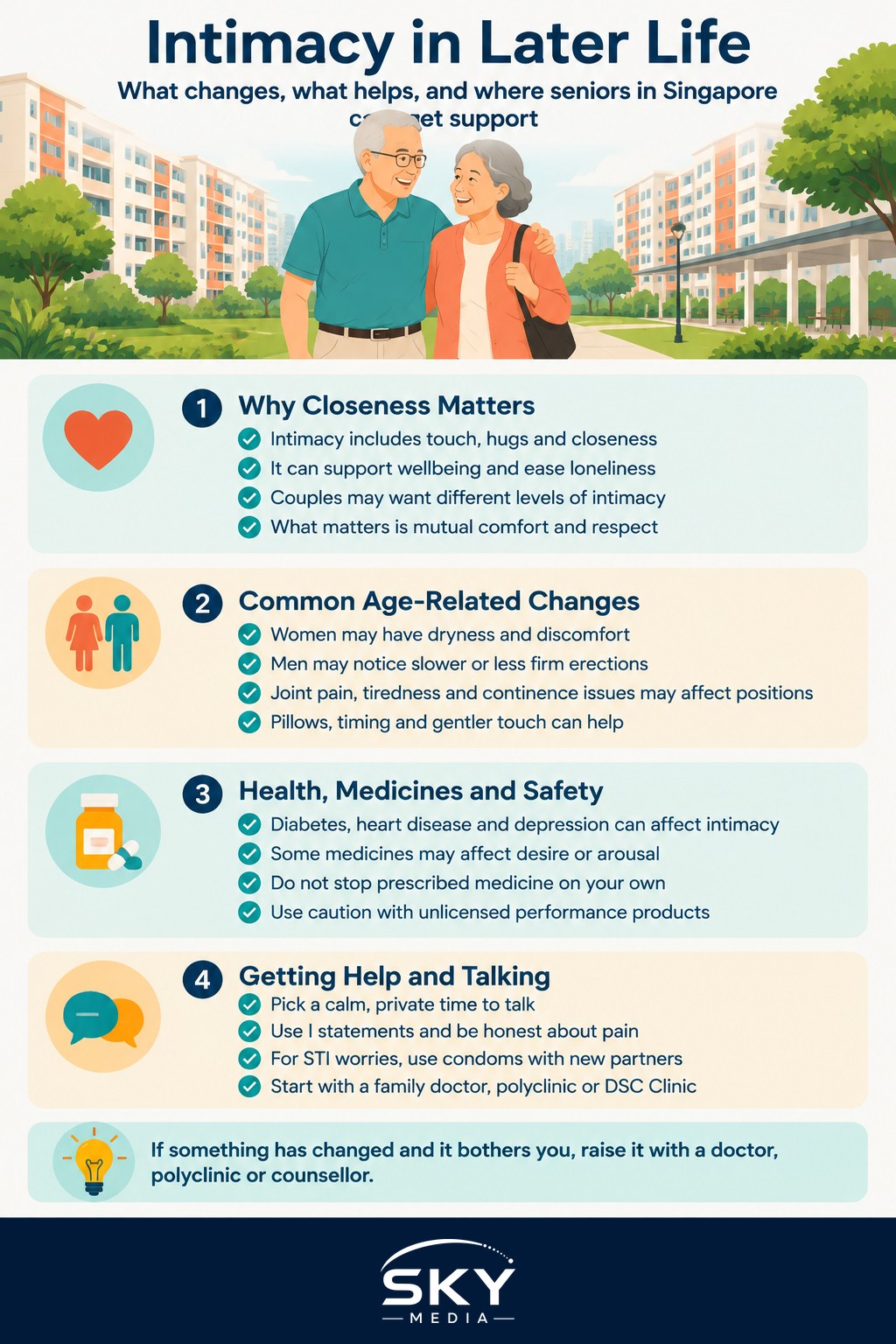
Why Intimacy Still Matters After 60
Intimacy is wider than sex. It includes holding hands on an evening walk around the estate, sharing a bed, a hug in the morning, or simply feeling desired and understood by your partner. For many seniors, this closeness supports emotional wellbeing, eases loneliness and helps couples weather retirement, illness and the empty nest together.
Desire and activity vary hugely from person to person. Some couples are more active after the children have moved out and work pressure has eased. Others find that physical intimacy matters less, and are content with companionship. Neither is “right”. What matters is that both partners feel comfortable, respected and free to say yes or no.
Common Body Changes and What They Can Mean
Ageing brings gradual changes for both women and men. Knowing what is common can take away a lot of worry.
For women, menopause lowers oestrogen levels. This often leads to vaginal dryness, thinner tissue and discomfort during sex. Some women also notice lower desire, slower arousal or sleep problems that sap energy. These are common, and there are treatments and simple aids your doctor can talk you through.
For men, erections may take longer, be less firm or be harder to keep. Recovery time between episodes usually lengthens. Erectile difficulties can also be an early sign of heart disease, diabetes or blood vessel problems, so they are worth mentioning to a doctor rather than quietly putting up with them.
For both, joint pain, back problems, reduced flexibility, tiredness and continence issues can make some positions or routines uncomfortable. Many couples adapt by choosing times of day when they have more energy, using pillows for support, or focusing on touch and closeness rather than any particular goal.
How Health Conditions and Medicines Affect Intimacy
Chronic conditions common among older Singaporeans, such as diabetes, high blood pressure, heart disease, arthritis, stroke and depression, can all affect desire and physical function. Recovering from surgery or a cancer treatment can also change how your body feels and how you feel about it.
Medicines matter too. Some treatments for blood pressure, mood, prostate problems and other conditions may affect desire or arousal as a side effect. Never stop or change a prescribed medicine on your own. Instead, tell your doctor what you have noticed. They may be able to adjust the dose, switch to an alternative or suggest other support.
Be careful with products sold online or by unlicensed sellers that promise to boost performance. The Health Sciences Authority (HSA) has repeatedly warned the public about such products containing undeclared or harmful ingredients. Anything that affects your heart or blood pressure should only be taken with a doctor’s advice, especially if you are already on heart medicines.
If you have been newly diagnosed with a condition, ask your care team directly how it and its treatment might affect intimacy. It is a fair question, and knowing what to expect makes adjusting easier for both partners.
Talking About Intimacy as a Couple
Many older Singaporeans grew up in homes where sex was never discussed. Starting the conversation can feel awkward, even after decades of marriage. A few gentle approaches help:
- Choose a calm, private moment, not right after a disappointment in the bedroom.
- Use “I” statements, such as “I miss being close to you” rather than “You never want to”.
- Be honest about pain or discomfort. Pushing through pain usually makes things worse and can create fear around intimacy.
- Agree that touch does not have to lead anywhere. Taking pressure off often brings closeness back.
- Revisit the topic over time. Bodies and circumstances change, so the conversation is ongoing.
If you are with a new partner after widowhood or divorce, there is extra to discuss, including expectations and protection. Our article on talking about sexual health with a new partner has scripts that work at any age, and the dating and remarriage in later life guide covers the wider relationship side.
Safer Sex Is Not Only for the Young
Sexually transmitted infections (STIs) do not stop at a certain age. Seniors who are dating again may not have thought about condoms since before they were married, and pregnancy is no longer a concern, so protection can be overlooked. Using condoms with a new partner and getting tested when starting a new relationship are sensible steps at any age.
Singapore has public options for confidential STI testing and treatment, including the DSC Clinic under the National Skin Centre. See our explainer on sexual health and DSC Clinic services for how it works, and check the clinic’s official website for current arrangements before you go.
Where Seniors in Singapore Can Get Help
You do not need to struggle alone. These are the usual starting points, and the right one depends on what you are facing:
| Concern | Where to start | What they can help with |
|---|---|---|
| Pain, dryness or menopause symptoms | Family doctor, polyclinic or gynaecologist | Examination, treatment options, referral if needed |
| Erection or arousal difficulties | Family doctor, polyclinic or urologist | Checking heart, diabetes and hormone links, reviewing medicines |
| Side effects from medicines | The doctor who prescribed them, or your pharmacist | Reviewing doses or alternatives safely |
| STI worries or testing | DSC Clinic or your family doctor | Confidential testing, treatment and advice |
| Relationship strain or low mood | Family service centres, counsellors, your doctor | Couple counselling, emotional support, referrals |
A few practical tips for the appointment itself:
- Write your questions down beforehand so nerves do not make you forget.
- Bring a list of all your medicines, including supplements and traditional remedies.
- Ask for a doctor of the gender you are comfortable with when booking, if that helps. Clinics will often try to accommodate this.
- Remember that doctors hear these questions every day. Sexual health for the elderly is a normal part of healthcare, not an embarrassing extra.
Intimacy When One Partner Is Unwell or a Caregiver
When one partner becomes ill or frail, the relationship can shift from husband and wife to patient and caregiver. Intimacy may change shape: lying together, a massage, holding hands during a hospital visit or simply spending unhurried time together can keep the bond alive.
It is also normal for caregiving partners to feel tired, sad or conflicted. Talking to a counsellor or support group can help. Our guide to caring for a spouse in later life has more on looking after yourself while looking after the person you love.
Where dementia is involved, questions of consent become more complex. A doctor, the care team or a dementia support organisation can help couples and families think this through respectfully.
Living Well Together
Small lifestyle habits support both general health and intimacy: staying active, eating well, sleeping enough, limiting alcohol, not smoking and keeping chronic conditions well controlled. Regular health screenings help catch issues early. Above all, kindness, patience and a sense of humour go a long way.
Sexual health in later life is part of overall health. If something has changed and it bothers you or your partner, it is worth raising with a professional. Help is available, and it is never too late to feel close again.
Frequently Asked Questions
Is it normal for desire to change after menopause or in later life? Yes, gradual changes are common for both women and men. Menopause lowers oestrogen and can cause dryness and discomfort, while men may find erections take longer. Desire varies hugely between people, and neither more nor less is right. Treatments and simple aids exist, so raise concerns with a doctor.
Can erection problems be a sign of a heart or health condition? They can be. Erectile difficulties may be an early sign of heart disease, diabetes or blood vessel problems, so they are worth mentioning to a doctor rather than quietly putting up with them. Tell the doctor about all medicines you take too.
Is it safe to buy performance supplements online? It is risky. HSA has repeatedly warned the public about such products containing undeclared or harmful ingredients. Anything affecting your heart or blood pressure should only be taken with a doctor’s advice, especially if you already take heart medicines.
Do older adults with a new partner still need to worry about STIs? Yes. Sexually transmitted infections do not stop at a certain age, and with pregnancy no longer a concern, protection can be overlooked. Using condoms with a new partner and getting tested are sensible steps. Confidential testing is available, including at the DSC Clinic.
How do I bring up intimacy with my spouse after years of silence? Choose a calm, private moment and use I statements, such as I miss being close to you. Be honest about any pain, agree that touch does not have to lead anywhere, and keep revisiting the conversation as bodies change. A counsellor can help if it feels too awkward.
Official sources: HealthHub