
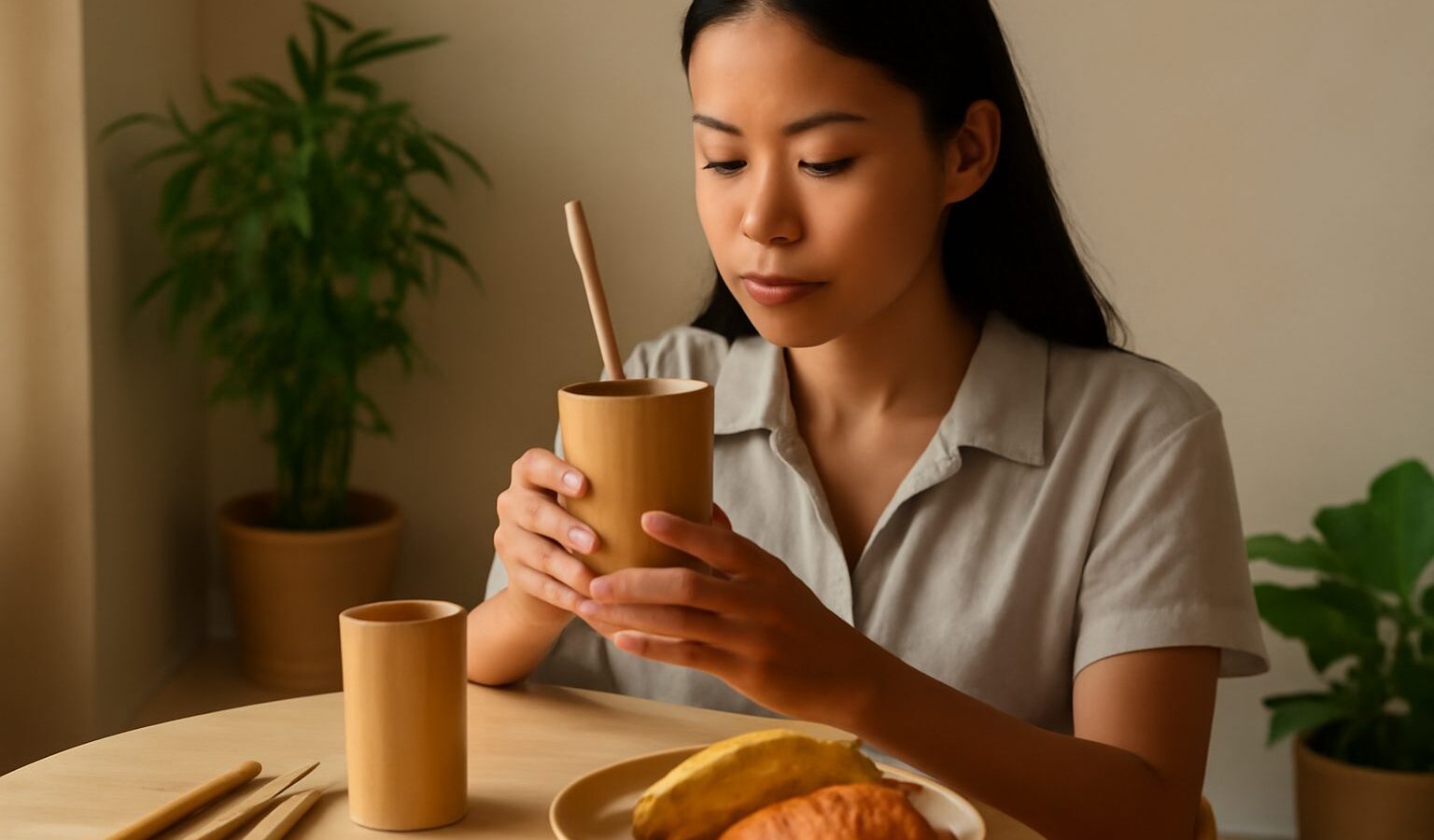
Walk through any Singapore homeware aisle or scroll an eco shop online and bamboo is everywhere: toothbrushes, straws, cutlery, chopping boards, bed sheets, even socks. It looks natural, it feels wholesome, and it is marketed as the planet-friendly choice. So the fair question is: is bamboo sustainable, or is it just clever branding wrapped around a fast-growing grass?
The honest answer is “it depends”. Bamboo has genuine strengths, but the label alone does not guarantee a greener product. Like most materials, what matters is how it is grown, how it is processed, how far it travels and, above all, whether the bamboo version actually replaces something worse. Let us weigh it up calmly, without hype in either direction.
Why Bamboo Earns Its Green Reputation
Bamboo’s good name is not entirely marketing. There are real reasons it can be a strong choice.
- It grows fast. Bamboo is one of the quickest-growing plants on Earth, with some species shooting up remarkably fast. That means it can be harvested more frequently than slow-growing hardwood trees.
- It regrows from the same root. Unlike a tree that is felled and gone, bamboo is a grass. Cut a stem and the plant keeps living, sending up new shoots, so harvesting does not necessarily mean replanting.
- It needs little help to thrive. Many bamboo species grow well without irrigation, fertiliser or pesticides, though this varies by farm and region.
- It is genuinely versatile. In its natural, minimally processed form, as with a bamboo toothbrush handle, chopping board or pair of chopsticks, it is sturdy, light and, at the end of its life, far more likely to break down than plastic.
For simple, solid items that swap out a plastic throwaway, bamboo is often a sensible pick. A bamboo toothbrush handle instead of a plastic one is a small, low-risk improvement, and it fits neatly with other plastic-free bathroom swaps in Singapore.
The Catches Behind the Marketing
Here is where “natural” gets complicated. Bamboo is not automatically green once it becomes a product.
The biggest issue is processing. Turning hard bamboo stalks into soft, silky fabric, the “bamboo viscose” or “bamboo rayon” in many sheets and clothes, usually involves heavy chemical treatment. The end fabric can be pleasant, but it is a long way from the raw plant, and the environmental story depends entirely on how responsibly that factory operates. A “bamboo” T-shirt is not the same eco proposition as a raw bamboo spoon.
Then there is land and biodiversity. Where demand booms, there is a risk of clearing diverse habitat to plant single-species bamboo. A monoculture is not the same as a healthy ecosystem, even if the plant itself is fast-growing.
Distance matters too. Most bamboo is grown and processed far from Singapore, then shipped here. That transport footprint chips away at the benefit, especially for a heavy or bulky item you could have bought second-hand or borrowed instead.
Finally, watch for greenwashing: bamboo details glued onto an otherwise plastic gadget, or bamboo packaging around a wasteful product. A sprinkle of bamboo does not make the whole thing sustainable, and no material claim replaces buying less in the first place.
Bamboo Versus the Alternatives: An Honest Comparison
The useful question is never “is bamboo good?” in the abstract, but “compared with what, and used how?” This table sets out the trade-offs for common situations.
| Situation | Bamboo option | Honest comparison | Better move if any |
|---|---|---|---|
| Toothbrush | Bamboo handle, replaceable | Beats all-plastic; still a disposable | Fine choice; use it fully |
| Chopping board or cutlery | Solid bamboo | Durable and long-lasting | Great if you keep it for years |
| Bed sheets or clothing | Bamboo viscose fabric | Heavily processed; varies a lot | Choose durable natural fibres or buy second-hand |
| Straws and party ware | Bamboo disposables | Better than plastic if truly reused or composted | A reusable you own beats any disposable |
| Furniture | Bamboo or “eco” board | Depends on glues and finish | Consider sustainable wood and furniture |
The pattern echoes almost every green-living choice: a durable item you keep for years beats a disposable, and buying nothing new beats buying the greenest new thing. Bamboo is often a reasonable material, but the way you use it decides most of the impact.
How to Shop Bamboo Wisely in Singapore
You do not need to boycott bamboo or worship it. A few practical filters will serve you well.
- Favour raw over processed. Solid, minimally treated bamboo, such as brushes, boards, utensils and chopsticks, keeps the plant’s natural advantages. Be more cautious and curious about “bamboo fabric”, which is chemically transformed.
- Prioritise durability. A bamboo item you use for years is far better than a trendy one that cracks in months. Look for solid construction and treat it well so it lasts, drying wooden and bamboo kitchenware properly in our humidity to prevent mould.
- Ask “do I need new at all?” Before buying, check whether you can borrow, swap or find it used. A library of things or a buy-nothing group often beats any purchase, bamboo or not.
- Be sceptical of vague claims. “Eco”, “natural” and “green” are not certifications. Where a genuine responsible-sourcing certification exists, it carries more weight than a leaf on the label. Product details and claims change, so check current information rather than trusting older reviews.
- Dispose of it thoughtfully. Untreated bamboo will break down far better than plastic, but remember Singapore has no household composting collection, so most items still go to general waste. Reusing and repairing keeps them useful for longer, which is the real win.
The Bigger Picture
So, is bamboo sustainable? At its best, in simple durable products that replace plastic and get used for years, yes, it is a solid choice. At its worst, as heavily processed fabric shipped across the world or a token feature slapped on a wasteful product, the green halo does not hold up.
The reassuring news is that you do not need perfect answers. The habits that make bamboo genuinely worthwhile, buying less, choosing durable, reusing and repairing, are the same habits that quietly cut waste across your whole home. Treat “bamboo” as a promising signal to investigate, not a guarantee, and you will spend your money and effort where they actually count.