
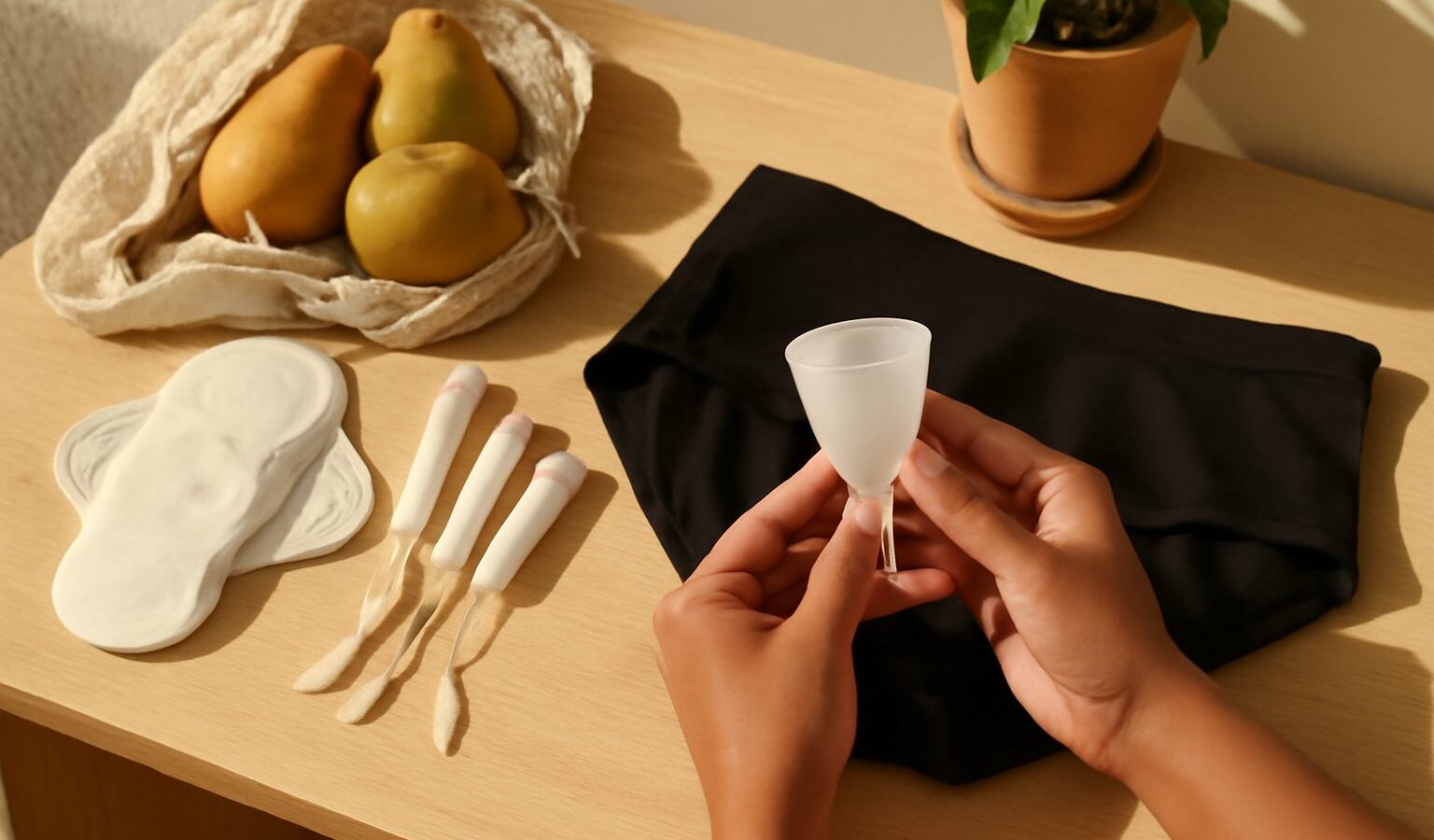
A typical period brings a small pile of disposables: pads, tampons, wrappers, applicators and packaging, month after month for decades. None of it is easy to recycle, and in Singapore all of it ends up in the general waste stream. If you have ever wondered whether there is a gentler option for your body and the bin, sustainable period products are worth a proper look. This is a practical, non-preachy guide to what the reusable options actually are, how they work in our climate, what they cost over time, and where the genuine trade-offs lie.
None of this is medical advice. Everyone’s flow, anatomy and comfort are different, so treat this as general information, use any product as directed, and see a doctor for pain, unusual bleeding or any concern about your health.
Why Disposable Period Products Are Hard to Bin Well
Conventional pads and tampons are made largely from plastics and blended materials, which is why they cannot go in the blue recycling bin. Even where a wrapper looks like paper, contamination from used products rules recycling out. If you are curious about what does and does not belong in the bin, our guide to what happens to your recycling in Singapore is a useful companion, because period waste is a clear example of something that simply has to go to general waste and, from there, to a waste-to-energy plant.
That does not mean disposables are shameful. They are convenient, hygienic and sometimes the only practical choice, for example when you are travelling, unwell, or without easy access to a clean tap. The aim here is not guilt. It is to show that for many people, some of the time, a reusable can cut both waste and long-term cost without much fuss.
A quick note on labels. “Biodegradable” or “compostable” claims on some pads can be misleading, because Singapore has no kerbside composting for this kind of waste and the item still goes to the incinerator. Judge products on how they perform for you, not on green-sounding packaging.
The Main Reusable Options, Explained
There are three families of reusable period products, and many people end up mixing them.
- Menstrual cups and discs. A soft medical-grade silicone cup is folded, inserted, and worn internally to collect rather than absorb flow. Emptied, rinsed and reinserted, a good cup can last for years. It has the steepest learning curve of the lot, but many users find the payoff worth it.
- Period underwear. These look like ordinary briefs but have absorbent, leak-resistant layers built in. You wear, rinse, wash and reuse them. They are the easiest switch for beginners and double as reliable backup on lighter days or overnight.
- Reusable cloth pads. Fabric pads that snap around the gusset of your underwear, then get rinsed and machine-washed. They feel familiar to anyone used to disposable pads and avoid anything internal.
Which suits you depends on flow, lifestyle and comfort with insertion. There is no single right answer, and trying one modestly before committing is sensible.
Comparing the Options at a Glance
The table below sketches the trade-offs. Treat lifespans and prices as general ranges only, since brands, models and offers change; always check current details before buying.
| Option | How it works | Typical lifespan | Learning curve | Best for |
|---|---|---|---|---|
| Menstrual cup or disc | Internal, collects flow | Several years with care | Higher at first | Longest wear, least waste, active days |
| Period underwear | Worn like briefs, absorbs | A few years | Very low | Beginners, backup, overnight, lighter days |
| Reusable cloth pads | Snaps into underwear, absorbs | A few years | Low | Those who prefer no insertion |
Hygiene, Washing and Our Humid Climate
Reusables only work well if you keep them clean, and Singapore’s heat and humidity make good drying habits especially important.
For a menstrual cup, wash your hands, rinse the cup with clean water during the day, and sterilise it in boiling water between cycles as the maker instructs. In a shared or public toilet, a wipe with clean water or tissue and a proper rinse later is usually fine. Replace the cup if it becomes damaged, sticky or discoloured beyond cleaning.
For period underwear and cloth pads, rinse in cold water first until it runs clear, then machine-wash. Skip fabric softener, which can clog the absorbent layers, and air-dry fully. This is where our weather bites: damp fabric left in a bunched pile can smell or grow mould, so hang items where air moves, ideally with some indirect sun. If you live in an HDB flat with limited outdoor drying, a fan and an airy rack do the job.
Store everything dry. A small wet bag lets you carry a used item home without mess when you are out. None of this is complicated, but it is a habit change from tearing open a wrapper and moving on.
The Real Costs and Trade-offs
The honest picture is that reusables cost more upfront and less over time. A cup or a couple of pairs of period underwear is a bigger single outlay than a packet of pads, but it replaces many packets over its life. Whether you come out ahead depends on how long the item lasts and how well it suits you, so do not buy a full drawer of one type before testing it.
Be realistic about effort and circumstances, too:
- Rinsing and washing take time and a private-enough basin, which is easier at home than in some workplace or public toilets.
- Insertable options are not for everyone, and that is completely fine.
- Heavy-flow days may still need backup, and many people keep a few disposables for travel, illness or emergencies.
- Water and electricity for washing are a genuine, if small, footprint of their own.
A blended approach is often the most sustainable one you will actually stick to: a cup or period pants for ordinary days, cloth pads at home, and a small stash of disposables for the times nothing else is practical. Small, durable habits beat an all-or-nothing switch you abandon after one messy month.
Building It Into a Greener Routine
Switching period products fits naturally with other low-effort swaps in the bathroom. If you are refreshing your routine anyway, our guides to plastic-free bathroom swaps and switching to shampoo and soap bars pair well with this one, and a greener beauty and skincare routine rounds it out. If a baby is on the horizon, the same reuse mindset carries over to using cloth nappies for your baby.
Start with one product and one cycle. Keep your usual disposables on hand so there is no pressure, learn what your body and schedule allow, and add from there. The goal is a period routine that is comfortable, hygienic and a little kinder to the bin, not a badge of purity. Any reduction in single-use waste, however partial, is a real and worthwhile step.