
A night at a ryokan, a traditional Japanese inn, is one of the most memorable parts of a trip to Japan. It is also quite different from a hotel, with its own rhythm, room layout, meal times and unwritten rules. This ryokan guide explains what to expect, how pricing usually works, the etiquette that makes your stay smoother, and how to make it work for a family travelling from Singapore.
If you only want to know how to use the hot spring baths, that is a separate topic. Here we focus on the whole stay: booking, the room, the meals and the people looking after you.
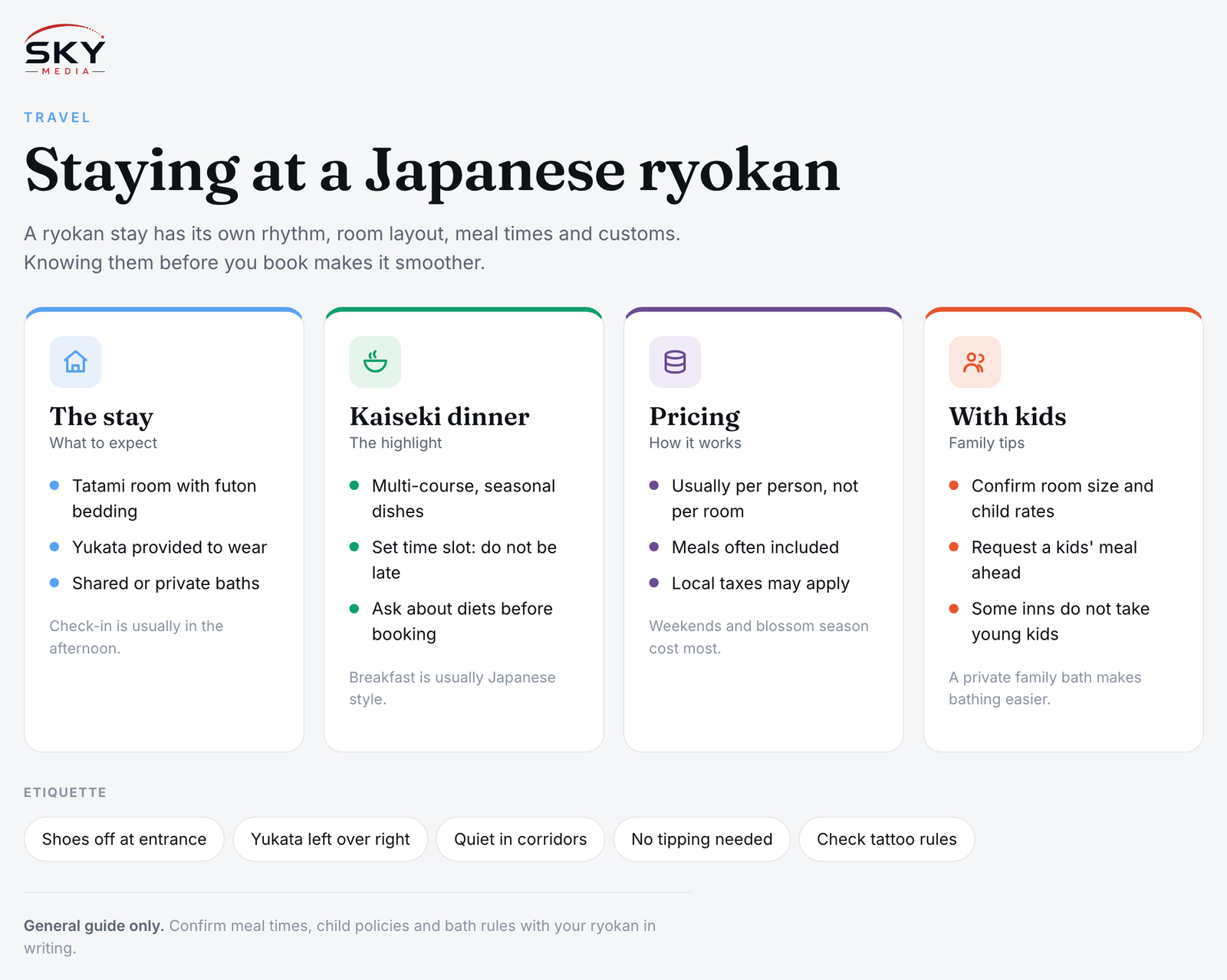
What a Ryokan Stay Is Actually Like
Most ryokan follow a similar pattern, though every inn has its own character.
- Check-in is usually in the afternoon. Staff may greet you at the entrance, where you take off your shoes and change into slippers.
- Your room is a tatami room. Tatami are woven straw mats, and the room is often simple, with a low table, floor cushions and a sliding paper screen. Some rooms have a small sitting area by the window.
- Futons replace beds. While you are at dinner or the bath, staff often lay out futon bedding on the tatami. In the morning they may fold it away again. Some modern ryokan offer Western-style beds instead.
- You wear a yukata. This light cotton robe is provided for lounging, walking to the bath and often for dinner within the inn.
- Dinner and breakfast are often included. Many ryokan are priced as a package with both meals, and the dinner is a major part of the experience.
- There is usually a bath. Many ryokan have shared baths, some fed by hot springs (onsen), and some rooms have a private bath.
Ryokan range from small family-run inns in the countryside to large resort-style properties in hot spring towns, and modern city ryokan that keep tatami rooms but feel more like a boutique hotel.
Kaiseki Dinners and Breakfast
The highlight for many guests is dinner. At a traditional ryokan this is often a kaiseki meal, a multi-course Japanese dinner built around seasonal and local ingredients. Courses may include small appetisers, sashimi, a simmered dish, a grilled dish, rice, miso soup, pickles and a light dessert. The order and number of courses vary by inn.
Some things to know:
- Dinner times are set. You usually choose a time slot at check-in, and the kitchen prepares the meal for that time. Arriving late can mean a shortened meal or none at all, so tell the ryokan in advance if you expect delays.
- Meals may be served in your room or a dining room. In-room dining is traditional, while many inns now use private dining rooms or a shared hall.
- Tell them about dietary needs when booking. Many ryokan can adjust for allergies, no raw fish or no pork, but options for vegetarian, halal or other specific diets vary widely. Ask clearly in writing before you book, rather than at check-in.
- Breakfast is usually Japanese style. Expect grilled fish, rice, miso soup, pickles, egg and small side dishes. Some inns offer a Western option.
If you are curious about Japanese food culture before your trip, our guides to yakitori and Japanese grills and matcha and Japanese drinks are a good warm-up you can try in Singapore.
How Ryokan Pricing Usually Works
Ryokan pricing often confuses first-time visitors because it works differently from hotels.
- Prices are usually per person, not per room. A rate that looks reasonable may double or triple once you add the number of guests.
- Meals are often included. Compare the price with a hotel room plus two meals, not with a hotel room alone.
- Seasonal and day-of-week pricing is common. Weekends, Japanese public holidays, cherry blossom season and autumn foliage season are usually the most expensive.
- Local taxes may apply. Some cities and hot spring towns charge accommodation or bathing taxes, which may be collected separately at check-in. Check the booking details.
- Room-only plans exist. Some ryokan offer stays without dinner, which can be cheaper but means finding dinner outside, which can be hard in small towns where restaurants close early.
Because prices vary so much by location, season and room type, compare a few inns directly on their official sites and on reputable booking platforms, and read the cancellation terms carefully.
Ryokan Etiquette Made Simple
Staff at ryokan are used to international guests and will usually explain the basics, but knowing a few customs helps you feel at ease.
| Do | Avoid |
|---|---|
| Take off shoes at the entrance and use the slippers provided | Walking on tatami in slippers or shoes (go barefoot or in socks) |
| Wrap your yukata left side over right | Wrapping it right over left, which is associated with funerals |
| Arrive in time for your chosen dinner slot | Turning up late without letting the inn know |
| Keep your voice down in corridors, especially at night | Loud conversations or phone calls in shared areas |
| Ask about bath rules, including any tattoo policy, before booking | Assuming every bath allows tattoos or swimwear |
| Leave the room tidy, with used towels gathered | Moving heavy furniture or sliding screens roughly |
Tipping is not customary in Japan, and good service is included. If you want to show thanks, a polite word to the staff is enough. Some guests leave a small gift or an envelope, but this is optional and not expected.
A few extra points:
- Toilet slippers. Some inns provide separate slippers just for the toilet. Swap them back when you leave.
- Room attendants. At traditional inns, a staff member may look after your room, serve meals and lay out futons. Let them know if you prefer privacy at certain times.
- Quiet hours. Many ryokan are calm by late evening, and the front entrance may be locked at night. Check the curfew if you plan to go out.
Tips for Families With Kids
A ryokan can be a wonderful family experience, especially for children who love sleeping on the floor and wearing a yukata. Plan ahead to make it smooth.
- Ask about room sizes. Tatami rooms are often flexible and can sleep several people on futons, which suits families of four or five. Confirm the maximum number of guests when booking.
- Check child pricing. Many ryokan charge reduced rates for children depending on age and whether they need a futon and meals. Policies differ, so ask.
- Request a children’s meal. Long kaiseki dinners can be too much for small children. Many inns offer a simpler kids’ menu if requested in advance.
- Ask about private baths. A family bath that can be reserved, or a room with its own bath, makes bathing easier with young children.
- Mind the floor. Low tables and sliding doors are safe in most cases, but watch toddlers near hot tea and steep stairs.
- Book family-friendly inns. Some ryokan focus on quiet adult stays and may not accept young children. Check the policy before you book.
If your children are keen to learn a few words before the trip, see our guide to learning Japanese in Singapore.
How to Book the Right Ryokan
- Decide what matters most: hot spring baths, food, location, price or a private bath.
- Check the location carefully, as some ryokan are in hot spring towns far from train stations. Many offer a shuttle from the nearest station if you book it.
- Read reviews from international guests about English support, food and room condition.
- Confirm meal times, dietary requests, child policies and tattoo rules in writing.
- Note the check-in and check-out times, which can be stricter than at hotels.
One night is enough for many travellers to enjoy the experience, while two nights let you slow down and explore the surrounding area. Use this ryokan guide as a checklist, ask questions before you book, and you can relax into one of the most rewarding ways to experience Japan.
Frequently Asked Questions
Is a ryokan stay worth the cost compared with a regular hotel? It is worth it if you value the experience, since the price usually covers dinner and breakfast as well as the room. Compare it with a hotel room plus two meals rather than a room alone. If you mainly want a cheap bed for sightseeing, a hotel may suit you better.
Are ryokan comfortable for elderly guests who struggle with sitting on the floor? Many can be, but ask before booking. Some modern ryokan offer Western-style beds, and some provide low chairs or cushions with back support. Also ask about steps at the entrance, stairs to the room and the distance to the baths, and confirm in writing.
Do ryokan staff speak English? It varies. Larger inns in tourist areas often have some English support, while small family-run places may rely on simple phrases or translation apps. Read recent reviews from international guests, and put important requests, such as diet and arrival time, in writing before you arrive.
How far in advance should I book a ryokan? Popular inns can fill up early, especially in cherry blossom and autumn foliage seasons and on weekends and public holidays. Book as soon as your dates are firm, and compare refundable and non-refundable rates carefully before you pay.
What should I pack for a one-night ryokan stay? Bring a small overnight bag rather than your whole suitcase, as rooms are simple and floor space is limited. Pack socks without holes since you will be shoeless, light sleepwear is unnecessary because a yukata is provided, and bring any toiletries you prefer.