
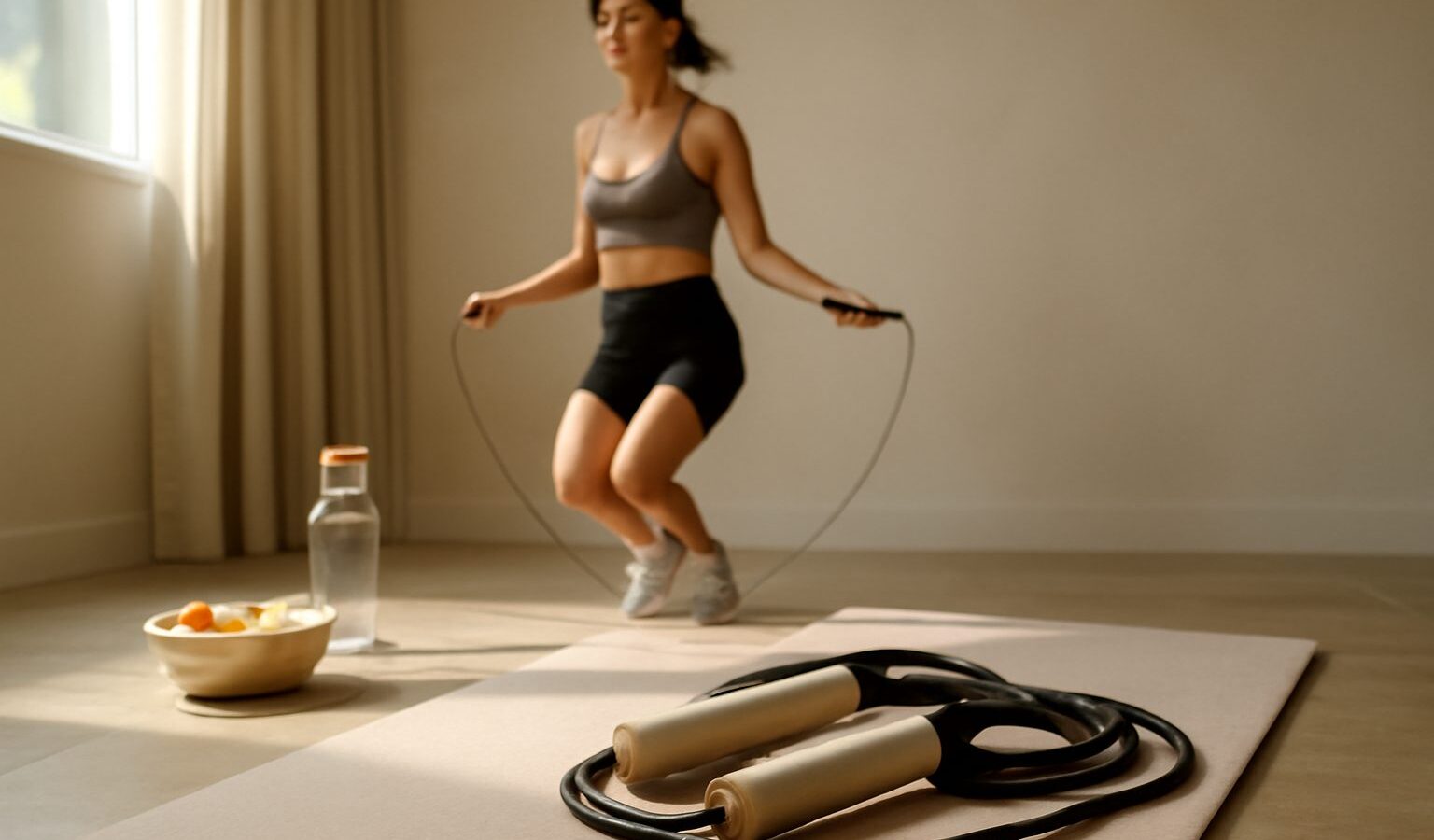
Few pieces of fitness kit deliver as much as a humble skipping rope. Cheap, portable and brilliant for the heart and lungs, it turns a corner of an HDB living room or a void deck into a full cardio studio. Jump rope workouts build coordination, burn energy quickly and need almost no space, which makes them a perfect fit for flat-dwelling Singapore. This guide covers technique, beginner routines and how to skip safely in our climate.
This is general fitness information, not medical advice. If you are older, sedentary, pregnant, carrying a lower-limb injury, or have a heart condition or joint problems, check with a doctor or physiotherapist before starting, and build up gradually.

Why the Skipping Rope Is So Effective
Jumping rope is a high-intensity, full-body cardio exercise disguised as child’s play. It raises your heart rate fast, so it burns a good amount of energy per minute, and it trains your calves, ankles, shoulders and core all at once. Because the movement is rhythmic and repetitive, it also sharpens coordination, timing and balance in a way that steady jogging does not.
For Singaporeans, the practical wins are just as important:
- It needs barely any space. A patch of floor roughly two metres square is enough. No treadmill, no membership.
- It is affordable and portable. A basic rope costs very little and fits in a bag, so you can skip at home, at the void deck, or at an ActiveSG fitness corner.
- It scales with you. Beginners can do short bursts with rest; advanced skippers can chain tricks and intervals.
Because it is genuinely high intensity, it also fits into the harder end of the HIIT vs steady state cardio picture, so treat it with the same respect you would any vigorous session.
Getting the Technique Right
Good form keeps skipping efficient and protects your joints. Work through these points slowly before adding speed.
- Choose the right rope length. Stand on the middle of the rope; the handles should reach roughly to your armpits or a little lower. Too long and it drags, too short and it clips your feet.
- Stay tall and relaxed. Keep your chest up, elbows close to your sides and shoulders loose. The power comes from your wrists, not big arm swings.
- Turn from the wrists. Small circular flicks of the wrists spin the rope. Flailing arms tire you out fast.
- Jump low. You only need to clear the rope by a centimetre or two. Land softly on the balls of your feet with a slight knee bend to absorb the impact.
- Find a rhythm. Aim for a light, springy, even bounce rather than a hard stomp. A steady rhythm is easier to sustain and kinder on your shins.
If you feel pain along your shins, ease off; skipping on hard surfaces can aggravate them. Choosing a slightly cushioned surface and building up volume gradually helps a lot.
A Simple Beginner Routine
Start smaller than you think. Even fit people find skipping surprisingly tiring at first because it is so continuous. A gentle four-week on-ramp might look like this:
- Weeks 1 to 2: 20 seconds skipping, 40 seconds rest, repeated 8 to 10 times. Focus on smooth turning and soft landings, not speed.
- Weeks 3 to 4: 30 seconds skipping, 30 seconds rest, repeated 10 times. Add a basic side-to-side or front-to-back bounce for variety.
Always warm up your ankles and calves first and cool down afterwards, as covered in warming up and cooling down properly. As you improve, you can lengthen the work intervals, shorten the rest, or learn moves like the boxer skip, high knees or single-leg hops.
Jump Rope Compared With Other Cardio
How does skipping stack up against other popular options? The table gives a quick sense of where it fits.
| Feature | Jump rope | Running | Rowing machine |
|---|---|---|---|
| Space needed | Very small | Large or a treadmill | Machine footprint |
| Cost | Very low | Low | Higher |
| Impact on joints | Moderate to high | Moderate to high | Low |
| Coordination demand | High | Low | Low |
| Portability | Excellent | Good | Poor |
| Good for | Quick, intense cardio | Endurance | Full-body low impact |
If your knees or shins struggle with the impact, a lower-impact option such as rowing machine workouts can give you similar cardio benefit with gentler landings.
Skipping Safely in Singapore’s Heat
The tropics reward smart timing. Skipping is intense, so doing it in a stuffy, un-airconditioned room at midday will spike your body temperature quickly.
- Pick cooler times and places. Early morning or evening, a shaded void deck, or a fan-cooled room all beat the midday heat.
- Hydrate before and after. Keep water on hand and sip during rests. Do not wait until you feel parched.
- Mind your neighbours and floor. In a flat, an exercise mat cushions your landings, protects the floor and reduces noise for those below.
- Know the heat warning signs. Dizziness, nausea, headache or feeling faint mean stop, cool down and rehydrate. Seek help if symptoms are severe.
Because skipping is high impact, anyone with knee, ankle or back issues should get advice from a physiotherapist first, and stop at once if you feel sharp joint pain. Soreness the next day is normal; sharp pain during the movement is not.
Building It Into Your Week
Two or three sessions a week is plenty to see progress, especially alongside some strength work and easier cardio. Because skipping is demanding, give yourself recovery between hard sessions, as explained in why rest days matter. The rope is also a superb warm-up tool before other training, or a quick finisher when you are short on time.
The real charm of jump rope workouts is that they are genuinely fun. Chasing a new number of unbroken skips, or finally nailing a trick, keeps you coming back, and enjoyment is what makes any routine stick. Start light, land soft, hydrate well, and let a two-dollar rope do the heavy lifting for your fitness.
Explore more: HIIT vs steady state cardio · Rowing machine workouts · Warming up and cooling down properly · Staying consistent with exercise
Frequently Asked Questions
How long should I skip each day to see results? Short, regular sessions usually work better than one long slog. Ten to twenty minutes of interval-style skipping, two or three times a week, is a sensible target for most people. Build up gradually, and let how your shins and calves feel decide whether you add more.
Is skipping better than running for burning calories? Skipping tends to feel more demanding per minute because it is continuous and uses the whole body, but the real winner is whichever you will keep doing. Running suits endurance and being outdoors, while a rope suits short, intense bursts at home. Many people happily mix both across the week.
What kind of jump rope should a beginner buy? A simple, lightweight rope with comfortable handles and an adjustable length is plenty to start. Fancy weighted or speed ropes are not necessary at first. Check the length against your height by standing on the middle, and trim or adjust it so the handles reach your armpits.
Can I skip in my HDB flat without annoying the neighbours? Yes, if you take a few precautions. Skip on a thick exercise mat, land softly on the balls of your feet and pick reasonable hours rather than late at night or early morning. Skipping in a ground-floor void deck or park is another option when you want to avoid noise altogether.
Why do my shins hurt after skipping, and should I stop? Shin soreness is common when the calves and lower legs are not yet used to repeated impact, often from jumping too high or on hard floors. Ease off, rest and use a cushioned surface. If the pain is sharp or does not settle, see a doctor or physiotherapist before continuing.
Further reading: Battle Rope Workouts · Plyometrics and Jump Training · CrossFit and Functional Fitness in Singapore