
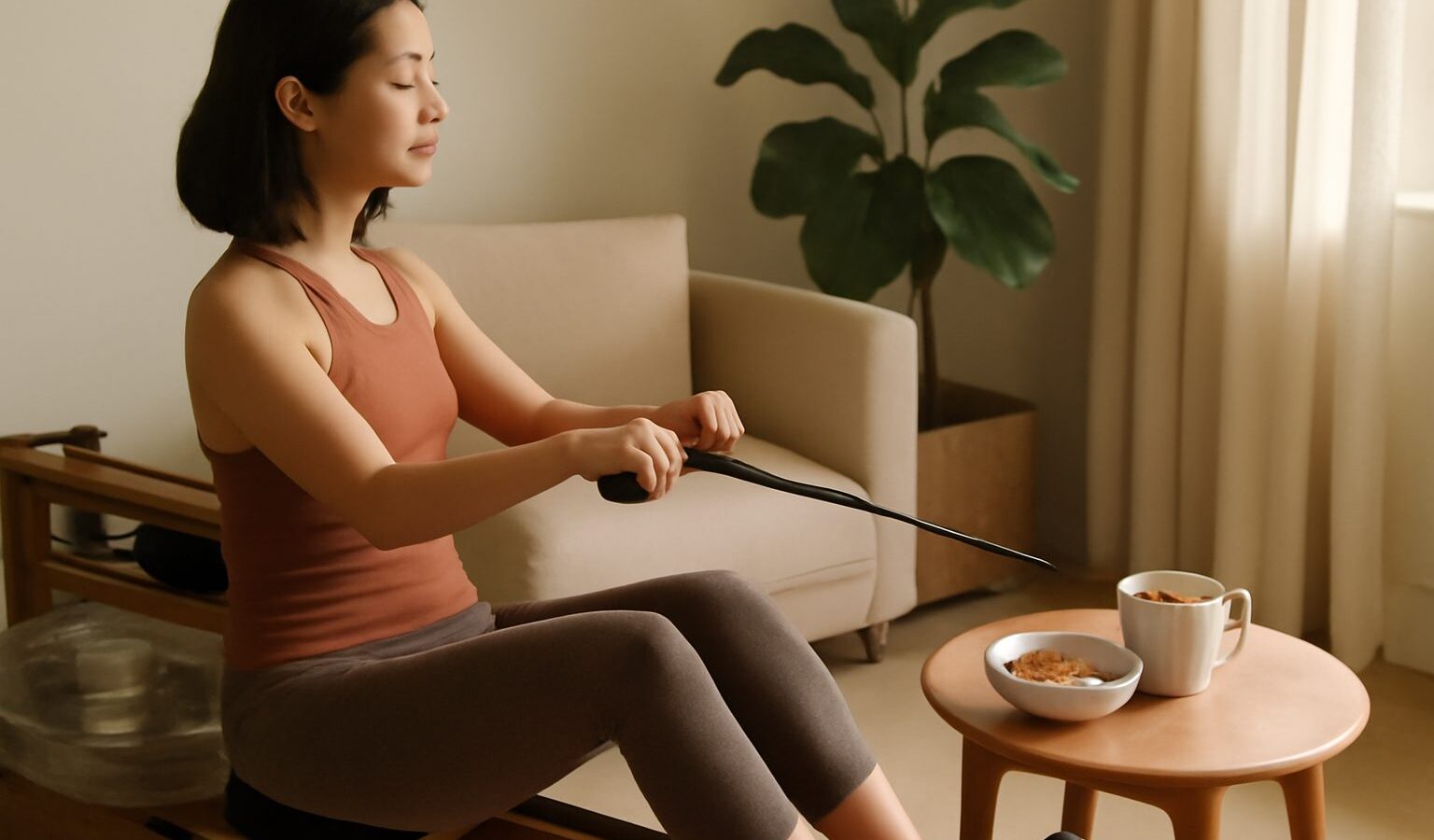
Tucked in the corner of most gyms sits one of the most underrated machines around. The indoor rower, or ergometer, trains your legs, back, arms and core while giving your heart and lungs a serious workout, all with very little pounding on your joints. Rowing machine workouts are ideal for anyone who wants strong, full-body cardio without the impact of running or skipping, which makes them a smart choice in space-conscious, tropical Singapore. This guide covers technique, routines and how to train safely here.
This is general fitness information, not medical advice. If you are older, sedentary, pregnant, or have a heart condition, high blood pressure, or a back or knee problem, check with a doctor or physiotherapist before starting, and build up gradually.
Why Rowing Deserves a Place in Your Routine
Rowing is one of the few cardio exercises that works most of the body in a single, flowing movement. A good stroke drives through the legs, swings through the hips and back, and finishes with the arms, so you get both cardiovascular and muscular benefit at once. Coaches often reckon the stroke is roughly 60 percent legs, 30 percent core and back, and 10 percent arms, which surprises people who assume it is an arm exercise.
The standout feature is that it is low impact. Because you are seated and sliding smoothly, there is no jarring landing, so it suits people whose knees, shins or ankles struggle with running or jump rope workouts. It is also highly adjustable: pull gently for easy steady work, or drive hard for intense intervals.
Most ActiveSG and community gyms have rowers, and because the machine is self-contained, it copes perfectly with our weather when the gym is air-conditioned.
Mastering the Rowing Stroke
Technique is everything on a rower. Poor form wastes energy and can strain your lower back. The stroke has four phases; learn them slowly before adding power.
- The catch. Sit tall at the front, knees bent, shins vertical, arms straight, and lean forward slightly from the hips. This is the coiled starting position.
- The drive. Push hard through your legs first. Once the legs are almost straight, swing your torso back gently, and only then pull the handle to your lower ribs. Legs, then body, then arms.
- The finish. Sit leaning back a touch, legs straight, handle at your lower chest, elbows drawn past your sides.
- The recovery. Reverse the order: arms extend, body hinges forward, then knees bend to slide you back to the catch. Take this phase slowly to catch your breath.
A common mistake is yanking with the arms too early or rounding the back. Keep a neutral spine throughout, let the legs do the heavy work, and stop if you feel any sharp lower-back pain. If in doubt, ask a gym trainer to check your form.
A Beginner Rowing Routine
Start with technique, not speed. Rowing rewards a smooth, efficient stroke far more than a frantic one. A gentle four-week build might look like this:
- Weeks 1 to 2: Row easy for 5 minutes to warm up, then 3 rounds of 3 minutes steady rowing with 2 minutes rest. Focus on the leg-body-arm sequence.
- Weeks 3 to 4: Warm up, then 20 to 25 minutes of continuous steady rowing at a conversational effort, checking your form stays clean as you tire.
Once you are comfortable, you can add intervals, such as 1 minute hard and 1 minute easy repeated, which pushes you toward the harder end of the HIIT vs steady state cardio spectrum. Always warm up first and cool down after, as covered in warming up and cooling down properly.
Rowing Compared With Other Cardio Machines
How does the rower stack up against the usual gym options? The table gives a quick sense of the trade-offs.
| Feature | Rowing machine | Treadmill | Stationary bike |
|---|---|---|---|
| Muscles worked | Full body | Mostly lower body | Mostly lower body |
| Joint impact | Low | Moderate to high | Low |
| Core involvement | High | Low | Low |
| Technique needed | Moderate | Low | Low |
| Good for | Full-body low-impact cardio | Running fitness | Easy steady cardio |
| Common beginner error | Pulling with arms first | Overstriding | Seat set wrong |
If you want to compare running surfaces specifically, our guide to treadmill vs outdoor running goes deeper.
Training Smart in Singapore
The rower is usually indoors and air-conditioned, which sidesteps much of our heat problem, but a few habits still matter.
- Hydrate anyway. Air-conditioning masks how much you sweat during hard intervals, so drink before and after.
- Set the machine up right. Strap your feet so the strap crosses the widest part of the foot, and start with a moderate resistance or damper setting rather than the maximum.
- Mind your back. If you have a history of lower-back trouble, keep the stroke controlled, avoid over-reaching at the catch, and get a physiotherapist’s advice first.
- Build gradually. Rowing can feel deceptively easy on the lungs early on while quietly loading the back, so add time and intensity slowly.
Soreness in the legs and back over the following day is normal as you adapt. Sharp pain during the stroke is not; stop and rest, and seek advice if it persists.
Making Rowing a Habit
Two or three rowing sessions a week gives excellent full-body cardio, and because it is low impact you can often train more frequently than with running or skipping. It pairs well with strength work and easier aerobic sessions, and it is a superb rainy-day option when outdoor training is off the table. As with any training, recovery matters, so read why rest days matter if you are tempted to row hard every day.
The beauty of rowing machine workouts is their combination of intensity and kindness: you get a hard, full-body effort without hammering your joints. Learn the stroke properly, start steady, hydrate, and the rower will reward you for years.
Explore more: Jump rope workouts · HIIT vs steady state cardio · Treadmill vs outdoor running · Why rest days matter