

Walk past a wet market chicken stall or browse a supermarket chiller in Singapore and you will see birds labelled kampong chicken sitting beside ordinary whole chickens, usually at a noticeably higher price. Some families swear by kampong chicken for soups and confinement dishes, while others find it tough and wonder what the fuss is about.
This guide explains the real differences in texture, taste, price and cooking, so you can decide which one suits the dish you are making.
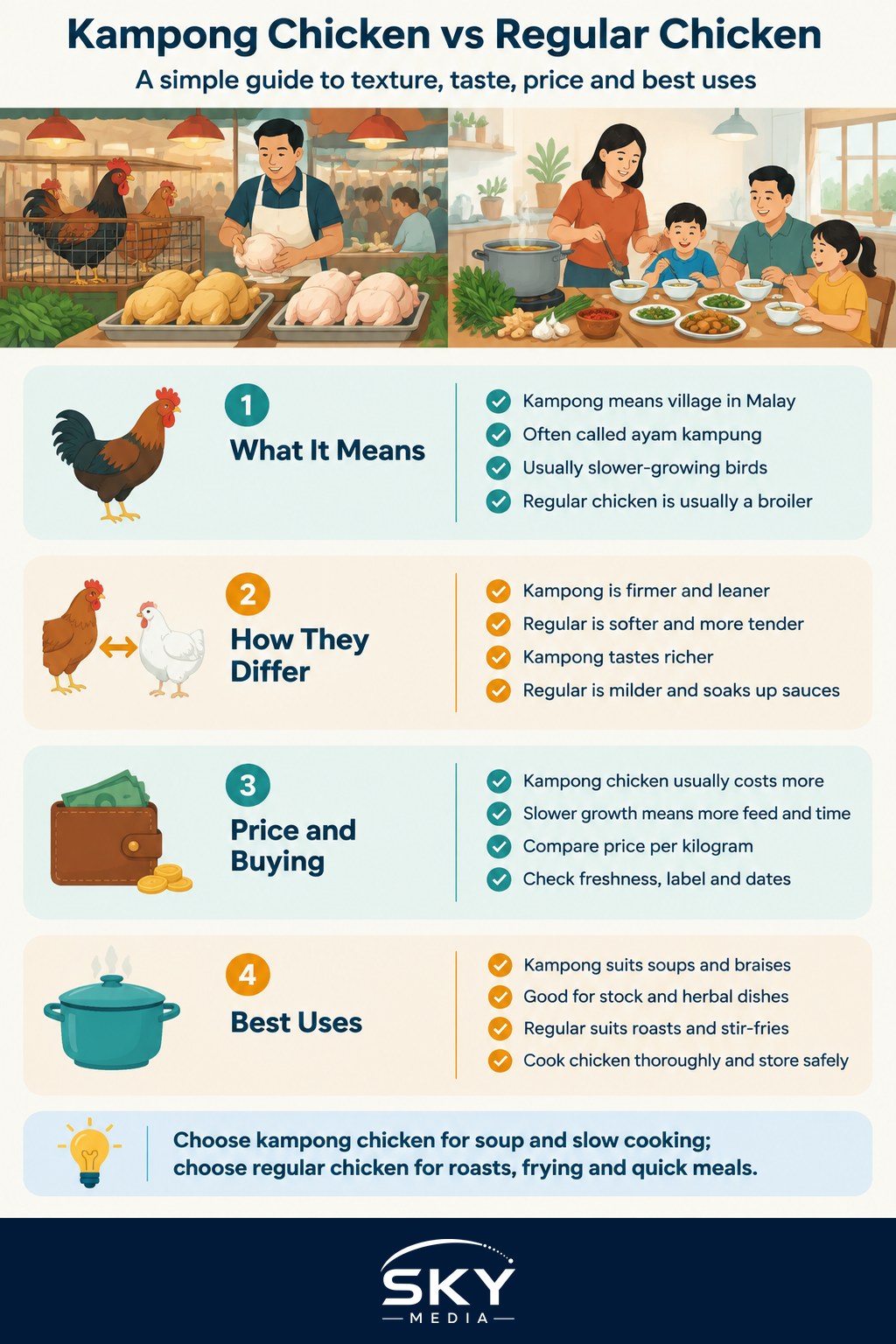
What Kampong Chicken Actually Is
“Kampong” (also spelled kampung) is the Malay word for village. The name harks back to the days when families in Singapore’s villages kept chickens that roamed the yard, pecked for food and grew slowly. In Malay the bird is called ayam kampung, and in Chinese it is often called 土鸡 (tǔ jī) or 菜园鸡. If you are curious about that era, our guide to Singapore’s former villages and lost kampongs paints the picture.
Today, chickens sold as kampong chicken in Singapore are typically raised on farms in the region. The term generally refers to slower-growing breeds or crosses that are raised for longer than standard meat chickens, often with more space or some access to the outdoors. However, “kampong” is a descriptive label rather than a single strict standard, and practices differ between producers. If the way the bird was raised matters to you, read the packaging, look for any farm or certification information, and ask your butcher.
Regular chicken, by contrast, usually means a broiler: a breed developed to grow quickly and efficiently, producing plump, tender meat in a relatively short time. This is the chicken used in most hawker dishes, fast food and everyday home cooking.
How They Differ in Texture and Taste
The key differences come from breed, age and how much the birds move around.
- Texture. Kampong chicken is leaner and firmer, with a slightly springy, chewy bite. Regular chicken is softer and more tender, with more fat under the skin.
- Flavour. Many people find kampong chicken has a deeper, more “chickeny” taste, which is why it is prized for soups. Regular chicken tastes milder and takes on sauces and marinades easily.
- Size and shape. Kampong chickens tend to be smaller and leaner, with longer legs and less breast meat. Regular chickens are larger and meatier, especially around the breast.
- Skin and colour. Kampong chicken skin is often thinner, sometimes with a more yellowish tone. Regular chicken skin is thicker and fattier, which makes it good for crisping.
- Bones. Kampong chicken bones are typically denser, giving a richer stock when simmered for a long time.
Kampong Chicken vs Regular Chicken at a Glance
| Feature | Kampong chicken | Regular (broiler) chicken |
|---|---|---|
| Texture | Firm, lean, slightly chewy | Soft, tender, juicy |
| Flavour | Richer, more pronounced | Mild, absorbs seasonings well |
| Fat content | Lower, thinner skin | Higher, thicker skin |
| Typical size | Smaller, less breast meat | Larger, plumper breast |
| Price | Usually higher per kilogram | Usually lower and widely available |
| Best uses | Double-boiled soups, herbal stews, slow braises | Roasts, fried chicken, stir-fries, quick curries |
Why Kampong Chicken Costs More
Kampong chicken generally costs more for practical reasons, not just marketing. Slower-growing birds take longer to reach market weight, which means more feed and more time per bird. They also yield less meat for their size, so you get fewer servings from each one. Smaller-scale production and specialised supply chains add to the cost.
Exact prices vary by season, supplier and where you shop, so compare between your neighbourhood wet market, supermarkets and online grocers. When comparing, look at the price per kilogram rather than per bird, since kampong chickens are usually smaller.
Cooking Each Type Well
Using the right chicken for the dish makes a real difference. Cooking kampong chicken like a broiler is the most common reason people find it tough.
Getting the Best From Kampong Chicken
- Go low and slow. Kampong chicken shines in long-simmered soups, double-boiled tonics and braises. Gentle heat over a longer time softens the firmer meat and draws out flavour.
- Use it for stock. The bones and lean meat make a clear, flavourful broth. Blanch the chicken briefly first and rinse to keep the soup clean.
- Pair with herbs. Classic Chinese herbal soups with ingredients such as red dates, wolfberries and ginseng, as well as many confinement-style dishes, traditionally use kampong chicken.
- Try ayam kampung dishes. Malay and Indonesian dishes such as soto, gulai and slow-cooked curries suit its firm texture.
- Expect chew in poached chicken. Some people enjoy kampong chicken poached and served with ginger and spring onion for its bite, but it will be firmer than the silky chicken rice you know.
Getting the Best From Regular Chicken
- Roast, fry or grill it. The fat and thicker skin crisp nicely. Our guide on how to roast a whole chicken walks you through it.
- Use it for quick dishes. Stir-fries, curries and steamed dishes cook quickly and stay tender.
- Make chicken rice. The tender, juicy texture of a broiler is what most hawker-style chicken rice relies on.
- Marinate freely. Its milder flavour soaks up sauces, spices and marinades well.
For everyday curries, regular chicken is usually the easier choice, as in our guide to curry chicken noodles.
Buying and Storing Tips
Whichever you pick, some basics keep things safe and tasty:
- Check freshness. Look for meat that smells clean, with skin that is not slimy or discoloured. At the wet market, go early for the best selection.
- Read the label. Packaged chickens should show the origin, packing date and use-by date. Chilled and frozen options both exist; plan your cooking accordingly.
- Ask for help. Wet market stallholders can cut the bird into parts, remove the skin or keep the bones for stock if you ask.
- Store properly. Refrigerate raw chicken promptly in a sealed container on the lowest shelf so juices do not drip onto other food. Freeze anything you will not cook within a day or two.
- Thaw safely. Defrost in the fridge rather than on the counter, especially in Singapore’s warm climate.
- Cook thoroughly. Chicken should be cooked until the juices run clear and there is no pink near the bone. A food thermometer helps if you are unsure.
Which One Should You Choose?
There is no single winner. Kampong chicken is worth paying extra for when flavour and broth matter most, such as in a nourishing soup for a family member recovering from illness, a confinement meal, or a Sunday herbal stew. Regular chicken is the practical, versatile choice for roasts, fried chicken, quick weeknight dinners and anything where tenderness counts.
Many households keep both in rotation: kampong chicken for the soup pot, regular chicken for everything else. Try each in the dishes they suit best, and you will soon know which your family prefers.
Further reading: Best Fried Chicken in Singapore