
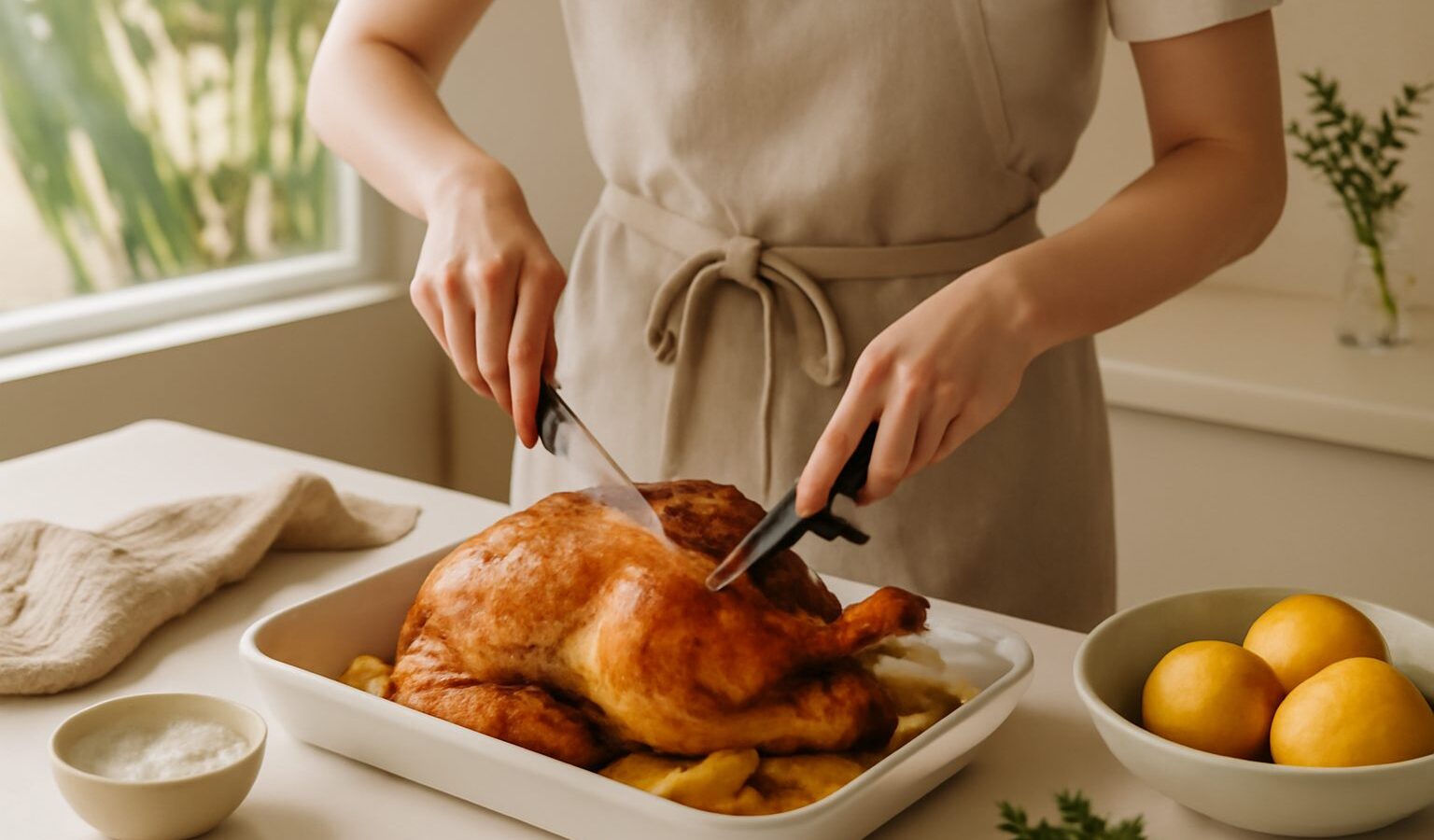
A golden roast chicken is one of the great home cooking achievements, and it is far simpler than it looks. One bird feeds a family, the leftovers make sandwiches and soup, and the technique is the same whether you have a full sized oven or a compact countertop one. Roast chicken in Singapore is very doable in a small HDB kitchen, and this guide takes you from choosing the bird to carving it, with the food safety details that matter most when cooking poultry.
Ingredients, Equipment and Preparation
You need surprisingly little. A whole chicken of about 1.3 to 1.6kg is a good size for a home oven and cooks evenly. For seasoning, salt and pepper are the non negotiables, and from there you can add whatever you like, such as garlic, lemon, ginger, spring onion, soy, or a rub of paprika and herbs. A little oil or softened butter rubbed over the skin helps it brown. Butter adds dairy, so use oil if you are avoiding it.
For equipment, a roasting tin or any oven safe tray with a rack is ideal, since raising the bird lets heat circulate and the base crisp. If you have no rack, a few thick slices of onion or some chopped vegetables under the chicken do the same job and flavour the pan juices. The single most important tool is an instant read meat thermometer. Guessing doneness with poultry is risky, and a thermometer removes all doubt. If you are still building your kit, our guide to essential kitchen tools for beginner cooks covers the essentials.
Preparation makes a big difference. Pat the chicken very dry inside and out with kitchen paper, as dry skin is the secret to crisp skin. For the best results, salt the bird and leave it uncovered in the fridge for a few hours or overnight, which dries the skin further and seasons the meat deeply. Bring the chicken close to room temperature before roasting so it cooks evenly. Always handle raw chicken on a separate board, wash your hands and any utensils that touched it, and never let raw poultry or its juices touch ready to eat food, which is the most important step in avoiding cross contamination. A light marinade also works well, and our notes on how to marinate meat and seafood well can guide you.
Roasting, Safe Temperatures and Resting
Heat your oven to about 200C. Place the seasoned chicken breast side up on the rack. Roasting time is roughly forty five minutes per kilogram plus an extra fifteen to twenty minutes, so a 1.5kg bird takes around one hour and twenty five minutes, but time is only a guide. The real test is temperature. In a small countertop oven, keep an eye on the top of the bird, as it sits closer to the element and may brown fast. If the skin darkens too quickly, tent it loosely with foil while the inside finishes cooking.
This is the part you must get right. Chicken is only safe to eat when it is fully cooked through. Insert your thermometer into the thickest part of the thigh, avoiding the bone, and look for an internal temperature of 74C. The juices should run clear, not pink, and the leg should feel loose in its joint. If you are below temperature, return the bird to the oven and check again in ten minutes. Do not rely on colour alone, and never serve poultry that is still pink at the bone. If you stuff the cavity, the stuffing itself must also reach 74C, which is why many cooks prefer to cook stuffing separately.
Once it hits temperature, resist carving straight away. Rest the chicken loosely covered for fifteen to twenty minutes. Resting lets the juices redistribute, so the meat stays moist and does not bleed out onto the board. Use this time to make a quick gravy from the pan juices or to finish your side dishes. Carve by removing the legs first, then the breasts, and pull the remaining meat from the carcass for later.
A few common pitfalls to avoid. A pale, flabby skin usually means the bird went in wet or the oven was not hot enough, so dry it well and preheat fully. Dry breast meat means it was overcooked, so pull the bird the moment the thigh reaches 74C, as the breast cooks faster. If different parts finish at different times, that is normal, and tenting the breast or covering fast browning areas helps. Store leftovers in the fridge within two hours, keep them no longer than three to four days, and reheat until piping hot throughout. Do not refreeze chicken that has already been thawed and cooked more than once.
Roast chicken is the kind of dish that anchors a whole meal, and once you are confident with the bird you can build a relaxed spread around it. Our guide to hosting a simple dinner party at home will help you turn one roast into a proper occasion.