

A vegetarian wedding banquet in Singapore is no longer a niche request. Some couples are vegetarian or vegan for religious, ethical or health reasons, some have families who observe vegetarian days, and many simply have a growing number of guests who do not eat meat. Whether you want a fully meat-free banquet or a regular dinner with well-run vegetarian tables, the planning is different from a standard banquet, and it pays to get the details right early.
This guide focuses on meat-free menus and table arrangements. For how banquets work in general, see the wedding banquet explained.
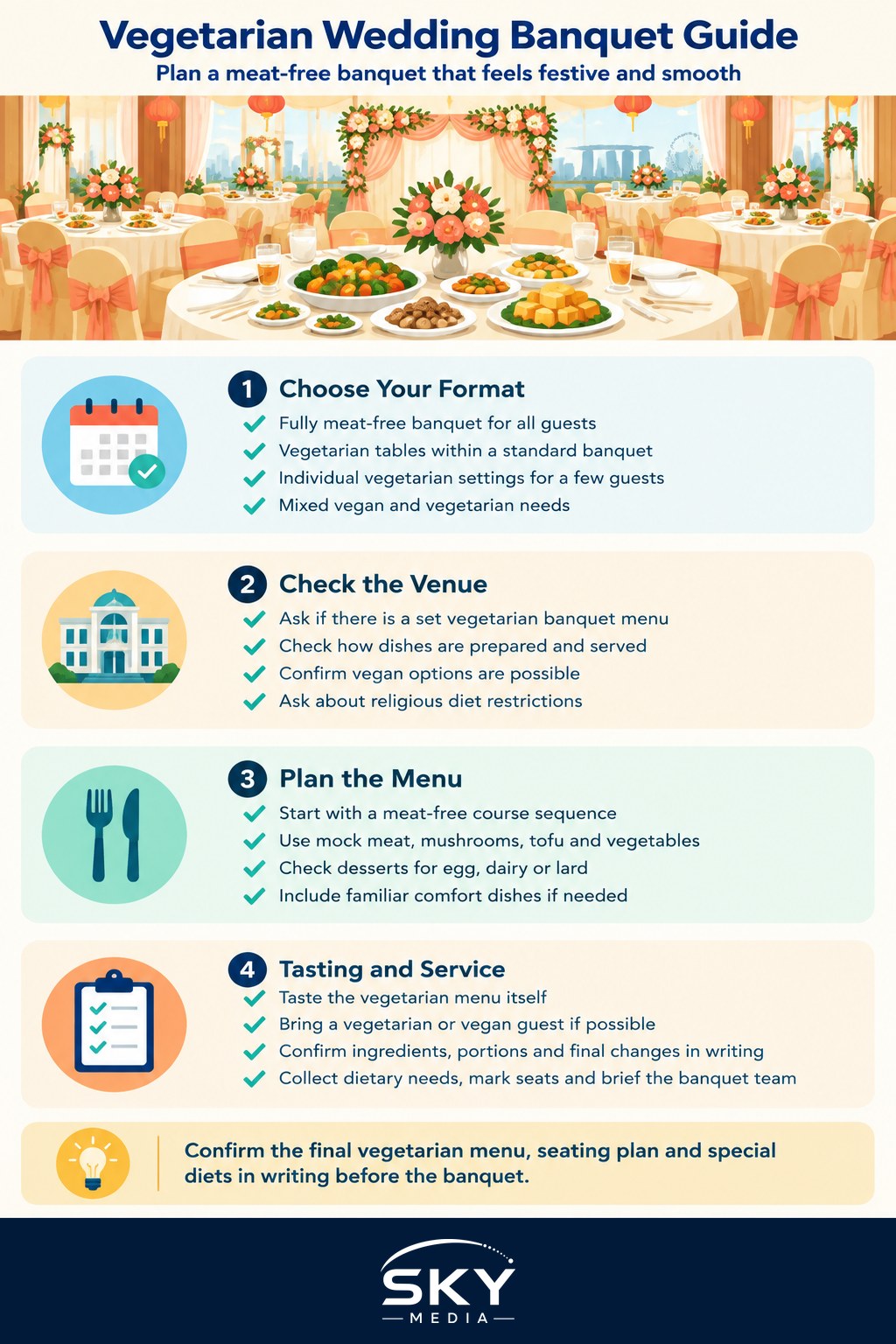
Two Approaches: Fully Meat-Free or Vegetarian Tables
Start by deciding which of these you are planning, because it shapes your choice of venue.
A fully meat-free banquet. Every guest gets the same vegetarian or vegan menu. Couples choose this when they are vegetarian themselves, for Buddhist or other religious reasons, or because it reflects their values. It is simpler to manage on the day, since there is only one menu, but it needs a kitchen that can produce a full, celebratory spread without meat.
A regular banquet with vegetarian tables or settings. Most guests eat the standard menu, while vegetarian and vegan guests are seated together or given individual vegetarian portions. This is the most common arrangement and works well when only a portion of your guests are meat-free.
| Arrangement | Best when | What to check with the venue |
|---|---|---|
| Fully meat-free banquet | The couple or family keeps a vegetarian diet, or most guests are meat-free | Whether the kitchen has a full vegetarian banquet menu, and how dishes are prepared |
| Dedicated vegetarian tables | A meaningful group of guests is vegetarian | Minimum guests per vegetarian table and whether the menu matches the main banquet course for course |
| Individual vegetarian settings | Only a few vegetarian guests, spread across tables | How servers will identify these guests and time their dishes |
| Mixed vegan and vegetarian needs | Some guests avoid eggs, dairy or other ingredients | Whether vegan dishes are prepared separately and labelled clearly |
Choosing a Venue That Does Vegetarian Well
Not every banquet kitchen is equally comfortable with meat-free food. When you shortlist hotels, restaurants or other venues, ask direct questions:
- Is there a set vegetarian banquet menu, or will the chef adapt the standard one? A set menu usually means the kitchen has done it before.
- How are vegetarian dishes prepared? Ask about shared woks, stocks, sauces and oils. Many Chinese dishes rely on oyster sauce, fish sauce, dried shrimp or meat-based stock.
- Can they cater to vegan guests? Vegan means no eggs, dairy or honey as well as no meat or seafood. Some vegetarian menus rely heavily on egg or cream.
- Do they handle specific religious diets? Some Buddhist vegetarians avoid garlic, onions and other pungent vegetables. Some Hindu and Jain guests have their own restrictions. Ask whether the kitchen understands and can meet these needs, rather than assuming.
Our comparison of hotel vs restaurant wedding banquets can help you weigh up venue types more broadly.
Building a Meat-Free Banquet Menu Guests Will Enjoy
A great vegetarian banquet should feel just as festive as any other. Chinese wedding banquets traditionally follow a sequence of courses, and most have meat-free versions:
- Cold platter: Vegetarian versions often feature mock meat, marinated mushrooms, tofu skin rolls and pickled vegetables.
- Soup: A rich mushroom, bamboo pith or herbal soup can take the place of shark’s fin or seafood soups.
- Signature mains: Mock meat dishes, braised mushrooms, monk’s style vegetables, tofu in clay pots and fried “fish” made from yam or beancurd skin.
- Rice or noodles: Fried rice with vegetables, braised e-fu noodles or lotus leaf rice.
- Dessert: Many traditional Chinese desserts, such as yam paste or red bean soup, are already meat-free. For vegan guests, check for egg, dairy or lard.
Some guests love mock meat, while others prefer dishes that celebrate vegetables, mushrooms and tofu as they are. A balance of both usually works well. If your guests include older relatives who may be wary of a meat-free menu, include familiar comfort dishes and make sure portions are generous.
For broader ideas about the local scene, see our guide to vegetarian and vegan food in Singapore.
Getting the Most Out of Your Vegetarian Food Tasting
The food tasting is your best chance to judge whether a kitchen can deliver. When tasting a vegetarian menu:
- Taste the vegetarian menu itself, not only the standard menu. Ask the venue to include it in your tasting session.
- Bring a vegetarian or vegan friend or relative if you are not one yourself. They will spot problems you might miss.
- Ask about ingredients dish by dish. Find out what is in the sauces and stocks.
- Check that the portions match. Vegetarian tables should not feel like an afterthought compared with the main banquet.
- Note any changes in writing. Ask the venue to confirm the final vegetarian menu in your contract or written confirmation.
Our guide to making the most of your wedding banquet food tasting has more tips on what to ask during a session.
Managing Vegetarian Guests on the Day
Most problems happen on the night itself, when a busy service team has to serve hundreds of guests. Clear planning helps:
- Collect dietary needs in your RSVP. Ask guests to state whether they are vegetarian, vegan or have other restrictions, rather than leaving a blank comments field.
- Group vegetarian guests sensibly. If you have enough of them, a vegetarian table keeps things simple. Seat friends and family together so no one feels isolated.
- Mark seats clearly. Use a discreet sign on place cards or a small symbol on the table plan so servers know who receives which dishes.
- Brief your banquet captain. Go through the vegetarian count and seating plan with the venue’s banquet manager before the dinner starts.
- Ask someone to check. A trusted friend or your wedding planner can quietly make sure vegetarian guests received the right food.
Drinks, Cake and Other Details
Meat-free planning does not stop at the main courses.
- Wedding cake: Ask the baker about eggs, dairy and gelatine if you have vegan guests.
- Desserts and sweets: Check jellies and some desserts for gelatine.
- Drinks: Some wines are made using animal-derived processing aids. If this matters to you or your guests, ask the supplier.
- Tea ceremony and favours: Choose sweets or snacks that are suitable for all your guests.
Talking to Family About a Fully Meat-Free Banquet
If you are planning a fully vegetarian banquet and some relatives expect a traditional spread, a gentle conversation early helps. Explain your reasons, invite key family members to the tasting, and highlight the dishes that show the menu is generous and celebratory. Many families come around once they taste a well-prepared vegetarian menu.
Explore more: The Wedding Banquet Explained in Singapore · How to Make the Most of Your Wedding Banquet Food Tasting · Vegetarian and Vegan Food in Singapore