
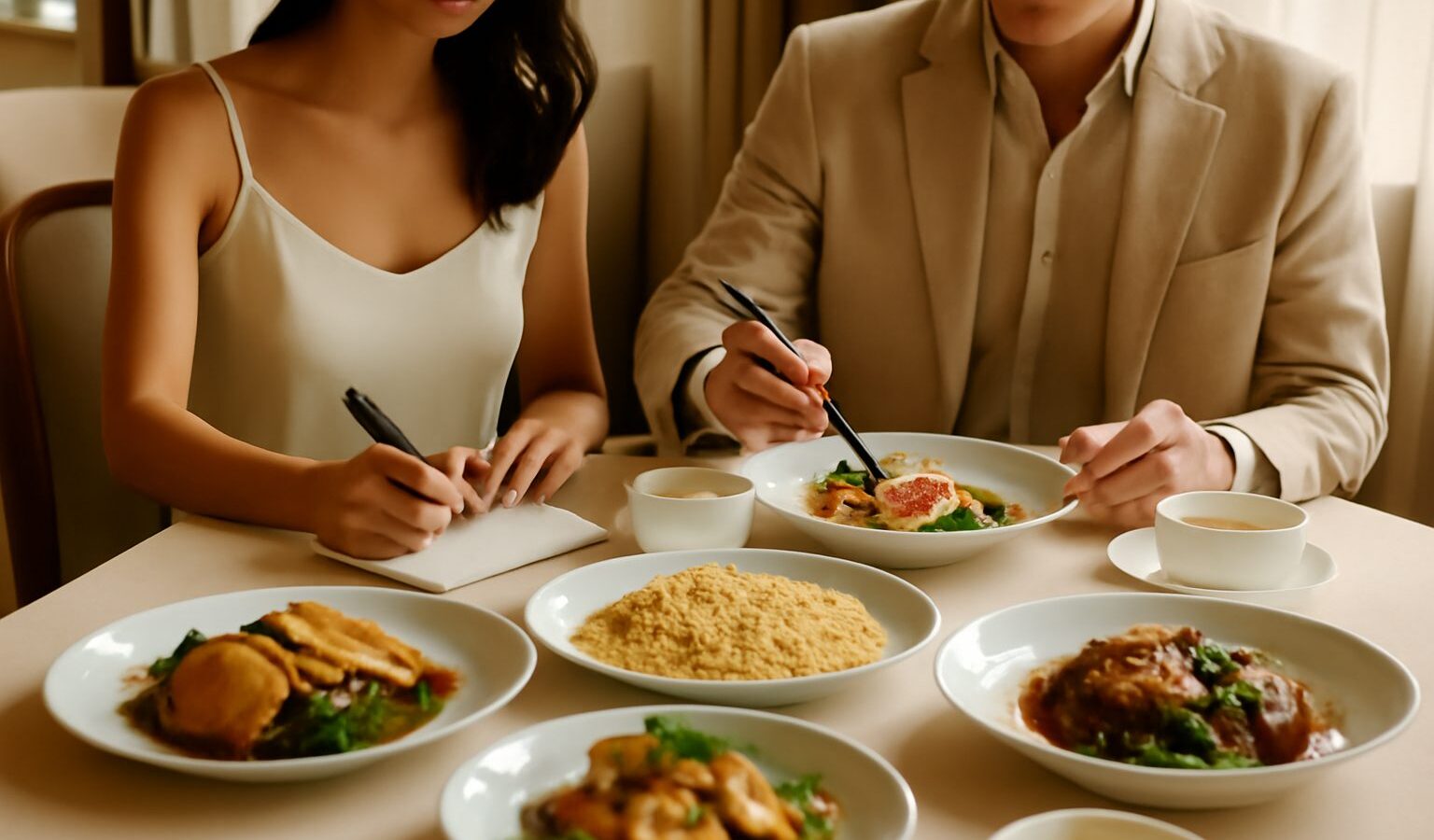
Food is what guests remember about a Singapore wedding banquet, sometimes more than the décor or the speeches. That makes the menu tasting one of the most important sessions in your planning calendar. A wedding food tasting in Singapore is usually offered by hotels and restaurants once you have confirmed your booking, and it is your chance to check quality, adjust dishes and settle details before the big day. This checklist shows you how to use it well.
Every venue handles tastings differently, so read your contract and ask your banquet coordinator how theirs works.

How Wedding Food Tasting Usually Works in Singapore
For a typical Chinese-style banquet, venues often offer a complimentary tasting for one table once a minimum number of tables is booked. Some charge for it, some allow extra guests at a fee, and some only offer tastings on certain days or at set times. Western-style dinners and buffets may follow a different format, such as a smaller plated tasting.
Common features to clarify when you book:
- Is the tasting included, and for how many people?
- When is it held? Many venues schedule tastings a few months before the wedding, sometimes as group sessions with other couples.
- Which menu will you taste? Usually the package you chose, plus any upgrades you are considering.
- Can you swap dishes afterwards, and is there a deadline to confirm the final menu?
If you are still comparing venues, our guide to hotel vs restaurant wedding banquets in Singapore explains how the experience and packages differ. For the bigger picture of how the evening runs, see the wedding banquet explained.
Who to Bring to the Tasting
Your tasting table is a working group, not a party. Choose people whose opinions matter and who will speak honestly.
- Both of you, obviously, and ideally with an appetite.
- Parents or the person paying. In many families, parents host part of the banquet and care deeply about the menu. Involving them now prevents disagreements later.
- An elder or relative who knows banquet food well. They will notice if the shark’s fin alternative is watery or the fish is overcooked.
- Someone with dietary insight. If many guests are vegetarian, halal-observing, or have allergies, bring someone who can judge those options.
- Your wedding planner, if you have one. They know what to ask and what venues usually agree to.
Avoid packing the table with friends who are mainly there for a free dinner. Keep it to people who will help you decide.
What to Test: A Course-by-Course Checklist
Bring a printed copy of the menu and a pen, or use your phone, and score each dish as it arrives. The table below shows what to check and why it matters.
| What to test | What to look for | Why it matters on the day |
|---|---|---|
| Cold platter | Freshness, variety, how well it holds at room temperature | It sits on tables while guests arrive and speeches start |
| Soup | Depth of flavour, temperature, portion | Lukewarm soup is one of the most common banquet complaints |
| Seafood and fish | Texture, freshness, not overcooked | These dishes are expensive and easily ruined in big batches |
| Meat and poultry | Tenderness, seasoning, crispness of skin | Guests notice dry or bland meat immediately |
| Rice or noodles | Not too oily or soggy, enough flavour | Often the dish older guests judge most |
| Dessert | Sweetness level, temperature, presentation | It is the last impression guests take home |
Beyond individual dishes, pay attention to:
- Portion size. Ask whether tasting portions match what each table gets on the day. Ten adults, including a few big eaters, should leave full.
- Spice and salt levels. Think about elderly relatives and children, and ask the chef to adjust where needed.
- Presentation. Photograph each dish so you can compare later and remember what was agreed.
- Timing between courses. On the day, gaps that are too long make guests restless, and courses rushed out cool on the table. Ask how they pace service for a full ballroom.
- Special meals. Taste the vegetarian and other dietary options too, if possible. Guests on special meals should not feel like an afterthought.
Remember that cooking for one table is easier than cooking for many. Ask the coordinator how dishes are prepared and plated for a full banquet, and whether anything is cooked in advance.
Questions to Ask the Banquet Team
Use the tasting to cover practical points too. Useful questions include:
- Can we swap a dish we did not like for another of similar value?
- Is there a top-up for upgrading a dish, and how is it charged?
- How are vegetarian, halal or allergy requirements handled, and when do you need the numbers?
- What is the deadline to confirm the final menu and guest numbers?
- What happens if guest numbers change after that deadline?
- Are drinks such as soft drinks, Chinese tea or beer included, and what are the corkage terms? Our guide to wedding banquet corkage in Singapore explains how this usually works.
- Can leftover dishes be packed for guests or family, and what are the food safety rules on this?
Write the answers down, and ask for any changes to be confirmed in writing by email.
What You Can Usually Negotiate
The tasting is often when couples have the most leverage, because the venue wants the menu settled and the booking secure. Whether a venue agrees depends on its policies, your package and the season, so ask politely and do not assume. Couples commonly ask about:
- Dish swaps within the same price range
- Small upgrades, such as a better fish or an extra side, at a reduced top-up
- Extra tasting guests at no charge, if you are bringing parents from both sides
- Additional vegetarian or children’s meals at a fair rate
- Inclusions such as extra drinks, an additional dessert or small tokens
Prices and promotions vary widely, so compare what you are offered against your contract rather than against anyone else’s wedding.
After the Tasting: Lock It In
Within a day or two, while everything is fresh in your memory, compare notes with everyone who attended. Agree on any changes, then send the venue a clear list. Ask for an updated menu in writing and keep it with your contract. Closer to the wedding, confirm final guest numbers and dietary counts by the agreed deadline.
A well-run wedding food tasting in Singapore takes only an evening, but it shapes the meal that hundreds of guests will share with you. Go prepared, taste carefully and get the agreed details in writing.
Explore more: The Wedding Banquet Explained in Singapore · Hotel vs Restaurant Wedding Banquet in Singapore · Wedding Banquet Corkage and Bringing Your Own Alcohol in Singapore
Further reading: Planning a Vegetarian or Vegan Wedding Banquet in Singapore