
It often starts after a festive meal. A dog snatches a piece of roast pork, gets a plate of leftover curry, or raids the bin, and a day later is vomiting, hunched over and refusing food. Pancreatitis in dogs is a painful inflammation of the pancreas that ranges from mild to life-threatening, and fatty food is one of the best-known triggers. This guide explains what happens, which signs mean you should see a vet urgently, and how low-fat feeding supports recovery. It is general information, not veterinary advice; always follow your own vet’s guidance for your dog.
What the Pancreas Does and What Goes Wrong
The pancreas is a small organ near the stomach and small intestine. It has two main jobs: releasing digestive enzymes that break down food, especially fat, and producing hormones such as insulin that regulate blood sugar.
Normally, the digestive enzymes stay inactive until they reach the intestine. In pancreatitis, they activate too early, inside the pancreas itself. The organ effectively starts to digest its own tissue, causing inflammation, pain and, in serious cases, effects on other organs.
Vets generally describe two forms:
- Acute pancreatitis comes on suddenly and can range from mild to severe.
- Chronic pancreatitis is ongoing, lower-grade inflammation with repeated flare-ups that may be harder to spot.
Common Causes and Fatty-Food Triggers
In many cases a precise cause is never found, but vets commonly point to these risk factors:
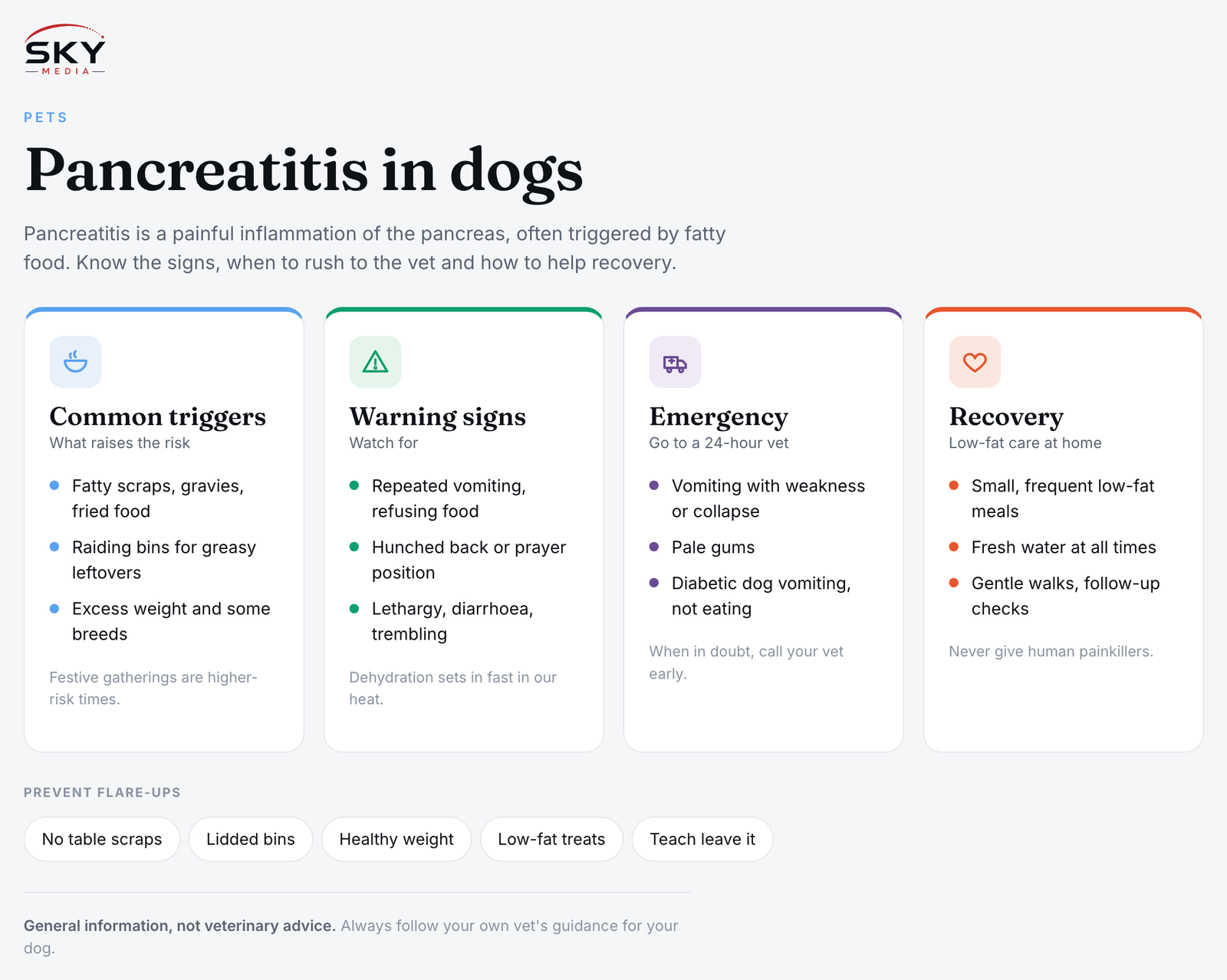
- High-fat meals or scraps. Pork belly, fatty meat trimmings, chicken skin, bacon, butter, rich gravies, fried food and oily curries are classic triggers. Festive periods, barbecues and family gatherings are higher-risk times simply because there is more rich food around and more guests slipping treats under the table.
- Bin raiding. Dogs that scavenge from rubbish bins, food courts or void decks can eat greasy leftovers in quantity.
- Overweight or obesity. Carrying excess weight is widely linked with higher risk.
- Breed tendencies. Some breeds, including Miniature Schnauzers, are often mentioned as being more prone. Small breeds and terriers are frequently discussed too, though any dog can be affected.
- Other health conditions. Diabetes, hormone disorders such as Cushing’s disease or hypothyroidism, and high blood fats are associated with pancreatitis.
- Certain medicines. Some medications have been linked to pancreatitis. Never stop or change a prescribed medicine without speaking to your vet.
A sudden diet change on its own is not the same thing, but a big rich meal on top of a normal diet is exactly the kind of event that can set off an episode in a susceptible dog.
Warning Signs and When It Is an Emergency
Signs vary from subtle to dramatic. Watch for:
- Repeated vomiting, sometimes several times in a few hours
- Loss of appetite or refusing favourite treats
- Abdominal pain: a hunched back, reluctance to be picked up, or the “prayer position” with front legs down and rear end up
- Lethargy and hiding
- Diarrhoea, sometimes greasy or with a strong smell
- Restlessness, panting or trembling
- Fever or, in severe cases, collapse
The table below can help you judge urgency. When in doubt, call your vet; it is always better to be checked early.
| What you see | How urgent | What to do |
|---|---|---|
| One vomit, otherwise bright, eating and drinking | Monitor closely | Withhold rich food, offer water, call the vet if it repeats |
| Several vomits plus refusing food | Same day | Book an urgent vet appointment |
| Hunched posture, “prayer position” or crying when the belly is touched | Same day, sooner if worsening | See a vet promptly; pain needs proper treatment |
| Repeated vomiting with weakness, pale gums or collapse | Emergency | Go to a 24-hour emergency vet clinic right away |
| Known diabetic dog with vomiting and not eating | Emergency | Contact your vet or an emergency clinic immediately |
Dehydration can set in quickly with repeated vomiting, especially in Singapore’s heat, so do not wait several days to see whether it passes. Save the number of your regular vet and the nearest 24-hour clinic in your phone before you ever need them.
How Vets Diagnose and Treat Pancreatitis
There is no single home test. A vet will usually take a history (including what your dog may have eaten), examine the abdomen, and may recommend blood tests, including a pancreas-specific test, and imaging such as an ultrasound. These also help rule out other causes of vomiting, such as a swallowed object or infection. Like tick fever, pancreatitis can look similar to other illnesses early on, which is why testing matters.
Treatment is mainly supportive, meaning it helps the body cope while the inflammation settles. Depending on severity, it may include:
- Fluids, often through a drip, to correct dehydration
- Pain relief, which is a key part of care because pancreatitis is very painful
- Anti-nausea medication
- Early, carefully managed nutrition, often a low-fat diet introduced gradually
- Hospital stays for moderate to severe cases, sometimes for several days
Do not give human painkillers or home remedies. Many common human medicines are dangerous for dogs. Follow your vet’s plan exactly.
Recovery and Low-Fat Feeding at Home
Mild cases may recover within days; severe ones take longer and need close follow-up. Your vet will tell you when and how to restart food. Common recovery advice includes:
- Small, frequent meals. Several small portions are easier on the digestive system than one large one.
- Low-fat food. Your vet may recommend a prescription low-fat gastrointestinal diet, or give guidance on a carefully balanced home-cooked option. Do not design a long-term home diet without professional input, since it needs to be nutritionally complete.
- Fresh water at all times. Hydration helps recovery.
- Gradual return to activity. Short, gentle walks at cooler times of day are better than long outings at first.
- Follow-up checks. Rechecks and repeat blood tests may be advised, especially after a severe episode.
Dogs that have had pancreatitis once may be more likely to have it again, so long-term habits matter.
Preventing Future Flare-Ups
- Make fatty scraps a firm household rule. Brief family members, helpers and visitors, especially during festive gatherings, that the dog does not get table food.
- Secure bins and the kitchen. Use lidded bins and keep leftovers out of reach.
- Keep your dog at a healthy weight. Measure meals and count treats as part of daily food.
- Choose low-fat treats. Ask your vet which are suitable.
- Supervise walks. Practise a strong “leave it” cue so your dog does not scoff food on the ground.
- Keep up regular vet visits. Routine checks can pick up related conditions like diabetes early.
Pancreatitis can be frightening, but with prompt treatment many dogs recover well and go on to live normal lives on a sensible diet. For other conditions worth knowing, see our guides to pyometra in female dogs and cats and kennel cough.