

A kitchen bin is one of those items nobody thinks about until the wrong one is in the way. In a compact HDB or condo kitchen, a bin that is too big blocks a cabinet door, one that is too small overflows by dinner, and one with a flimsy lid invites ants and smells in our warm, humid climate. Choosing the right kitchen bin in Singapore comes down to three things: the opening mechanism, the size and where it will physically sit.
This guide compares the main bin types and sizes so you can pick one that fits both your space and your habits.
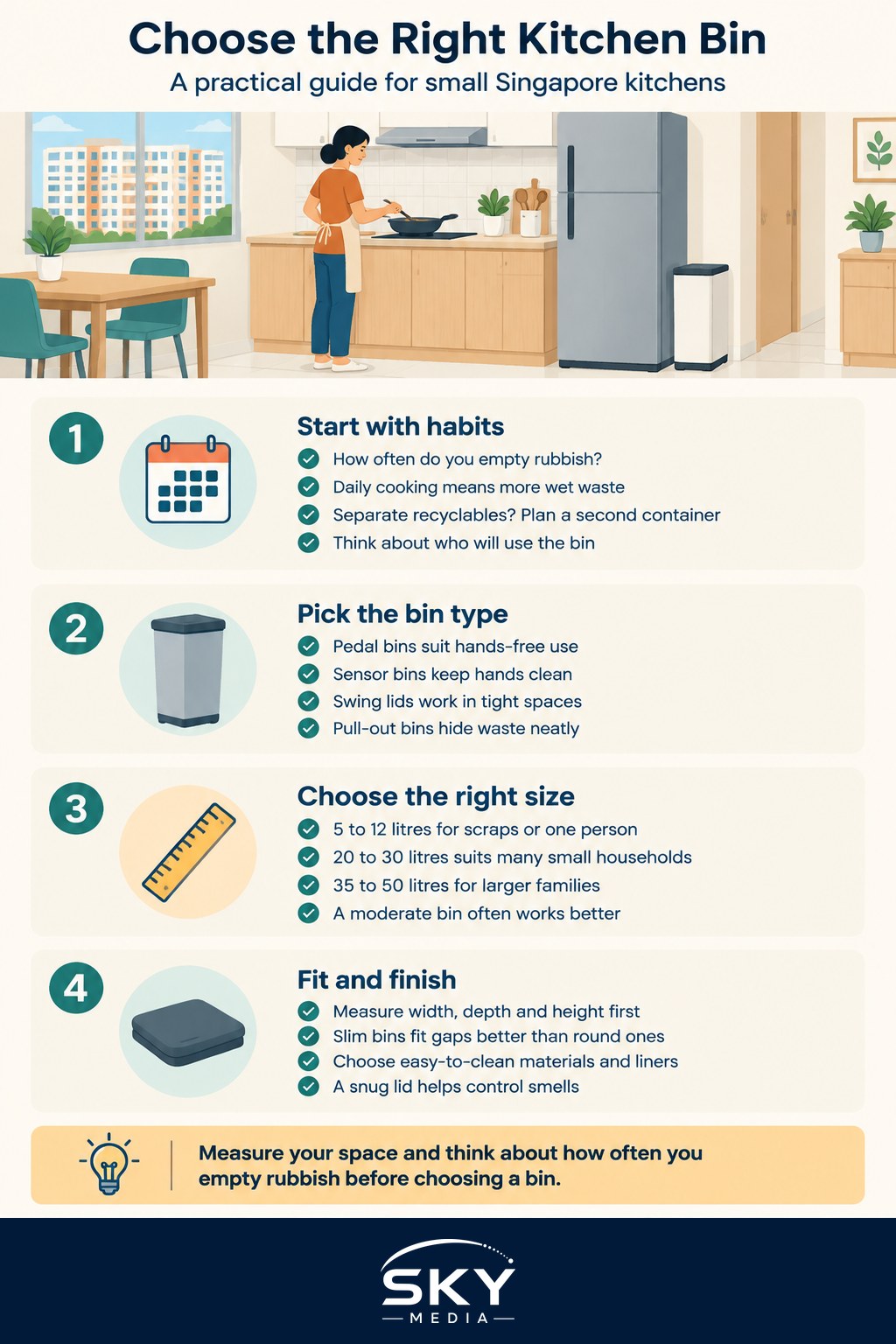
Start With How Your Household Throws Things Away
Before looking at designs, spend a few days noticing your routine.
- How often do you take out the rubbish? Many Singapore households empty the kitchen bin daily, especially in older HDB flats with a refuse chute close by, or in homes where food waste smells quickly in the heat.
- How much do you cook? Daily home cooking produces more wet waste, such as peels, bones and prawn shells, than mostly eating out.
- Do you separate recyclables? If you collect cans, bottles and paper for the blue recycling bins in your estate, you need space for a second container.
- Who uses the bin? Children, elderly parents or a helper may find some opening mechanisms easier than others.
Your answers point you towards the right size and type far more reliably than any product listing.
Pedal, Sensor, Swing and Pull-Out Bins Compared
| Bin type | How it opens | Best for | Watch out for |
|---|---|---|---|
| Pedal bin | Step on a foot pedal to lift the lid | Hands-free use while cooking, most kitchens | Pedal needs floor space in front; cheap hinges can break |
| Sensor bin | Lid opens when a hand passes over the sensor | Hygiene-conscious households, larger floor bins | Needs batteries or charging; may open by accident in tight spots |
| Swing or push lid | Push the lid or flap, which swings back | Small spaces, low cost, wall corners | Lid gets touched and dirty; less airtight for smells |
| Pull-out cabinet bin | Slides out from inside a base cabinet | Clean look, galley kitchens, renovations | Needs a suitable cabinet; capacity limited by cabinet size |
| Door-mounted or hanging bin | Hangs on a cabinet door or rail | Very tight kitchens, food scraps while prepping | Small capacity; must be emptied often |
Pedal bins are the most popular all-rounder. Look for a soft-close lid, which stops the bang and reduces splatter, and a removable inner bucket that lifts out for washing.
Sensor bins keep hands completely clean, which some people value when handling raw meat. Check whether they run on batteries or a rechargeable battery, and whether the lid can be locked open while you clear the counter.
Pull-out bins are worth considering if you are renovating or replacing cabinetry. They hide waste completely and free up floor space. Our kitchen renovation guide explains how to plan cabinet layouts so a pull-out bin fits alongside your sink plumbing.
What Size Bin Do You Actually Need?
Kitchen bins are measured in litres. As a rough guide:
- 5 to 12 litres: Countertop caddies for food scraps, or a main bin for a single person who empties it daily.
- 20 to 30 litres: The sweet spot for most couples and small families in HDB flats. Fits under many counters and next to the fridge.
- 35 to 50 litres: Larger families who cook daily and empty the bin less often. Needs a proper floor spot and is heavy when full.
A bigger bin is not always better here. Food waste left for several days in Singapore’s heat attracts ants, cockroaches and fruit flies. Many households do better with a moderate bin emptied every day than a huge one emptied twice a week.
Also check the bin liner size. A bin that takes a standard supermarket or bin bag size is cheaper and easier to run than one that needs special liners. If you are weighing up greener liners, our guide on whether biodegradable bin liners are worth it in Singapore covers the pros and cons.
Fitting a Bin Into a Small HDB or Condo Kitchen
Measure before you buy. Note the width, depth and height of the spot, and remember that a lid needs clearance above to open fully.
Popular spots in compact kitchens include:
- Beside the fridge, where a slim, tall bin can tuck into a narrow gap
- At the end of a counter run, close to where you prep food
- Inside the cabinet under the sink, using a pull-out frame or a small bin on the cabinet floor
- Near the service yard door, if you have one, which keeps smells away from the cooking area
Slim, rectangular bins use space far better than round ones against a wall. Two slim bins side by side, one for general waste and one for recyclables, often fit where one round bin would. A dual-compartment bin does the same job in one footprint.
For more space-saving ideas, see our guide to small kitchen cooking in an HDB flat.
Materials, Lids and Odour Control
- Stainless steel looks sleek and resists dents, but shows fingerprints unless it has a fingerprint-resistant finish. Check that the base will not rust on a wet floor.
- Plastic is light, cheap and easy to wash, though it can absorb smells over time.
- Removable inner buckets make cleaning much easier and catch leaks from torn bags.
- A well-sealed lid matters more in Singapore than in cooler countries. Look for a lid that closes snugly, with a rubber seal if possible.
- Odour filters, such as carbon filters in the lid, help a little but are no substitute for emptying the bin often.
Wipe the inside of the bin weekly and wash it thoroughly every few weeks. Letting it dry fully, ideally in the service yard, helps prevent mould and lingering smells.
A Quick Buying Checklist
Before you check out, confirm that the bin:
- Fits the measured spot with enough lid clearance
- Suits who will use it, whether foot pedal, sensor or push lid
- Holds a sensible amount for how often you empty it
- Takes affordable, easy-to-find liners
- Has a removable inner bucket and a lid that seals well
- Leaves space for a recycling container if you sort waste
With a little measuring and an honest look at your habits, choosing a kitchen bin in Singapore becomes simple, and your small kitchen stays cleaner, quieter and easier to work in.
Further reading: How to Choose a Dish Drying Rack for a Small Singapore Kitchen