
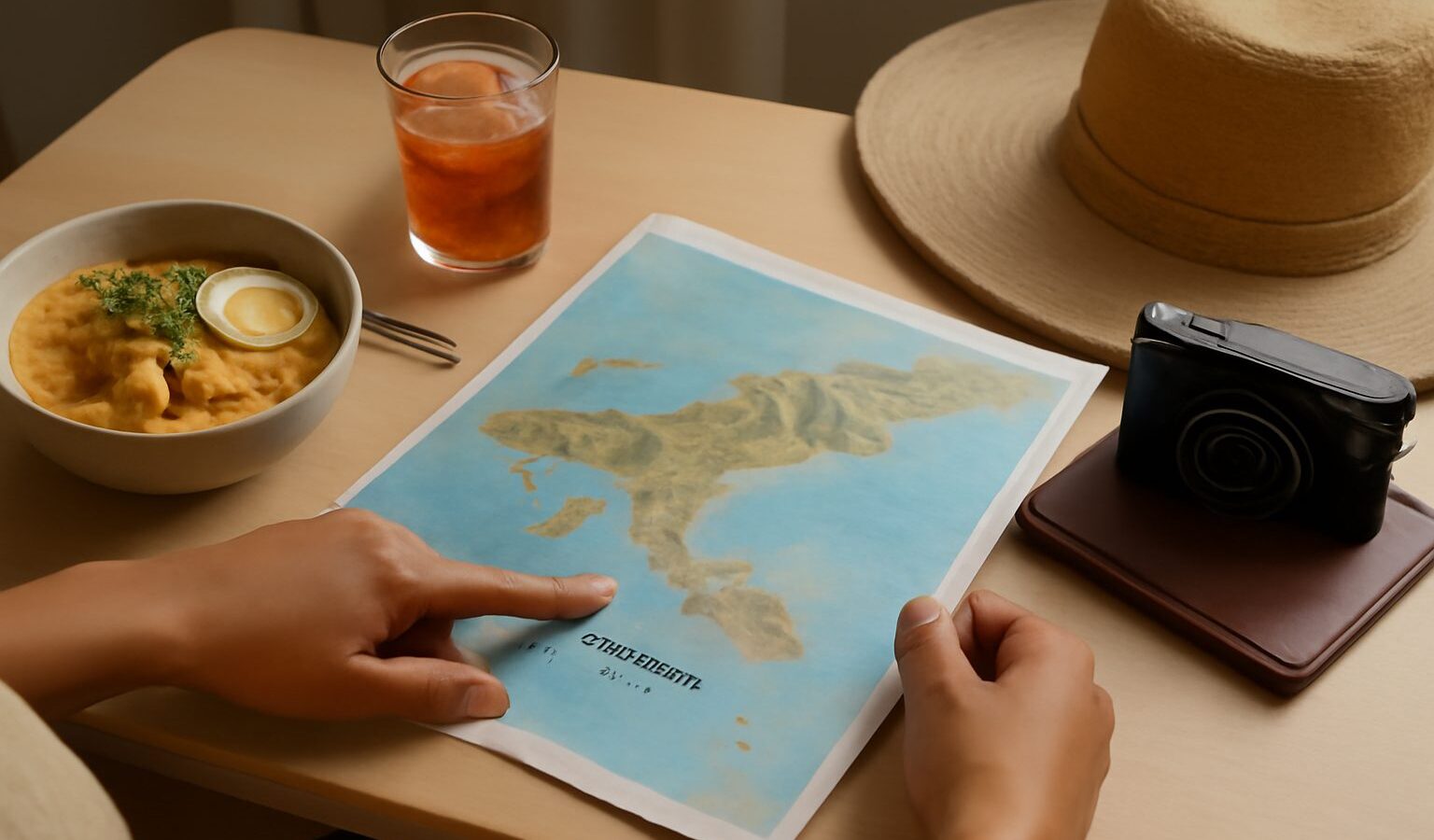
Reaching Komodo Island from Singapore takes a connection, but the payoff is one of the most remarkable wildlife and seascape experiences in Southeast Asia. Part of Komodo National Park, a UNESCO World Heritage Site in East Nusa Tenggara, the islands are home to the wild Komodo dragon, the largest lizard on Earth, alongside ridge-top viewpoints, coral reefs and pink-tinged beaches. This guide, written for travellers leaving Changi, explains how to get there, how to plan a boat trip and how to behave responsibly around the wildlife.
Getting There From Changi
There are no direct flights from Singapore to Komodo, so the journey involves a connection. The usual approach is to fly from Changi to an Indonesian hub, most often Bali (Denpasar) or Jakarta, then take a short domestic flight to Labuan Bajo, the harbour town on the western tip of Flores that serves as the gateway to the park. Its airport is small but well connected to the main Indonesian hubs.
From Labuan Bajo, everything happens by boat. Because routings, carriers and timings shift with the season, confirm the current connections when you book and leave a comfortable buffer for the domestic leg.
On entry: Indonesia’s visa and entry rules depend on your passport and change over time. A Singapore passport and a China passport can face different conditions for the same trip, so check the official Indonesian immigration guidance for your own nationality before booking, and confirm passport validity and Singapore re-entry with ICA.
When to Go and How Long to Stay
The region has a marked dry season, broadly through the middle of the year, which is generally the most reliable window for calm seas, clear water and easy boat trips. The wetter months can bring rougher crossings and murkier visibility for snorkelling. Conditions vary, so check close to your dates.
Most travellers spend three to five days based in or around Labuan Bajo, taking one or more day trips or an overnight boat into the park. A full day is enough for a taste, but two or three days on the water let you reach the farther islands, snorkel properly and catch a sunrise or sunset without rushing. Remember that this is the deep dry tropics, so the sun is fierce on open decks even when a sea breeze makes it feel cool, and a longer trip gives the weather room to cooperate on at least one clear morning.
Exploring the Park by Boat
Komodo is explored on day boats and multi-day liveaboards, and the classic highlights include:
- Komodo and Rinca Islands: the main places to see wild dragons on a ranger-led walk.
- Padar Island: the famous ridge hike to a viewpoint over three curved bays, one of Indonesia’s most photographed landscapes.
- Pink Beach (Pantai Merah): a beach with a soft rose tint from crushed coral, good for swimming and snorkelling.
- Snorkelling and diving sites: rich reefs where manta rays and turtles are often seen in the right season.
Choose a reputable operator, check the boat’s safety equipment, and be realistic about your swimming ability, since some currents are strong.
Respecting the Dragons and the Wildlife
The Komodo dragon is a genuinely wild, powerful predator, and the park exists to protect it. Behave accordingly:
- Always stay with your ranger and follow every instruction; never wander off to approach an animal.
- Keep a safe distance and do not disturb, corner, chase or provoke the dragons for a photo.
- Never feed the wildlife, which harms the animals and their natural behaviour.
- Move calmly and quietly, as sudden movements can trigger a defensive response.
- Take nothing and leave nothing, carrying out all litter and respecting the protected habitat on land and reef.
This is a place where the visitor adapts to the wildlife, not the other way around. Treating the dragons and the marine life with respect keeps both you and them safe.
Where to Base Yourself and Getting Around
Labuan Bajo is the base for almost everyone. It has grown into a lively little harbour town with guesthouses, mid-range hotels and higher-end stays on the hills above the bay, plus dive shops, tour desks and waterfront restaurants for sunset. Staying near the harbour keeps you close to the boat jetties and tour operators.
The table below sketches how trip styles tend to work from Singapore.
| Trip style | Best for | Rough shape |
|---|---|---|
| Day trips from town | First-timers, flexible plans | Sleep in Labuan Bajo, boat by day |
| Overnight boat | Reaching farther islands | One or two nights aboard |
| Liveaboard trip | Serious divers and snorkellers | Several days at sea |
Beyond the boats, the town itself is walkable, and ride-hailing or short taxi rides cover the rest.
What to Eat, Costs and Practical Tips
Labuan Bajo’s food leans on fresh seafood, grilled fish and Indonesian staples, with a growing range of cafes and restaurants along the waterfront. Favour busy, freshly cooked spots and stick to sealed bottled water and drinks without loose ice to keep your stomach settled.
Costs sit higher than mainland Indonesia because boats, park fees and the remote setting add up, though food and simple stays remain reasonable. Prices and exchange rates change, so treat any figure as a rough guide and check current rates before you travel.
A few final tips:
- Language: Indonesian is standard; a few phrases help, and English is understood in tourism.
- Connectivity: a local eSIM or SIM helps in town, but expect little or no signal out at sea.
- Sun and sea: bring reef-safe sunscreen, a hat and motion-sickness remedies for choppy crossings.
- Health and insurance: buy travel insurance that covers water activities, and check MOH or a travel clinic before you go.
Komodo asks for effort and respect, and returns something rare: dragons in the wild, ridgelines over turquoise bays and reefs full of life, all within a connecting flight of Changi.
Explore more from Sky Media: Surabaya from Singapore, Medan from Singapore and Phong Nha from Singapore.