
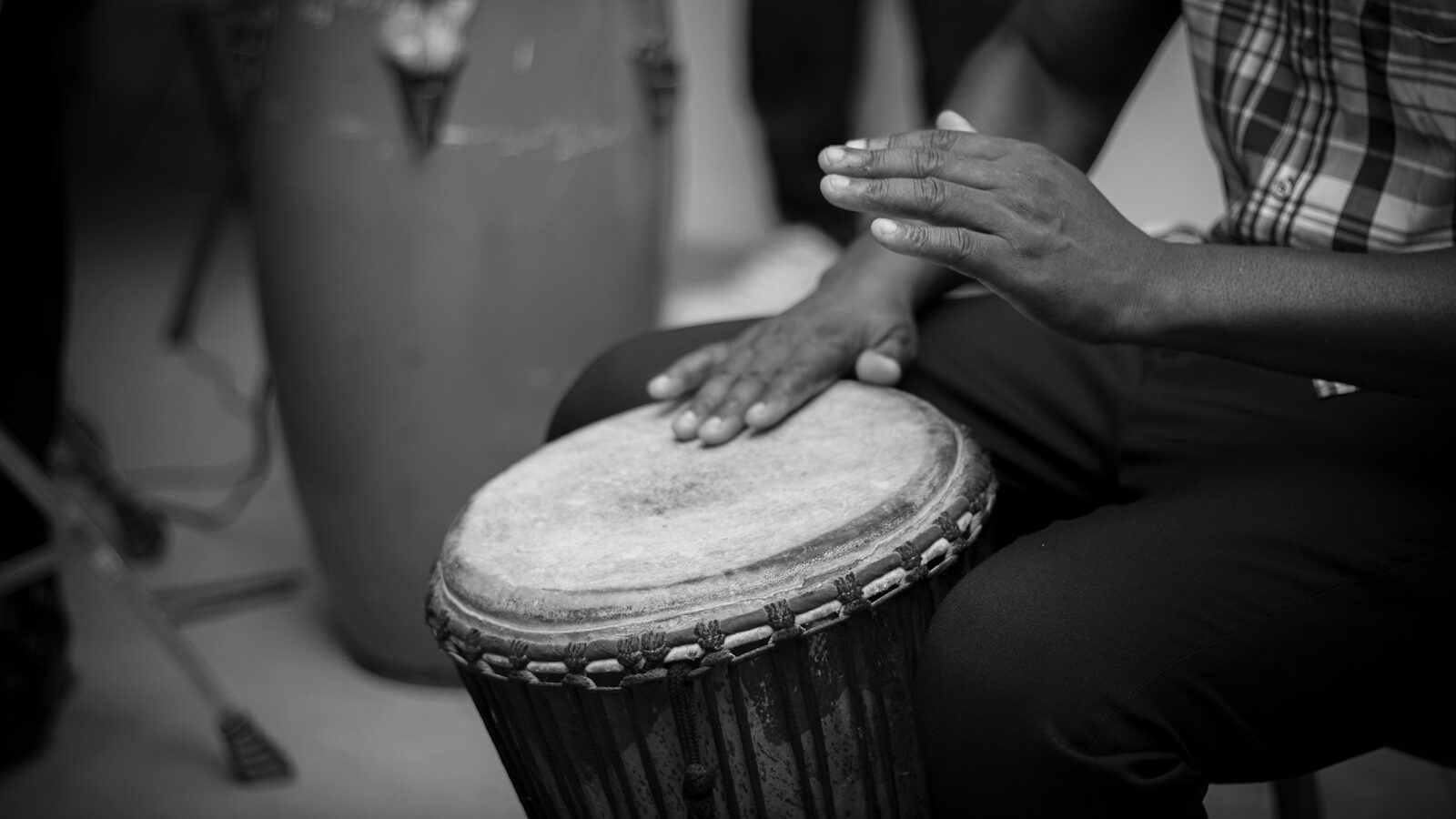
There is something joyful and communal about African hand drumming. The djembe, a goblet-shaped drum played with bare hands, can produce booming bass notes and sharp, ringing tones, and it sits at the heart of drum circles and workshops all over the world. Learning the djembe in Singapore is a wonderfully accessible way into rhythm, whether you want to join group sessions, add percussion to a band, or simply feel the release of a good drumming session. This guide will help you start well and play kindly.
The Djembe and Its Family
The djembe comes from West Africa and is carved from a single piece of wood with a drumhead traditionally made of animal skin, tightened by an intricate system of ropes. You play it with your hands, and the magic is in the range of sounds from one drum. A strike in the centre gives a deep bass, a strike near the edge gives a sharp, cutting slap, and a controlled hit between the two gives an open tone. Learning to produce these three sounds clearly is the foundation of djembe playing.
The djembe is often played alongside other African drums, such as the dundun family of bass drums, and it shines in ensembles where different parts interlock into a rich, layered groove. This social, call-and-response spirit is a big part of the appeal. You do not need to be a soloist to enjoy it; the fun is in playing together. If broader percussion interests you, our guide to learning hand drums and percussion in Singapore sits nicely alongside this one, and African rhythms are a rich part of the wider world of global music.
The instrument is beginner-friendly because you can make a satisfying sound immediately, yet it offers years of depth as you refine your tones, speed, and repertoire of traditional rhythms. It is easy to start and genuinely deep to master.
Protect Your Hearing and Your Neighbours
African drums are loud, and this deserves real attention. A djembe played with full-hand slaps can reach volumes that, over time, can cause permanent hearing damage. In a drum circle with several drummers, the sound builds quickly. Take this seriously and enjoyably: play at sensible levels, take regular breaks, and use musician’s earplugs when you play for long stretches or in a group. Good earplugs designed for musicians lower the volume without muffling the sound, so you can still hear the music clearly. Protecting your ears is not being precious; it is how you keep drumming for life.
Noise also matters at home. In an HDB flat, a djembe’s powerful bass can carry through floors and walls and easily disturb your neighbours. Be thoughtful about this. Practise only at reasonable hours, keep your playing gentler when you must, and place the drum on a mat to reduce vibration through the floor. If you live in a flat and want to practise seriously, consider joining a community drum circle or a studio session where louder playing is welcome, and keep home practice softer. Our guide to learning the drums in an HDB flat explores noise-conscious practice in more detail, and the same courtesy applies to hand drums.
Getting Started in Singapore
Djembe is easy to begin on your own, but a class or a drum circle is the ideal way in. Group sessions teach you the core tones, get you playing rhythms with others straight away, and are simply more fun. Singapore has an active community around African drumming, with workshops and circles you can join. Our guide to finding a music teacher in Singapore can help if you would like structured lessons.
When choosing a drum, feel and sound matter more than looks. Rope-tuned wooden djembes with natural skins have a traditional sound but need retuning and care, while some drums use synthetic heads that are lower maintenance. Try a few in person if you can, since tone varies a lot from drum to drum. We will not name a “best” brand or quote prices; check current reviews and pick one that sounds good and feels comfortable under your hands.
A simple path to begin:
- Learn the three core sounds: bass, tone, and slap, one at a time.
- Practise them until each is clean and consistent.
- Play simple repeating patterns with a steady pulse.
- Join a circle or class to practise interlocking rhythms with others.
Timing is central, so work with a steady beat from the start. Our guide on how to practise music effectively offers techniques that transfer directly to drumming.
Mind your hands and body too. Enthusiastic beginners often hit too hard and end up with sore palms and wrists. Let the sound come from relaxed, efficient motion rather than force, keep good posture, take breaks, and never push through pain. If soreness lingers, rest and see a doctor or physiotherapist rather than playing through it.
Feel the Rhythm
Djembe drumming is as much about connection and joy as it is about technique. It gets you playing with others, it is a brilliant stress-reliever, and it rewards you the moment you sit down. Protect your ears, be kind to your neighbours and your hands, and let yourself enjoy the groove. Find a circle, get a decent drum, and start with clean tones. The rhythm will carry you from there.