

The french horn has one of the warmest, most golden voices in the whole orchestra, capable of both heroic fanfares and the softest, most tender melodies. It is also known, fairly, as one of the trickier brass instruments to master. If you love that rich sound and are thinking about taking up the french horn in Singapore, this guide lays out what learning it really involves, from the honest costs to breathing, practising in a flat, and looking after yourself. It asks for patience, but the reward is a genuinely gorgeous instrument.
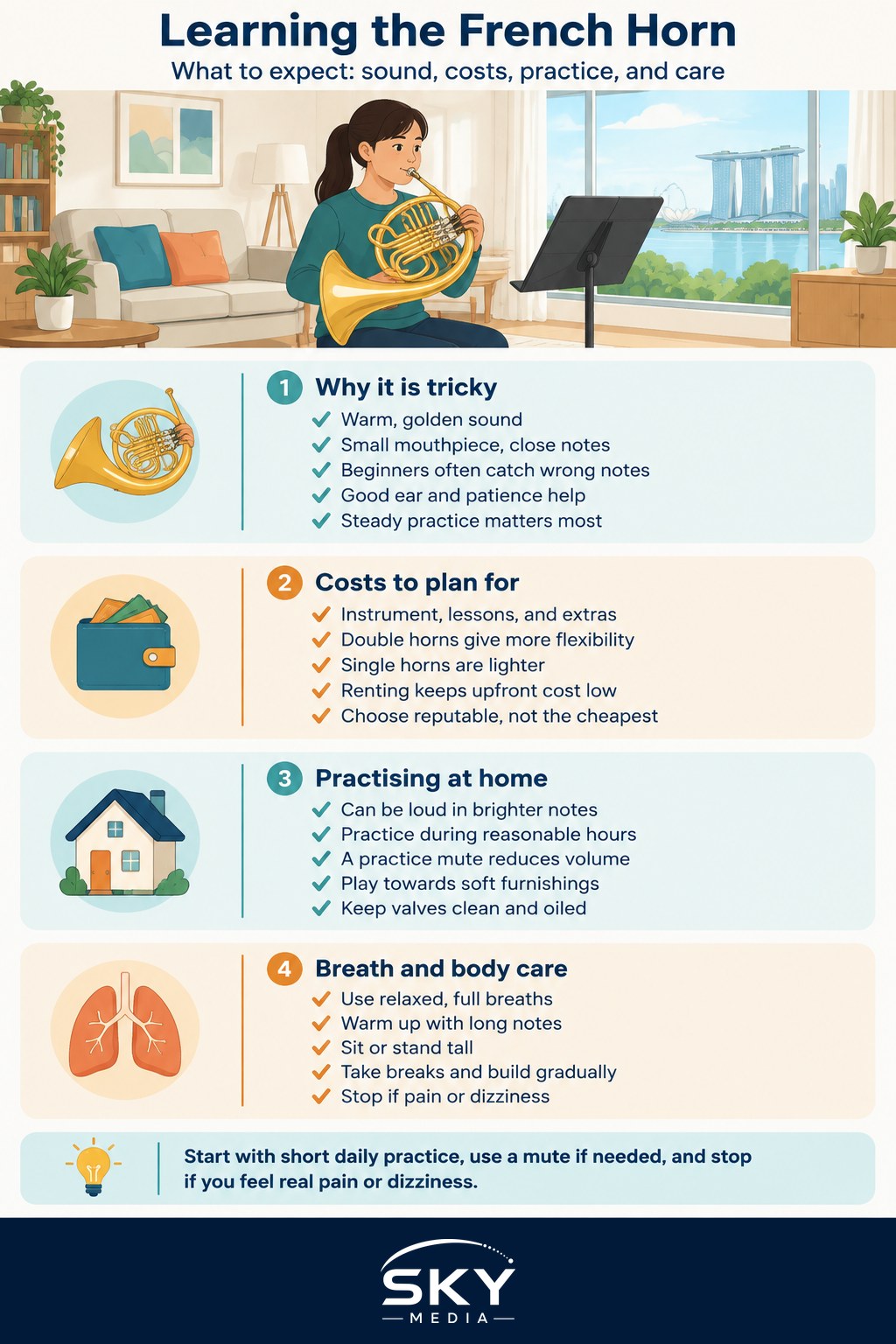
Why the french horn is special and demanding
The french horn is a brass instrument with a long, coiled length of tubing that flares into a wide bell, which you rest your right hand inside as you play. Like all brass, you make the sound by buzzing your lips into a small cup-shaped mouthpiece, and you change notes with a combination of your lip tension, your air, and the valves you press with your left hand.
The horn earns its tricky reputation for good reasons. Its mouthpiece is small, and the notes sit close together, so the difference between one note and the note above it is a subtle change in your lips and breath. This means beginners often catch the wrong note at first, which is completely normal and improves with practice. The horn rewards a good ear, so listening carefully and singing the note in your head before you play it genuinely helps.
None of this should scare you off. Thousands of ordinary learners play the french horn happily. It simply means that steady, patient practice and a good teacher matter more here than on some other instruments, and that early wobbles are part of the journey rather than a sign you are not cut out for it.
Counting the cost honestly
The french horn is a moderate to significant investment. The main costs are the instrument, lessons, and smaller extras like valve oil, a mouthpiece, a cleaning kit and a case.
Horns come in different types, and a common recommendation for learners is a double horn, which gives you more flexibility and security across the range, though single horns are lighter and can suit younger players. As with any instrument, a very cheap, badly made horn can leak air and play out of tune in ways that frustrate you, so aim for something reputable rather than the cheapest option you can find.
Renting is a sensible way to begin, since it keeps your upfront cost low and lets you test your commitment before buying. Lessons are the other regular expense, and they are worth it, because the horn’s quirks are much easier to navigate with a teacher guiding your ear and your technique. If you are still choosing an instrument, our guide on how to choose your first instrument can help, and finding a music teacher in Singapore covers how to find someone good.
Practising in an HDB flat
Here is an honest point about brass. The french horn can be loud, especially in its brighter, higher register, so if you live in a flat with shared walls, be considerate. It is not as piercing as a trumpet and its bell points backwards, which softens what your neighbours hear, but it still carries.
Practise during reasonable daytime hours, and if you sense the sound is travelling, adjust your timing or let neighbours know you are learning. Ask your teacher about a practice mute, which fits into the bell and reduces the volume considerably, making home practice much more neighbourly. Playing towards soft furnishings or a corner can help too. A little courtesy goes a long way towards keeping the peace while you learn.
Singapore’s humidity is worth a thought as well. Moisture builds up inside brass instruments as you play, so empty the water keys regularly, and keep valves clean and oiled so they do not stick. The general principles in our notes on caring for your audio gear in the humidity apply to looking after a horn in this climate too.
Breathing, posture and avoiding strain
Brass playing is powered by your breath, so good breathing is the foundation of good horn playing. Learn to take a relaxed, full breath from low in your body, and support the note with steady air rather than by squeezing your lips or throat. Warm up every session with gentle long notes and easy buzzing before you tackle anything demanding.
Posture matters for both sound and comfort. Sit or stand tall with relaxed shoulders, and support the horn’s weight sensibly, since it is a heavy instrument to hold for long stretches. Take breaks, and build up your playing time gradually so your lips, which are effectively a small muscle, do not get overworked. Do not push through sharp pain in your lips, jaw, neck or arms. Some tiredness is normal as you build stamina, but real pain is a signal to rest and check your technique, and to see a doctor if it persists. If you ever feel dizzy from the breathing, stop and rest.
Getting started and staying motivated
Begin with producing a steady buzz and a clean long note before worrying about tunes, and train your ear alongside your lips so you can hear the note before you play it. Short, regular practice beats occasional marathons, and our guide on how to practise music effectively will help you make the most of your time.
The french horn is happiest surrounded by other players. Joining a school band, a community orchestra or a brass ensemble gives you real music to aim for and the thrill of your warm tone blending into a bigger sound. Because good horn players are always in demand, you may find groups keen to have you sooner than you think.
Learning the french horn takes patience, a forgiving attitude towards early wrong notes, and steady practice, but few instruments reward you with such a beautiful, singing voice. Take it slowly, breathe well, look after your lips and body, and enjoy chasing that golden sound.
Frequently Asked Questions
Should a beginner choose a single or double french horn? The article notes that a double horn gives more flexibility and security across the range, while single horns are lighter and can suit younger players. Ask your teacher before choosing, since the best fit depends on age, budget and goals.
Why do I keep hitting the wrong note on the french horn? Notes sit close together, so tiny changes in lips and air decide which note sounds. Wrong notes are normal for beginners. Sing or hear the note in your head before you play, and ask your teacher to help train your ear.
How do I clean the french horn and stop valves sticking? Empty the water keys regularly, keep the valves clean and oiled, and wipe the instrument after playing. Humidity speeds up moisture build-up, so do this each session. Your teacher can show the correct cleaning routine and which valve oil to use.
How long should a beginner practise the french horn each day? Short, regular sessions beat occasional marathons, and the article gives no set time. Build practice gradually so the lips do not tire. Stop if you feel pain, and let your teacher suggest a sensible schedule for your level.
Can I join a brass band or orchestra as a beginner horn player? Many school bands and community groups welcome new players, and good horn players are in demand. Check with the group on its entry level. Joining while you are still learning gives you real music to aim for and a chance to hear your sound blend.