
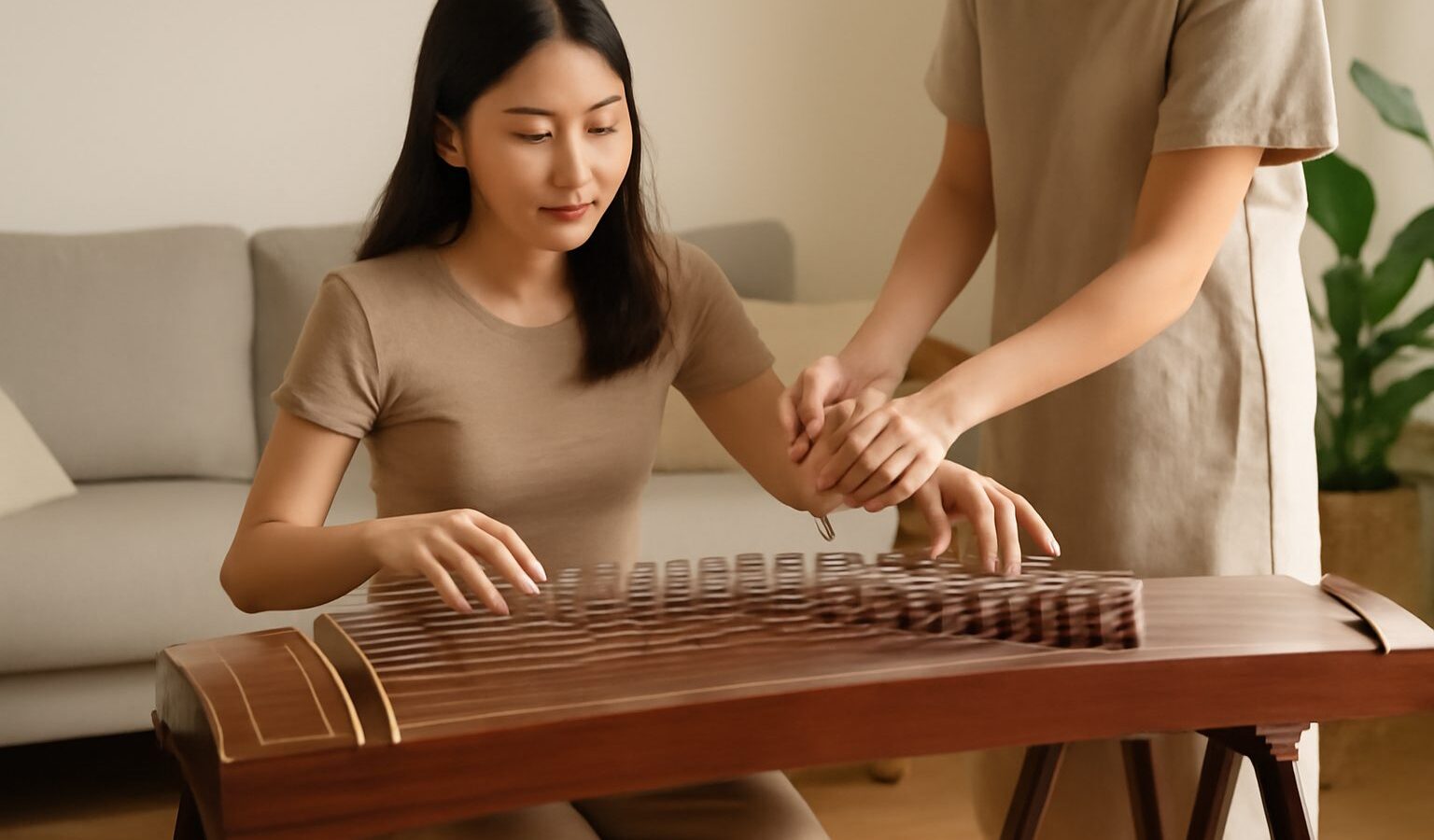
Learning guzheng is one of the friendliest ways into Chinese classical music, because the instrument sounds beautiful almost from your very first pluck. The guzheng is a long, plucked zither with a warm, cascading tone, and it has been played in China for well over two thousand years. In a bilingual Singapore, it is a popular choice for children and adults alike, and its bright, flowing sound makes it a joy to practise. This guide covers what the instrument is, what you need to begin, and how to look after it in our humid climate.
Understanding the Instrument
A modern guzheng is a large wooden soundboard, usually around one and a half metres long, strung with a set of strings, most commonly twenty-one on today’s standard concert instruments. Each string passes over its own movable bridge, a small A-shaped piece that sits on the soundboard. By sliding these bridges left or right, you tune the whole instrument, and their position is what allows the guzheng’s signature bends and slides.
The strings are tuned to a pentatonic scale, meaning a five-note pattern that repeats across the range, most often based on D. This is a big reason beginners sound good so quickly: because the open strings already form a pleasant scale, even simple plucking produces music rather than noise. Your right hand plucks the strings near the bridges to make the notes, while your left hand presses and releases the strings on the far side of the bridges to add vibrato, bends and expressive ornaments. That left-hand pressing is the soul of guzheng playing, and it is what separates a mechanical performance from an expressive one.
What You Need to Begin
The guzheng is a commitment in space more than in complexity, so plan for where it will live before you buy.
- A student guzheng. A reputable Chinese instrument shop or a guzheng school can recommend a solid beginner model. Buy in person if you can, so you can hear the tone and check the build.
- A stand or a pair of trestles, since the instrument is played resting horizontally at a comfortable height.
- Finger picks, small plectra usually made of a hard material, which you tape to the fingertips of your plucking hand. Bring your own medical tape or the tape your teacher recommends.
- A tuner or tuning app to set the movable bridges accurately.
- Numbered notation (jianpu) sheets, which most guzheng repertoire uses.
Because tuning involves positioning twenty-one bridges and taping picks correctly, a teacher makes the early stages far smoother. Group and private guzheng classes are widely available across Singapore through community centres, Chinese orchestras and private studios, and many young players start through school co-curricular ensembles.
Getting Started, Step by Step
Guzheng practice rewards a calm, methodical approach. Work through these stages in order.
- Set up correctly. Position the instrument so your plucking hand falls naturally over the strings to the right of the bridges, and sit tall and relaxed.
- Tape your finger picks. Get the angle right so the pick meets the string cleanly, and check with your teacher until it feels secure but not tight.
- Learn basic right-hand plucks. Practise single clear notes with the thumb and index finger, aiming for a full, even tone rather than speed.
- Add left-hand ornaments. Begin with gentle vibrato by pressing lightly on the far side of a bridge, then progress to slides and bends.
- Play simple pentatonic melodies slowly. Because the tuning is friendly, folk tunes come together quickly and build motivation.
- Tune before every session, checking each bridge so the whole instrument sings in tune.
If you want to understand why the pentatonic tuning sounds so complete and how the notes relate, a short read on understanding scales and keys will deepen your playing.
Practising Considerately at Home
The guzheng is resonant, and its bright plucked notes carry through the thin walls typical of HDB flats and condos. Be considerate of neighbours. Keep to reasonable hours, leaning towards daytime and early evening, and follow your town council and HDB guidelines. Playing away from a shared wall, softening a hard-floored room with a rug and closing the window during long sessions all reduce how much sound travels. The guzheng has no true silent version, so if you need to practise late, keep your dynamics gentle and your sessions short, and let immediate neighbours know your rough practice times. A little courtesy keeps everyone happy.
Caring for a Guzheng in Singapore
Humidity is the main enemy of any large wooden instrument here, and the guzheng’s big soundboard is vulnerable to it.
- Keep the instrument out of direct sun and away from air-conditioning that blows straight onto the wood, both of which can dry or warp it.
- Store it in its padded cover when not in use, and consider silica gel packs near the case to buffer moisture swings.
- Wipe the strings and soundboard after playing to remove sweat and dust, which prolongs string life.
- Have a shop check the bridges, strings and tuning pins periodically, and replace strings that sound dull or start to fray.
- Move it carefully, as the movable bridges can shift or topple and knock the tuning out.
Guzheng Compared With Other Starter Instruments
If you are deciding between the guzheng and another first instrument, the trade-offs are worth seeing plainly.
| Consideration | Guzheng | Erhu | Trumpet |
|---|---|---|---|
| Early tone reward | High, sounds pleasant quickly | Slow, bowing takes time | Slow, embouchure takes time |
| Space needed | Large, needs a stand | Small and portable | Small and portable |
| Tuning effort | Set twenty-one bridges each time | Two strings, quick to tune | Fixed, no tuning of pitch |
| Volume in a flat | Moderate to loud, resonant | Moderate, carries high notes | Loud, needs a mute |
| Repertoire | Rich Chinese classical and folk | Rich Chinese folk and orchestral | Broad, classical to jazz |
The right instrument is the one whose sound makes you want to sit down and play. If the guzheng’s shimmering, flowing tone appeals to you, its quick early wins will keep you motivated through the more demanding left-hand techniques.
Staying the Course
The guzheng is generous to beginners, giving beautiful sound early, and that head start is precious. Keep sessions short and frequent, tune carefully, and give your left hand time to master the ornaments that bring the music to life. Joining a class or ensemble adds structure and friends who share the journey, which matters more than any practice tip.
Explore more: learning the erhu, learning the trumpet, and understanding scales and keys.
Learning guzheng connects you to a deep and living tradition while giving you the satisfaction of beautiful sound from the start. Set it up thoughtfully, care for it against the humidity, respect your neighbours, and enjoy the music you will make.