
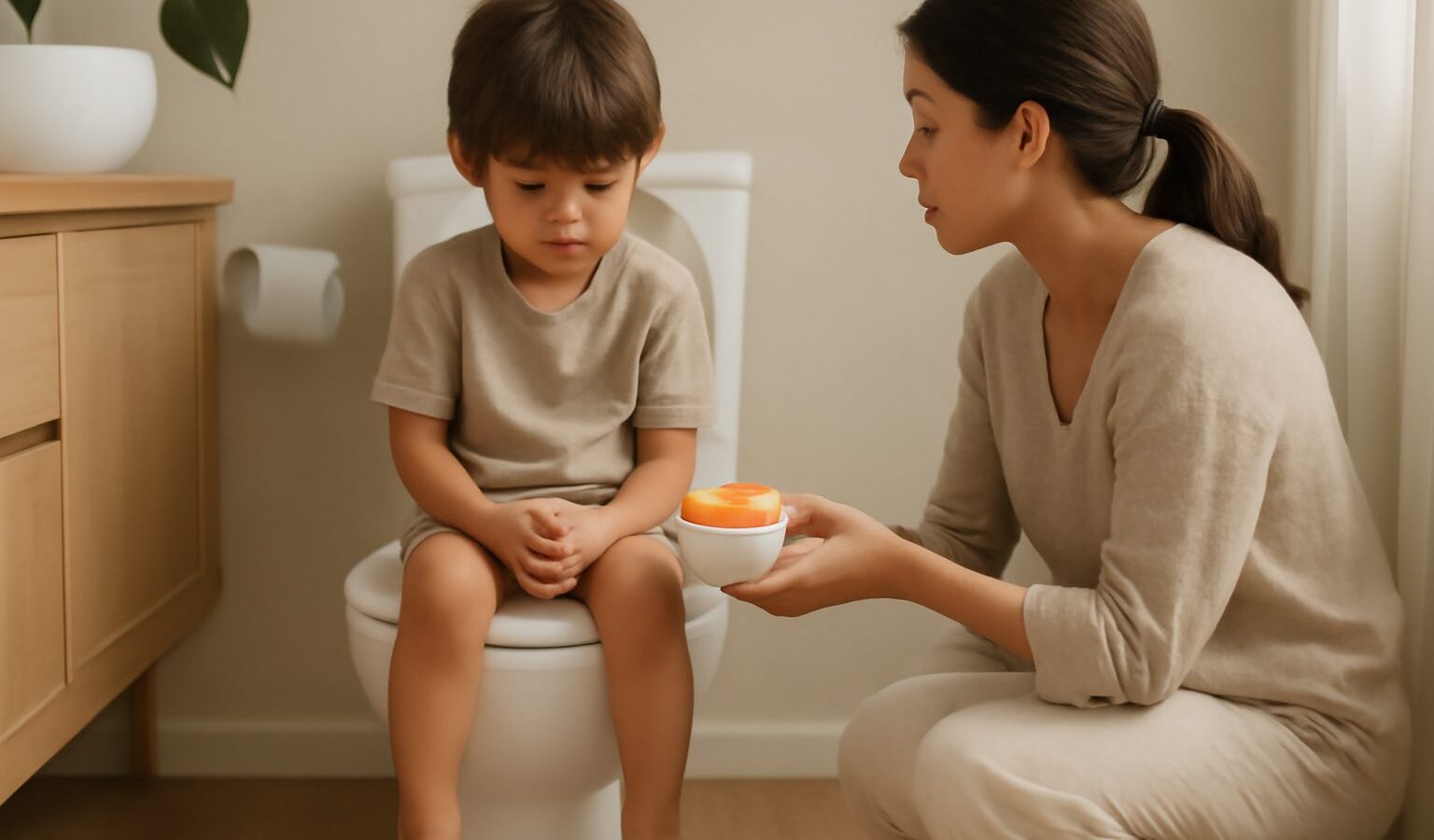
Constipation in little ones is more common than most parents realise, and it can be surprisingly upsetting for the whole family. A child who is straining, holding on, or crying at the toilet is a worried child, and that worry is catching. This gentle guide to child constipation singapore parents can use covers what constipation looks like, the everyday habits that help, and the signs that mean it is time to see a doctor. Please treat it as general information and not medical advice, and not a substitute for a proper assessment. If you are concerned, speak with your doctor.
The reassuring news is that most childhood constipation is not caused by anything serious and responds well to simple changes in fluids, food, activity, and toilet routines. With a bit of patience and a calm approach, most families can help their child feel comfortable again.
What Constipation Looks Like
Constipation is not only about how often a child goes. Children vary a lot, and some naturally go a few times a day while others go every couple of days. What matters more is whether the stools are hard, dry, or painful to pass, and whether your child seems uncomfortable. Fewer bowel movements than usual for your child, hard or pellet-like stools, straining, tummy ache, and a poor appetite can all point to constipation.
One tricky sign is a child who seems to be holding on. When passing a stool has hurt once, a child may start to clench and avoid going, which makes the next stool harder and more painful. This can become a cycle. Some children even have soiling or leakage of soft stool around a harder blockage, which parents sometimes mistake for diarrhoea. Understanding this holding pattern is often the key to breaking it gently.
Everyday Habits That Help
Most mild constipation eases with a few consistent changes. The aim is soft, comfortable stools and a relaxed relationship with the toilet. Try to build these habits gently and without pressure, since stress and pushing tend to make holding worse.
| Everyday step | How it helps |
|---|---|
| Offer water regularly through the day | Keeps stools softer and easier to pass |
| Include fibre-rich foods | Adds bulk and softness to stools |
| Encourage daily active play | Movement helps the bowel work |
| Set a calm, unhurried toilet routine | Gives the body a regular chance to go |
| Use a footstool at the toilet | Helps little legs into a better position |
On fibre, aim for a balanced mix rather than a sudden overload. Fruits such as pears, prunes, and berries, plenty of vegetables, wholegrains, and beans all help. Increase fibre gradually alongside plenty of water, because fibre without enough fluid can sometimes make things worse. In our warm climate, children lose fluid easily, so keep offering drinks throughout the day, especially when they are active or the weather is hot.
Building a Gentle Toilet Routine
A relaxed routine works wonders. Encourage your child to sit on the toilet for a few unhurried minutes after meals, since the body naturally tends to move the bowels after eating. Keep it low-key and positive, never a punishment or a battle. A footstool under the feet helps a child into a natural squat-like position that makes passing a stool easier, and it gives little legs something steady to push against.
Praise the effort of sitting and trying, not just the result. If your child is anxious about the toilet after a painful experience, patience and reassurance matter more than pressure. The goal is to help them feel safe and unhurried, so that going stops feeling like something to dread.
Keeping Mealtimes Positive
It is tempting to nag about vegetables and water when you are worried, but pressure at mealtimes often backfires. Instead, make fibre-rich foods easy and appealing, offer water in a favourite cup, and eat these foods together as a family so they feel normal. Small, steady changes tend to stick better than a sudden overhaul. Limiting very large amounts of certain drinks and offering water more often can also help some children.
Every child is different, so notice what works for yours and build on it gently. Consistency over days and weeks matters more than any single meal.
When to See a Doctor
Simple constipation usually improves with these everyday steps, but there are times when you should seek medical advice rather than managing it at home. Please see a doctor if your child has significant tummy pain, if the constipation is severe or does not improve despite the changes above, or if it keeps coming back. Seek advice promptly if you notice blood in the stool or on the toilet paper, if your child is vomiting, losing weight, or seems generally unwell, or if there is soiling or leakage.
Also see a doctor if a baby under a few months old is constipated, if the constipation started very early in life, or if your child is in a lot of distress. A doctor can check for any underlying cause, offer reassurance, and advise on safe next steps. Never give your child any laxative or medicine for constipation without a doctor’s or pharmacist’s guidance, as the right choice depends on your child’s age and situation.
A Calm Path Forward
Constipation can be a stressful patch, especially when your child is uncomfortable and mealtimes feel tense. Try to stay calm and patient, since your steadiness helps your child relax, which is exactly what a stuck bowel needs. Focus on the simple foundations of fluids, fibre, activity, and a gentle toilet routine, and give the changes time to work. If the warning signs above appear, or if you are simply unsure, a visit to the doctor brings both answers and peace of mind. With warmth and consistency, most children are soon back to feeling comfortable and themselves again.
Explore more
Childrens Nutrition and Healthy Eating
Common Baby Illnesses and When to Worry
Choosing a Paediatrician
When to Take Your Child to A&E vs a GP