
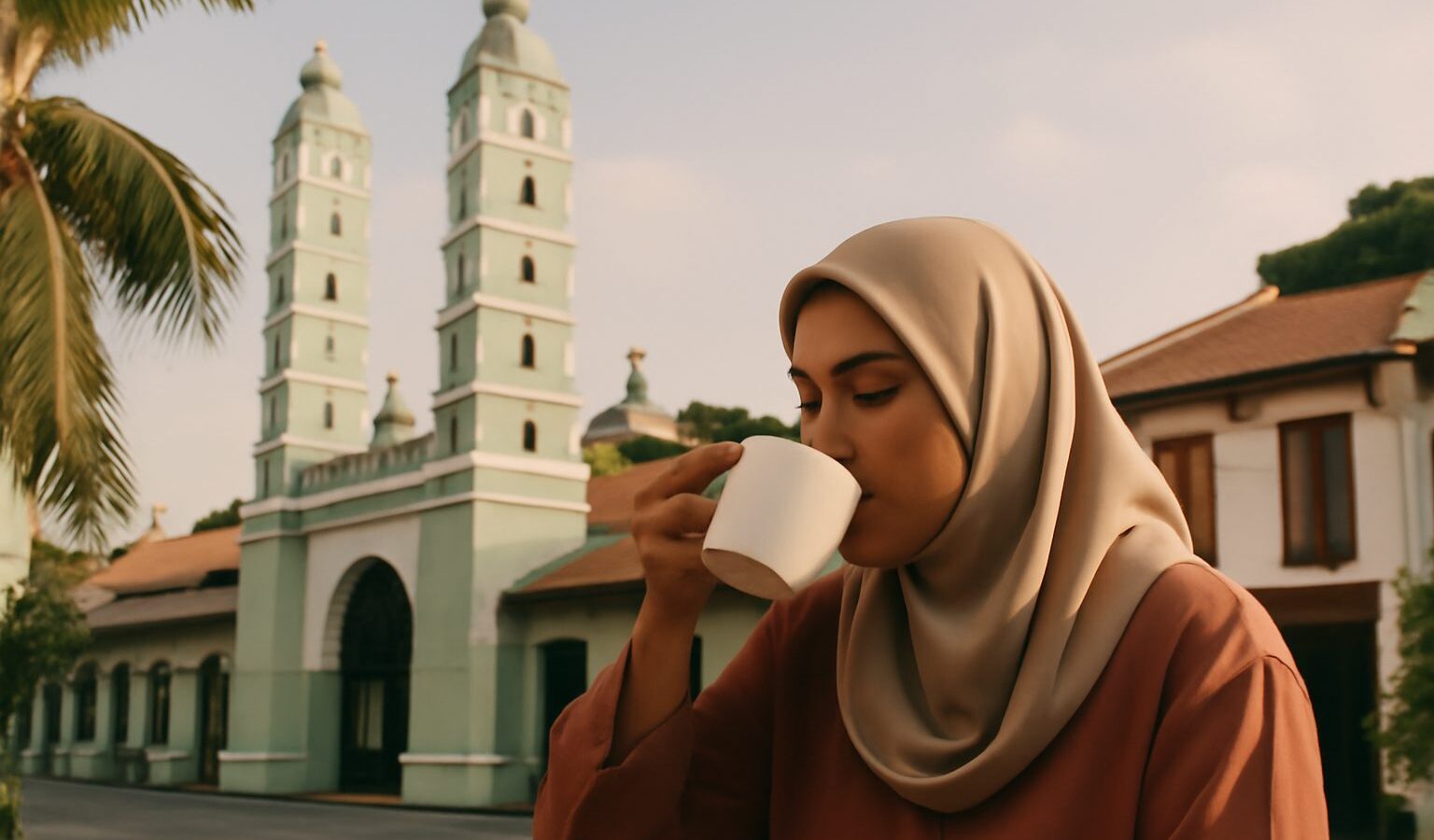
Masjid Jamae Chulia is one of Singapore’s oldest and most distinctive mosques, standing quietly on South Bridge Road in the heart of Chinatown. With its unusual twin towers and green facade, it is both a working place of worship and a treasured piece of the city’s heritage. This guide introduces its story and explains how to visit respectfully.
Significance and history
The mosque was established by the Chulia community, Tamil Muslims from the Coromandel Coast of South India, who were among the early traders and settlers in colonial Singapore. Their presence is woven into the fabric of the old town, and the mosque stands as a lasting reminder of that community’s faith and enterprise. It is one of several historic Muslim buildings that give the area its layered character.
Masjid Jamae is widely recognised for its heritage value and has been accorded protected status as a national monument. Rather than quote exact founding dates from memory, treat the mosque’s own signage and Singapore’s heritage authorities as the reliable source for its history. The essential point is that this is a place with deep roots, serving worshippers continuously across generations while the neighbourhood around it changed dramatically.
That Masjid Jamae sits so comfortably within Chinatown, close to Hindu and Buddhist temples, is itself a small lesson in Singapore’s long tradition of religious neighbours living side by side.
What to see
The most striking feature is the entrance gateway, framed by a pair of ornamental towers that rise above the street and catch the eye of everyone passing along South Bridge Road. Their form is unusual among Singapore’s mosques and makes the building instantly recognisable. The soft green colour scheme adds to its calm, welcoming presence.
Beyond the gateway you will find the prayer hall and courtyard, the working heart of the mosque, where the community gathers for the five daily prayers and for the larger Friday congregation. There are also smaller shrines and spaces within the compound. As a visitor, appreciate these from a respectful distance and remember that prayer takes priority over sightseeing.
The blend of architectural influences visible in the details, from the towers to the decorative elements, reflects the cultural crossroads that shaped early Singapore.
Part of the mosque’s charm is its setting. Standing on a busy Chinatown corner, it sits shoulder to shoulder with shophouses, eateries and other places of worship, so a visit naturally becomes part of a wider heritage walk. Pause on the pavement opposite to take in the towers against the streetscape, then step through the gateway and feel how quickly the noise of the road gives way to the calm of the compound. That contrast, between the bustling street and the quiet interior, is one of the mosque’s quiet pleasures and a reminder of how sacred spaces have long coexisted with everyday commerce in this part of town.
Architecture
Masjid Jamae is often described as an eclectic building, drawing together several styles rather than following a single tradition. The twin towered gateway shows one influence, while other parts of the mosque reveal further borrowings, an approach that was common in colonial era Singapore where craftsmen and communities exchanged ideas freely.
The result is a mosque that feels distinctive rather than grand, intimate rather than monumental. Because it remains a living place of worship, its spaces are arranged for practical devotional use, with the prayer hall oriented for prayer and the courtyard providing room for the community to gather. Take time to notice how the modest scale creates a sense of closeness and calm.
Observances
Muslim life follows a rhythm of five daily prayers, with the Friday congregational prayer holding special importance. The mosque is likely to be busiest around these times, and especially so during Ramadan, the month of fasting, and the two Eid celebrations that punctuate the Islamic calendar. These occasions bring the community together in large numbers.
| Aspect | Masjid Jamae Chulia | General visitor note |
|---|---|---|
| Tradition | Muslim mosque | Active place of worship |
| Founding community | Chulia, Tamil Muslim traders | Early settlers in Singapore |
| Signature feature | Twin towered gateway | Landmark on South Bridge Road |
| Heritage status | National monument | Protected building |
| Prayer rhythm | Five daily prayers, Friday key | Busiest at prayer times |
| Footwear | Removed before the hall | Racks provided |
Islamic dates follow the lunar calendar and shift each year, so check with the mosque before visiting around a festival.
Visiting etiquette
Mosques welcome respectful visitors, and a little care ensures a smooth visit. Dress modestly, covering shoulders, arms and legs. Women may be asked to cover their hair, and robes or shawls are sometimes available at the entrance for those who need them. Remove your shoes before entering the prayer hall and leave them at the racks provided.
Keep your voice low and move quietly, particularly during prayer times. Non Muslim visitors are generally welcome to observe but should not walk in front of people who are praying or step onto the prayer mats during worship. If you are unsure where you may go, ask a staff member or volunteer, who will gladly guide you.
Ask permission before photographing worshippers, and avoid using flash. Some areas may be reserved or off limits to visitors, so respect any signs or verbal guidance. Time your visit to avoid the busiest prayer periods if you simply wish to look around quietly, and always defer to those who have come to pray. Treating the mosque as a house of worship first, and a monument second, is the surest way to show respect.
A quiet landmark in a busy street
Masjid Jamae Chulia rewards the visitor who pauses beneath its towers and steps into its calm courtyard. It tells the story of a community that helped build Singapore and of a faith practised faithfully for generations. Visit with courtesy, check the mosque’s own guidance on hours and customs, and let its quiet dignity leave its mark.
Explore more: Mosques of Singapore · Little India heritage · Religious harmony and festivals in Singapore