
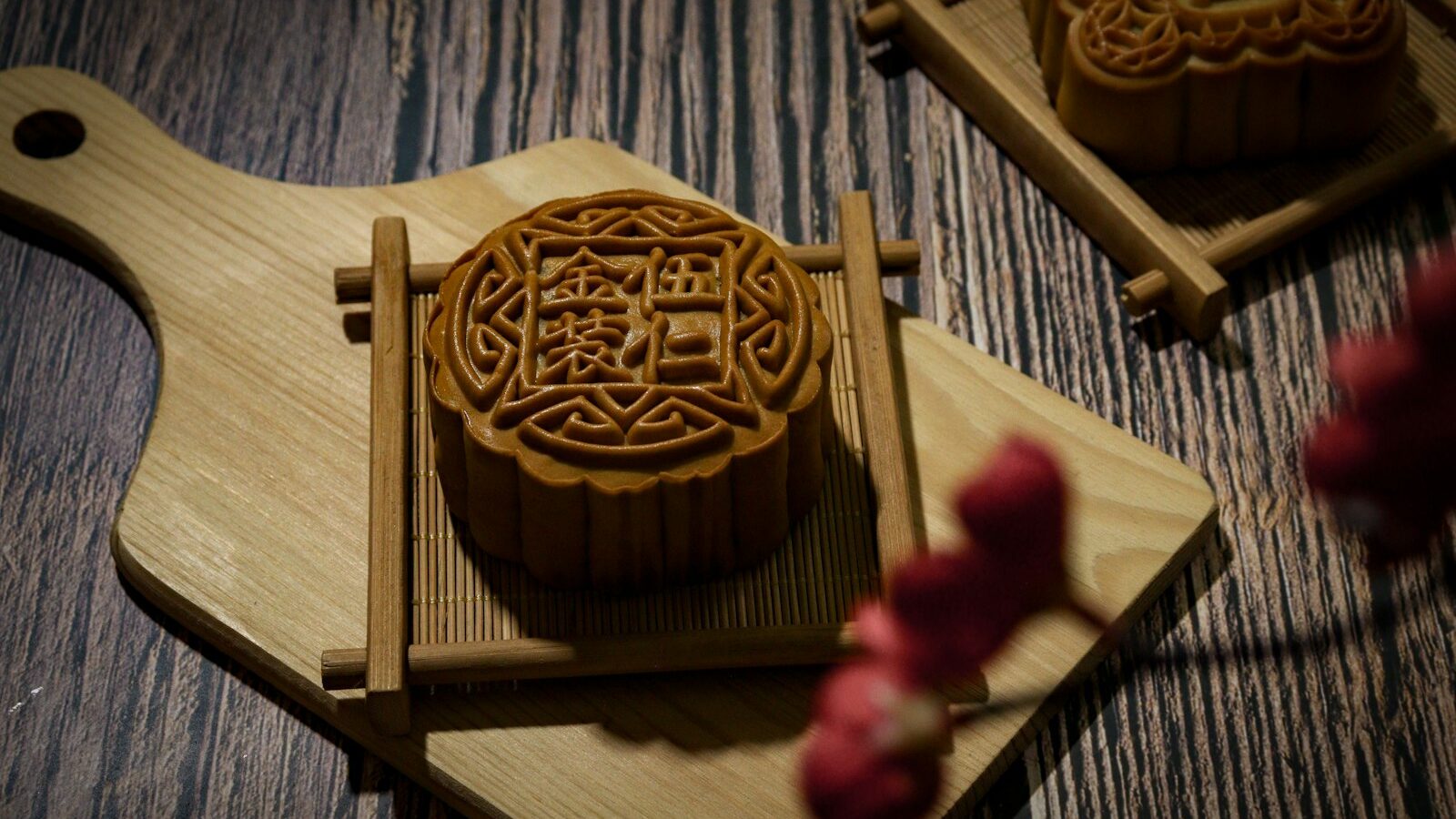
For many families in Singapore, the Mid-Autumn Festival is not complete without a tin of mooncakes, a pot of tea and the grandparents slicing wedges for everyone. If you or an older parent are living with diabetes, that tradition can feel like a test of willpower. The good news is that mooncakes and diabetes can coexist with some planning. You do not have to sit out the festival. You just need to know which mooncakes are the heaviest, what reduced-sugar labels really mean and how much is a sensible share.
This article is general information, not medical advice. Your doctor, polyclinic care team or dietitian knows your medication, targets and history, so check with them, especially if you use insulin or medicines that can cause low blood sugar.
Why Mooncakes Are So Rich
A traditional mooncake is small but dense. The crust is made with flour, syrup and oil, and the filling is typically a sweet paste of lotus seed, red bean or mixed nuts, cooked down with sugar and oil until it is smooth and glossy. Many add one or two salted egg yolks.
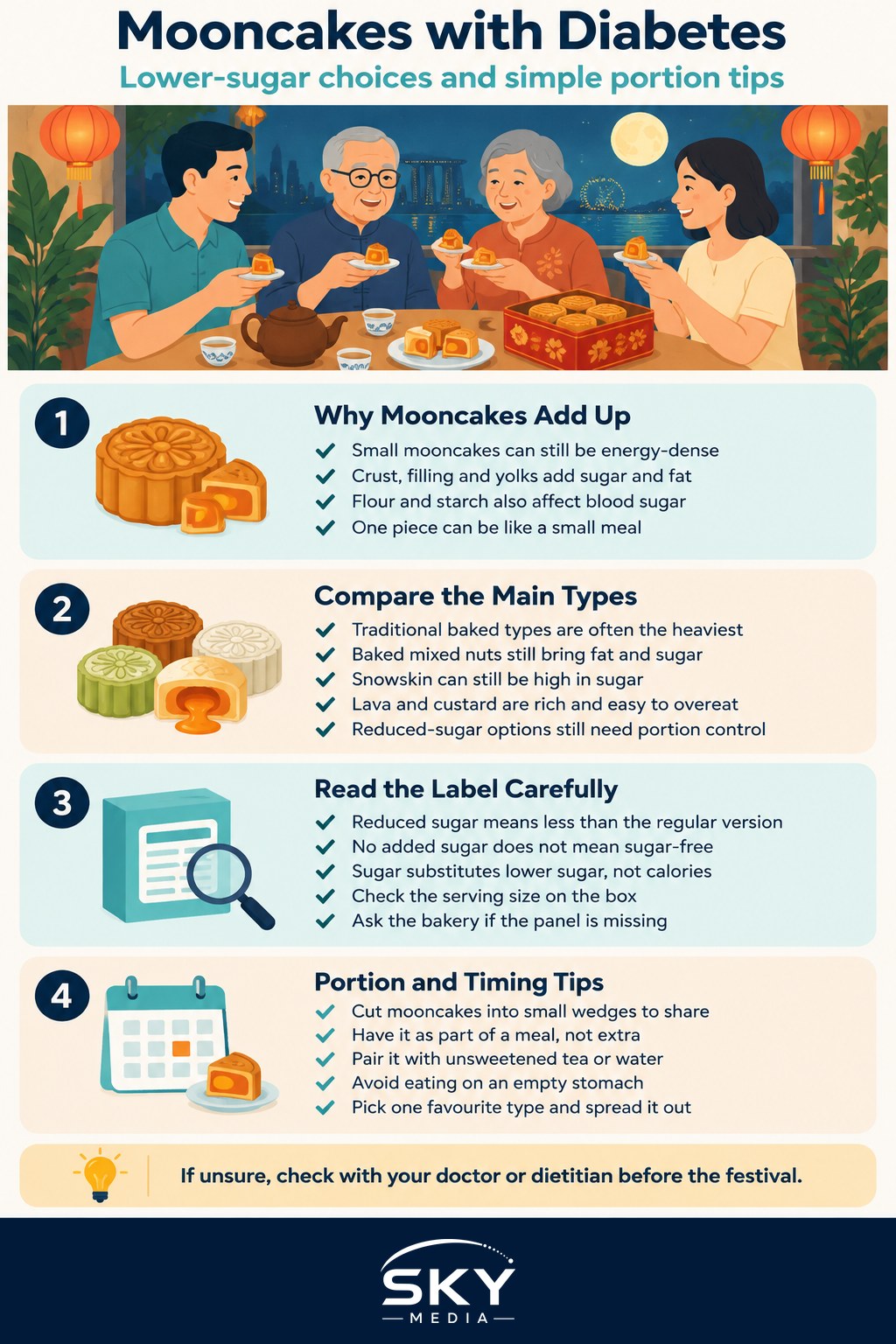
That means a single whole mooncake can contain as much energy as a small meal, plus a large amount of sugar and fat in one go. For someone managing blood sugar, the issue is not just the sugar. The refined flour and starchy fillings also break down into glucose, and the high fat content adds calories that matter for weight management.
Health Promotion Board resources on HealthHub regularly remind Singaporeans that festive snacks add up. Exact figures vary a great deal between bakeries and sizes, so read the nutrition information panel on the box where one is provided, and remember that the figures are usually given per piece or per 100 grams, not per wedge.
How the Main Types Compare
There is no “diabetes-safe” mooncake, but some types are easier to portion and plan around than others. The table below describes general patterns. Actual sugar and calorie content depends on the recipe, so use it as a guide for questions to ask, not as a nutrition label.
| Mooncake type | What drives the sugar and calories | What to watch |
|---|---|---|
| Traditional baked lotus paste with yolks | Sugared lotus paste, oil in crust and filling, egg yolks | Among the heaviest; a small wedge goes a long way |
| Baked mixed nuts | Nuts, sugar, candied fruit, oil | Nuts add fat and calories; candied pieces add sugar |
| Snowskin with fruit, durian or cream fillings | Sugary glutinous rice skin, sweetened fillings, cream | Often feels lighter, but can still be high in sugar |
| Lava or custard | Butter, egg, milk powder, sugar | Rich and easy to overeat because the pieces are small |
| Reduced-sugar or “low sugar” ranges | Less sugar, sometimes replaced with sweeteners or fibre | Still contains flour, starch and fat; portion still matters |
Two things often surprise people. First, a snowskin mooncake is not automatically healthier just because it is chilled and colourful. Second, “mini” mooncakes are easy to eat two or three of without noticing. For more on the varieties themselves, see mooncakes: types and traditions.
Reading Reduced-Sugar and “Healthier” Labels
Many bakeries now offer reduced-sugar ranges, and some use sugar substitutes or add fibre. These can be a reasonable choice, but read the box with a critical eye:
- “Reduced sugar” or “less sugar” usually means less than the brand’s regular version, not that the mooncake is low in sugar overall. Compare the nutrition panel if both versions show one.
- “No added sugar” does not mean no sugar. Fruit, lotus seed, red bean and flour still contain carbohydrate.
- Sugar substitutes such as sugar alcohols or other sweeteners lower the sugar figure, but the flour, starch and fat remain. Some sugar alcohols can upset the stomach if eaten in quantity.
- Healthier Choice Symbol: if a product carries this HPB logo, it meets HPB’s criteria for that food category. Check HealthHub for what the symbol means rather than assuming it suits every diet.
- Serving size: a label might give figures for a quarter of a mooncake. Make sure you compare like with like.
If there is no nutrition panel, ask the bakery. Many will share the information for their reduced-sugar range on request or on their website.
Sensible Portions and Smart Timing
Portion size is the single biggest lever you control. Our general guide to understanding portion sizes applies here too. Practical ideas that many families use:
- Cut small wedges. Slicing a mooncake into eight pieces instead of four makes it easy to share and to stop at one.
- Treat it as part of a meal, not an extra. If you plan to have a wedge after dinner, consider a smaller portion of rice or noodles at that meal. Ask your dietitian how to fit it into your meal plan.
- Pair it with unsweetened tea. Chinese tea, plain green tea or water is a traditional and sugar-free companion. Avoid pairing mooncakes with sweet drinks or bubble tea.
- Avoid eating it on an empty stomach or as a late-night snack, which can make blood sugar harder to manage.
- Pick one type to enjoy. Rather than sampling a wedge of every flavour in the box, choose the one you really love.
- Spread it out. A small wedge on two or three days is gentler than several pieces on festival night.
- Stay active. A gentle walk after the meal, such as an evening lantern walk with family, is a pleasant festive habit. Check with your doctor about what activity suits you.
Tips for Seniors and Their Families
Older adults living with diabetes often face extra factors: other medical conditions, multiple medicines, reduced appetite or difficulty reading small print on labels. Our guide to managing diabetes in older age goes into these in more detail. For the festival:
- Include them, do not police them. Being handed a small, thoughtfully cut wedge feels very different from being told “you cannot eat that”.
- Choose gift boxes with lower-sugar options when buying for elderly relatives, and say why in a positive way.
- Know the signs of low and high blood sugar, and follow the plan their doctor has given. If someone feels unwell, dizzy, very thirsty or confused, seek medical help.
- Keep up with regular monitoring if they check their blood sugar at home, and note how a festive snack affects their readings to discuss at the next appointment.
- Ask the care team before the festival. Polyclinics and family doctors are used to questions about festive eating and can give advice tailored to the person’s medicines.
Making Your Own Lower-Sugar Mooncakes
Baking at home gives you full control over sugar, size and fillings. You can make smaller mooncakes, use less sweetened paste or try fillings such as unsweetened nut or seed mixes. Start with a recipe you trust, then reduce sugar gradually and expect the texture and keeping time to change.
Mid-Autumn is about family, lanterns and the full moon as much as it is about pastry. With smaller slices, unsweetened tea and a plan agreed with your care team, mooncakes can stay part of the celebration. For broader day-to-day guidance, see our overview of managing diabetes in Singapore.
Frequently Asked Questions
What can I eat instead of mooncakes during Mid-Autumn if I have diabetes? Fresh fruit in sensible portions, unsweetened tea and nuts in small amounts are common festive choices, and a dietitian can suggest ones that fit your plan. Pomelo and other seasonal fruit still contain sugar, so watch portions. You can still join the sharing with a very small wedge.
Can someone with prediabetes or gestational diabetes enjoy a mooncake? A small portion may fit in, but the decision depends on your blood sugar targets and care plan. People with gestational diabetes should ask their obstetrician or dietitian first. Avoid alcohol-flavoured types during pregnancy.
How soon should I check my blood sugar after eating mooncake? Follow the monitoring schedule your doctor or diabetes nurse has given you, and note readings after festive foods for your next review. There is no one-size timing for everyone. If you feel very thirsty, dizzy or unwell, seek medical help.
Should people on insulin or diabetes pills change their dose for a festive treat? Do not change medicine doses on your own. Ask your doctor or diabetes educator beforehand how to handle special meals, because the answer depends on your medicines. Never skip doses to make room for a treat.
How do I politely turn down mooncakes pushed on me at family gatherings? A warm, simple reply works, such as asking for one small wedge to share or saying you are watching your sugar and want to enjoy the tea instead. Relatives usually respect a clear health reason. Bring your own lower-sugar option if it helps.
Official sources: HealthHub