

The gentle sound of trickling water can make a balcony, patio or corridor garden feel like a small retreat. In Singapore, though, standing water comes with a well-known risk: Aedes mosquitoes, which can spread dengue. The good news is that you do not have to give up on water entirely. A mosquito safe water feature in Singapore is very achievable if you choose the right design and build a simple maintenance habit.
This guide covers which features carry more risk, how to make each one safer, and the routine checks that keep larvae out. It is general guidance. For official advice on dengue prevention, refer to NEA (the National Environment Agency).
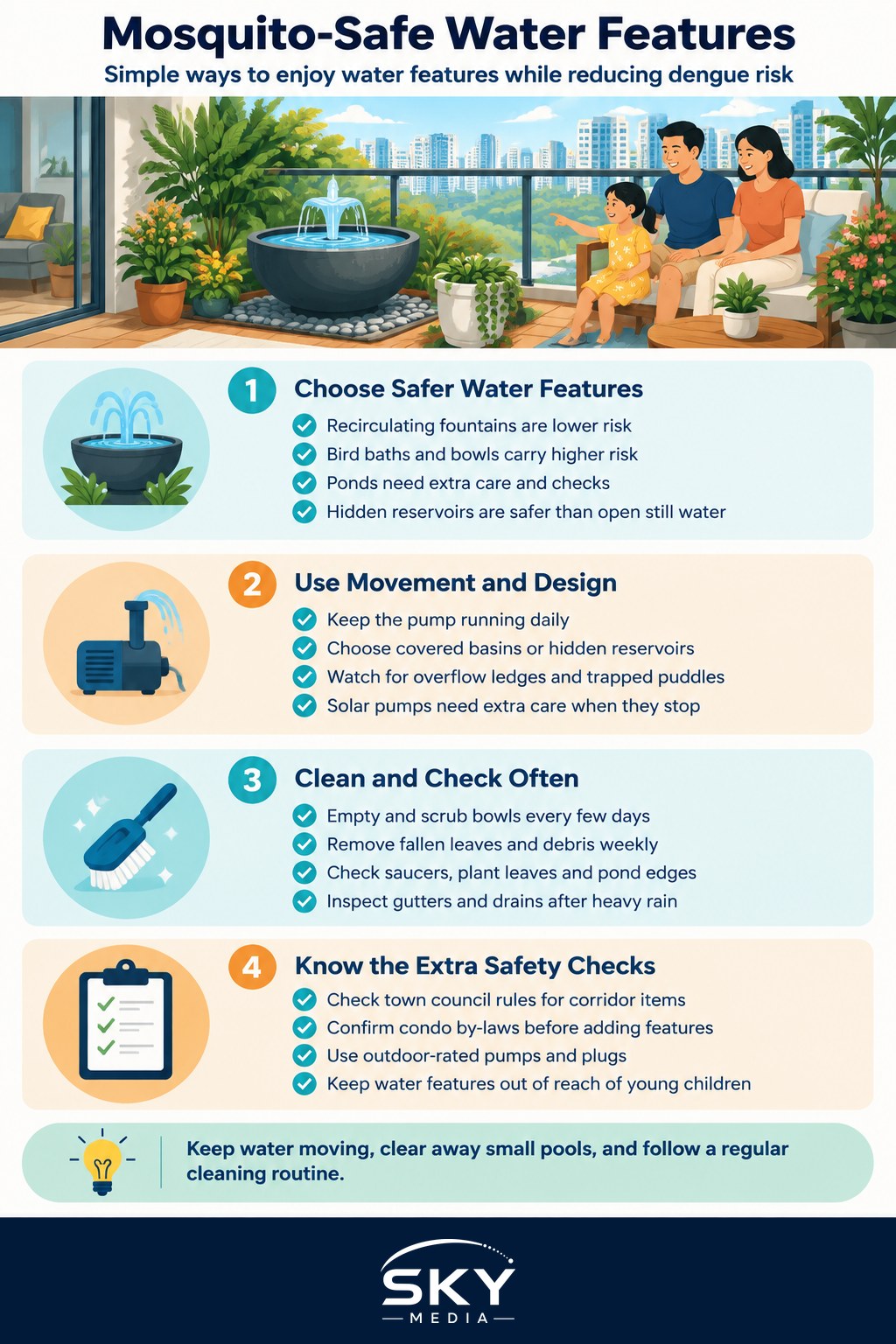
Why Water Features Attract Mosquitoes
Aedes mosquitoes lay their eggs just above the waterline on the inside of containers. When water levels rise, the eggs hatch into larvae, which wriggle near the surface and develop into adults in roughly a week under warm conditions. Eggs can also cling to dry container walls and survive until water returns.
That tells you three things about safe design:
- Still water is the main problem. Larvae need calm water to breathe at the surface.
- Small volumes count. A saucer under a pot or a fold in a plastic cover is enough.
- Container walls matter. Simply topping up water does not remove eggs stuck to the sides.
NEA treats mosquito breeding in homes seriously and may take enforcement action if breeding is found during inspections. Beyond the rules, it is about keeping your household and neighbours safe.
Comparing Common Water Features
Different features carry very different levels of risk. Use this comparison when planning a purchase or redesign.
| Water feature | Mosquito risk | How to keep it safe |
|---|---|---|
| Recirculating tabletop or wall fountain | Lower, if the pump runs | Keep the pump running daily, top up regularly, scrub the basin often |
| Bird bath or decorative bowl | High | Empty, scrub and refill every few days, or skip it entirely |
| Small pond or water tub with plants | Medium to high | Add a pump or fish, remove debris, check edges and plant pots weekly |
| Pebble or reservoir fountain (hidden basin) | Lower | Cover the reservoir with fine mesh, keep water moving |
| Water plants in vases or jars | High | Change water every few days, scrub the inside, or grow in soil instead |
Choose Moving Water Wherever Possible
Moving water is the single biggest safeguard. A recirculating fountain with a small submersible pump keeps the surface disturbed, which makes it hard for larvae to settle.
When choosing a fountain:
- Pick a closed or hidden reservoir. Designs where water drains into a covered basin, such as pebble fountains, leave less exposed still water.
- Look for continuous-duty pumps. Some pumps are meant for occasional use only. A fountain left off for days becomes a breeding site.
- Check the overflow areas. Lips, ledges and decorative shells can trap small pools that the flow never reaches.
- Consider solar pumps carefully. They stop at night and on cloudy days. Pair them with fish or extra cleaning.
If you are going away for more than a few days, empty and dry the fountain, or ask someone to run and check it. Scrub before refilling so any dried eggs are removed.
Ponds and Water Tubs: Using Fish and Plants Wisely
A mini pond or a glazed tub with lotus or water lilies is popular in landed homes and larger balconies. These hold more water, so they need a fuller plan.
Fish as natural predators. Small fish such as guppies are commonly kept in water features because they eat mosquito larvae. Keep in mind:
- They need enough water volume and shade to survive Singapore heat.
- Plants must not block every gap; larvae can hide in dense leaves.
- Never release pet fish into drains, reservoirs or nature areas. It harms local wildlife and may break NParks rules.
Keep the water clean. Scoop out fallen leaves and flowers, which create sheltered pockets. Trim overgrown plants so the surface stays visible.
Watch the edges. Pots sitting in the pond, rocks with hollows and the gaps between them can hold isolated water.
Larvicide as a backup. NEA advice includes using BTI (Bacillus thuringiensis israelensis), a larvicide that targets mosquito larvae, in places that cannot be emptied, such as roof gutters. If you use any product in a pond with fish or near pets, read the label carefully and ask the seller whether it is suitable. Avoid general insecticides in water.
Hidden Breeding Spots Around Your Water Feature
The feature itself is often fine; it is the clutter around it that breeds mosquitoes. Check:
- Plant saucers and trays under pots
- Bromeliads and plants with cupped leaves that hold water
- Bamboo stumps and hollow ornaments
- Pails, watering cans and spare pump containers left upright
- Folded tarps and plant covers
- Clogged roof gutters and drains in landed homes
NEA’s “Mozzie Wipeout” campaign sums up the key household steps. Break up hardened soil in pots, lift and empty flowerpot plates, overturn pails and wipe their rims, change water in vases, and keep roof gutters clear while placing BTI in them.
If you have pets or young children at home, combine mosquito safety with other checks. Our guides to pet-safe houseplants and child-safe plants for family homes help you pick greenery that suits everyone. Even shallow water is a drowning risk for toddlers, so keep ponds covered with sturdy mesh or out of reach.
A Weekly Maintenance Routine
A short routine does most of the work. Set a regular reminder on your phone.
Every few days:
- Change water in vases, bowls and bird baths, scrubbing the inner walls
- Check that fountain pumps are running
Every week:
- Inspect pond edges, saucers and plant leaves for standing water and larvae
- Remove fallen leaves and debris from ponds and basins
- Top up fountains and clean pump filters as needed
Every month:
- Fully clean fountain basins and reservoirs
- Check roof gutters and outdoor drains after heavy rain
To keep water use in check while topping up and cleaning, reuse rinse water on plants where suitable. Our article on saving water at home in Singapore has more tips.
Notes for HDB Flats and Condos
- Corridors are shared space. Town councils have rules on items placed in common corridors, including plants and decor. Check with your town council before installing a fountain outside your flat.
- Balconies in condos may be subject to MCST (the management corporation that runs the estate) by-laws. Confirm what is allowed before adding ponds or heavy containers.
- Electrical safety. Use outdoor-rated pumps and plugs, keep cables away from water, and have a licensed electrician install fixed outdoor sockets.
Enjoying Water Without the Worry
A mosquito safe water feature in Singapore comes down to three habits: keep the water moving, keep the surroundings free of small pools, and clean on a schedule. Choose a recirculating fountain over still bowls, add fish to larger ponds, and walk around your garden weekly with a quick eye for standing water. Your home stays calm and green, and your neighbourhood stays safer from dengue.
Frequently Asked Questions
Do guppies or other fish really keep a pond mosquito-free? Small fish such as guppies eat mosquito larvae, so they help, but they are not a cure-all. The pond needs enough water and shade, and dense plants should not hide larvae. Never release pet fish into drains or nature areas.
Is it okay to use BTI in a pond with fish or pets around? BTI is a larvicide aimed at mosquito larvae and NEA mentions it for places that cannot be emptied, such as roof gutters. For a pond with fish, read the label and ask the seller if it suits. Avoid general insecticides in water.
What should I do with my water feature when I go on holiday? If you will be away for more than a few days, empty and dry the fountain, or ask someone to run and check it. Scrub the basin before refilling to remove any dried eggs clinging to the sides.
Can I grow hydroponic plants or water plants in a jar on my balcony? You can, but still water is a risk. Change the water every few days and scrub the inside walls to remove eggs, or grow the plant in soil instead. NEA’s advice covers vases and other small containers too.
Who do I ask about putting a fountain outside my HDB flat or condo unit? For an HDB corridor, check with your town council, since common areas have rules on items placed outside. In a condo, check the MCST by-laws before adding ponds or heavy containers to a balcony.
Official sources: National Environment Agency (NEA)