
Greenery makes a Singapore flat feel calmer and cooler, but cats and dogs have a habit of chewing whatever is within reach. Choosing pet safe houseplants means you can enjoy a leafy home without worrying every time your kitten bats at a frond or your puppy noses a pot. This guide looks at plants commonly sold at Singapore nurseries and supermarkets, sorting the generally safer choices from the ones best kept away from pets.
This is general information, not veterinary advice. Plant names can be confusing and individual animals react differently. If your pet eats any plant and seems unwell, contact a vet straight away.
How to Judge Whether a Plant Is Pet Safe
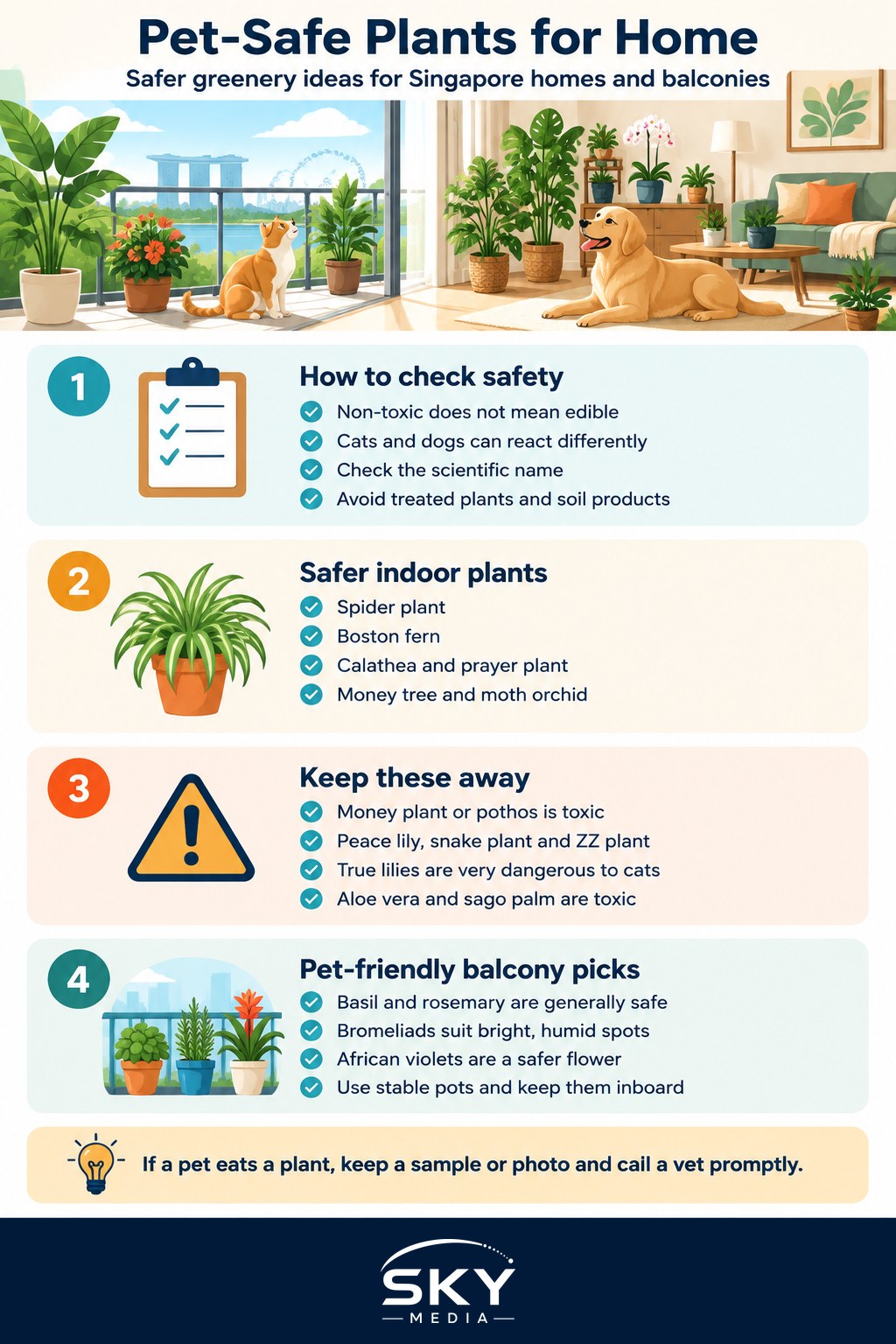
“Pet safe” usually means a plant is listed as non-toxic to cats and dogs by reputable animal welfare or veterinary references, such as the ASPCA’s toxic and non-toxic plant lists. Keep a few points in mind:
- Non-toxic is not the same as edible. Even safe plants can cause mild vomiting if a pet eats a lot, simply from the fibre.
- Cats and dogs differ. Some plants are far more dangerous to one species. Lilies, for example, are a serious danger to cats.
- Common names mislead. In Singapore, “money plant” usually means pothos, which is toxic to pets, while the “money tree” is a completely different plant that is generally considered safe. Always check the scientific name on the label or ask the nursery.
- What is on the plant matters too. Pesticides, leaf shine products and some fertilisers can harm pets even when the plant itself is safe.
Generally Safer Indoor Plants
These popular indoor plants are widely listed as non-toxic to cats and dogs:
- Spider plant (Chlorophytum comosum). Hardy, easy to propagate and tolerant of indirect light. Cats often love chewing the arching leaves, so expect some nibbling.
- Boston fern (Nephrolepis exaltata). Enjoys humidity, which suits our climate. Good for bathrooms with a window.
- Calathea and prayer plant (Maranta). Patterned leaves that fold up at night. They like steady moisture and filtered light.
- Parlour palm and areca palm. Soft, feathery palms that suit living rooms. Avoid the sago palm, which is not a true palm and is highly toxic.
- Peperomia. Compact, varied and forgiving, ideal for desks and shelves.
- Money tree (Pachira aquatica). Often sold with a braided trunk and popular around Chinese New Year as a symbol of prosperity.
- Moth orchids (Phalaenopsis). A common gift that is generally considered safe for pets.
- Haworthia and some other small succulents. A safer alternative to aloe vera, which is toxic to pets.
Plants to Keep Away From Pets
Many of the most common plants in Singapore homes are toxic to some degree. Here is a quick comparison of popular choices.
| Popular plant | Pet safety | Safer swap with a similar look |
|---|---|---|
| Money plant or pothos (Epipremnum) | Toxic to cats and dogs | Spider plant or a trailing peperomia |
| Monstera and philodendron | Toxic to cats and dogs | Calathea for bold leaves |
| Peace lily (Spathiphyllum) | Toxic to cats and dogs | Moth orchid for white blooms |
| Snake plant (Sansevieria) and ZZ plant | Toxic to cats and dogs | Haworthia or parlour palm for low maintenance |
| Lucky bamboo and other dracaenas | Toxic to cats and dogs | Areca palm for upright greenery |
| True lilies and daylilies | Extremely dangerous to cats | Orchids or African violets for flowers |
| Sago palm (Cycas) | Highly toxic to pets | Parlour palm |
| Aloe vera | Toxic to cats and dogs | Haworthia |
Other plants commonly flagged as toxic include rubber plants, aglaonema (Chinese evergreen), dieffenbachia, jade plants, and outdoor shrubs such as oleander and desert rose (adenium). Seasonal festive plants can also be a concern, so check before bringing new ones home.
If you already own some of these, you do not necessarily need to throw them out. Moving them somewhere your pet truly cannot reach, such as a closed room, may be enough. Cats climb, so a high shelf is not always out of reach for them.
Pet-Friendly Choices for Balconies
Balconies and service yards bring more sun, so the plant list shifts slightly.
- Herbs. Basil and rosemary are generally considered safe and useful in the kitchen. Some other herbs are not, so check each one.
- Bromeliads. Colourful and well suited to bright, humid spots. Empty water collecting in the central cup regularly to prevent mosquito breeding.
- African violets. Generally considered safe and happy in bright, indirect light. Note that begonias, often sold alongside them, are commonly listed as toxic.
- Areca palms and ferns. Good for softening a balcony grille while staying pet friendly.
High-rise balconies also need extra care with pets. Make sure pots are stable and kept well inside the railing, and that cats cannot use planters as a step to reach ledges or window gaps. Our guide to child-safe plants for family homes covers similar safety thinking for toddlers.
If you are drawn to scented plants, check them carefully. Several fragrant species are not pet safe, so cross-check anything from lists such as our fragrant night-blooming plants for Singapore balconies before placing them where pets roam.
Setting Up a Pet-Friendly Plant Corner
Even with safe plants, a little planning keeps both plants and pets happy.
- Use heavy, wide pots. Dogs knock things over and cats push items off ledges. Stable pots protect pets from falling ceramics.
- Cover the soil. Large pebbles on top of the soil stop digging and discourage cats from using pots as litter trays.
- Choose pet-aware products. Avoid slug pellets, systemic pesticides and cocoa shell mulch. Ask the nursery about pet-safer alternatives.
- Offer a chewing alternative. Cat grass or a dedicated pot of pet-safe greens can satisfy the urge to chew.
- Grow your own safe collection. Many safe plants, like spider plants, are easy to multiply. Our guide to propagating houseplants at home shows how.
- Label your plants. Keep the scientific name on a tag so you can check quickly if your pet ever takes a bite.
What to Do If Your Pet Eats a Plant
Stay calm and act quickly. Remove any remaining plant material from your pet’s mouth if it is safe to do so, take a photo of the plant or keep a piece, and contact your vet or an emergency veterinary clinic. Do not try to make your pet vomit unless a vet tells you to. Signs to mention include drooling, vomiting, pawing at the mouth, lethargy or changes in urination, but let the vet decide how serious it is.
With a careful choice of plants and a few small adjustments, you can have a lush home that is safer for every member of the family, furry ones included.
Frequently Asked Questions
Is it safe to keep a pothos if my cat cannot reach it? It can be, as long as the plant is genuinely out of reach. Pothos is toxic to cats and dogs, so a closed room is safer than a shelf, because cats climb and jump well. If you are unsure you can contain the risk, swapping to a spider plant is the simpler fix.
Are spider plants really safe if my cat keeps chewing them? Spider plants are widely listed as non-toxic, but heavy chewing can still upset a stomach because of the fibre. Mild vomiting is possible, while repeated or severe symptoms deserve a call to your vet. Offering cat grass nearby often redirects the nibbling and saves the leaves.
Are Chinese New Year plants safe for dogs and cats? Some are and some are not. The money tree is generally considered safe, but many festive plants and cut flowers are toxic, lilies being especially dangerous to cats. Check the scientific name against a reputable pet-safety list before bringing any seasonal plant home.
Is cat grass a good substitute for my houseplants? Cat grass is a sensible decoy because it gives a pet something safe to chew. It will not guarantee your other plants are left alone, but placing a pot where your pet likes to graze can cut down nibbling elsewhere. Keep it fresh and replace it when it turns yellow.
Can plant fertiliser or pesticide harm my pet even if the plant is safe? Yes. A pet-safe plant can still carry products that harm animals, including some pesticides, leaf shine and slug pellets. Ask the nursery for pet-safer options, avoid cocoa shell mulch, and keep treated plants away from pets until any product has fully dried.
Further reading: Cats and Toxic Houseplants: A Singapore Guide