
Natural wine has gone from a niche curiosity to a fixture on wine lists across the island, and it tends to divide people at first sip. Some love its bright, funky, unpolished character, while others are puzzled by a cloudy pour that tastes nothing like the wine they know. If you are new to natural wine in Singapore and are not sure what to order or what all the buzzwords mean, this guide lays out the basics: what natural wine actually is, how it is made, what the main styles taste like, and how to explore it without spending a fortune or feeling out of your depth. First, a note. The legal drinking age in Singapore is 18, so please enjoy any wine responsibly, and this guide is for readers of legal age.
What Natural Wine Actually Means
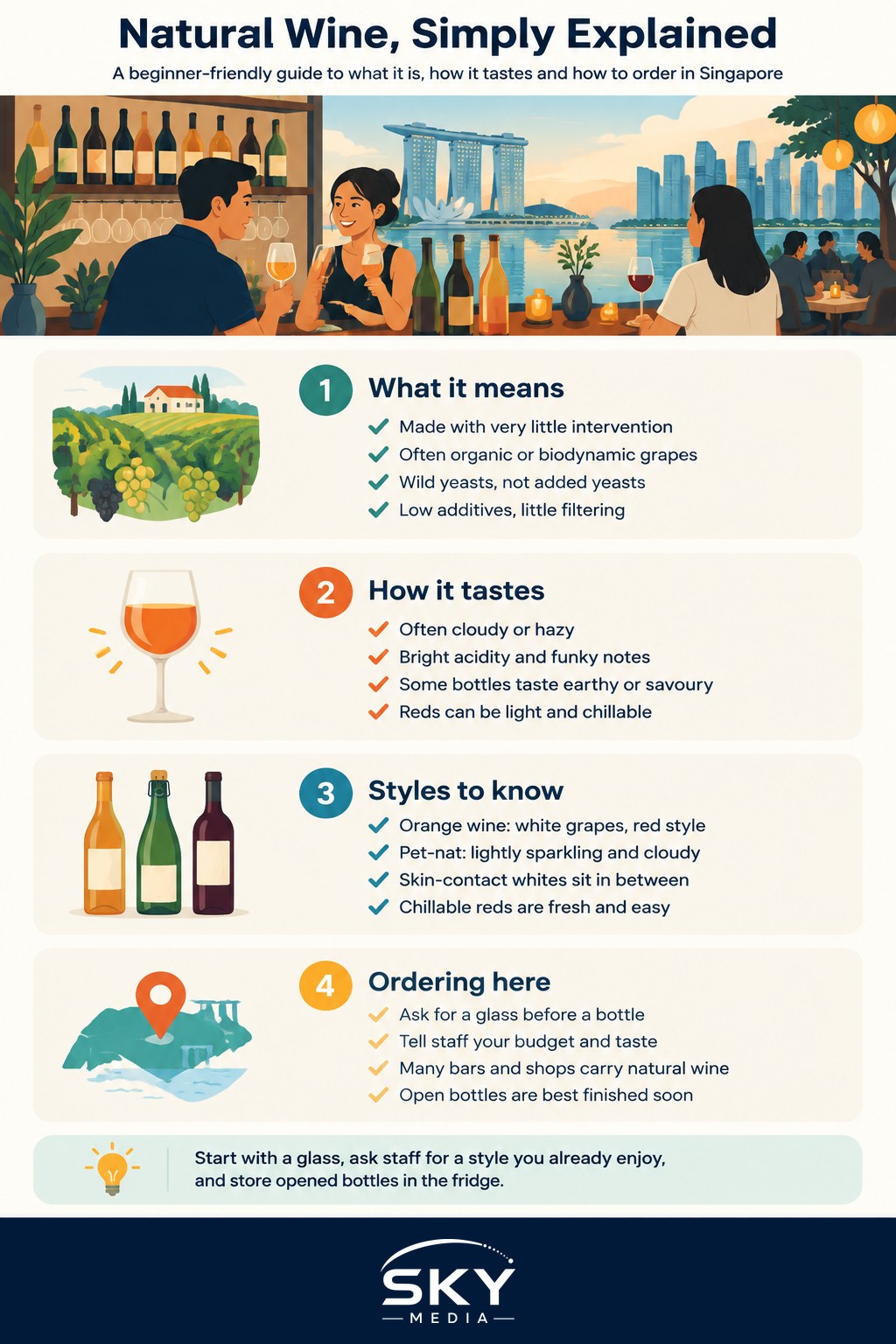
There is no single legal definition of natural wine, which is part of the confusion. Broadly, it describes wine made with as little intervention as possible, both in the vineyard and the cellar. Grapes are usually farmed organically or biodynamically, picked by hand, and fermented using the wild yeasts that live on the fruit rather than added commercial yeasts. In the cellar, winemakers add little or nothing, keeping additives such as sulphites very low or leaving them out, and often skipping the filtering and fining that make conventional wine clear and consistent.
The result is wine that is meant to reflect the grape, the place and the year as directly as possible. It sits at one end of a spectrum. “Conventional” wine allows a wide toolkit of additives and adjustments, “low-intervention” or “natural” wine deliberately uses very few, and terms like organic and biodynamic describe the farming rather than the whole approach. None of this makes natural wine automatically better or worse, just made differently, and it is still alcohol, so the usual advice to drink in moderation applies.
How It Tastes and Why It Looks Different
The first thing many people notice is the look. Natural wines are often cloudy or hazy because they are unfiltered, and you may see a little sediment. That is normal, not a fault. The flavours can be a surprise too. Expect brighter acidity, savoury or “funky” notes, a slightly wild or farmyard edge in some bottles, and reds that are lighter and more refreshing than you might expect, sometimes served with a gentle chill.
Because so little is added or corrected, natural wines vary a lot from bottle to bottle and year to year. One vintage might taste clean and fruity, the next more earthy. This inconsistency frustrates some drinkers and delights others, and it is a big part of the appeal for fans who enjoy the sense of a living, unmanipulated product. If a wine tastes intensely sour, fizzy when it should be still, or sharply vinegary, that can be a sign it has been stored badly or has genuinely faulted, so it is fair to mention it politely to the staff.
The Main Styles to Know
A few terms come up again and again on natural wine lists, and knowing them makes ordering far easier.
- Orange wine is white wine made like a red, with the grape skins left in during fermentation. That skin contact gives an amber colour, a light grip or tannin, and a bold, tea-like, savoury flavour.
- Pet-nat, short for petillant naturel, is a lightly sparkling wine bottled before fermentation finishes, so it fizzes gently. It is often cloudy, casual and fun, a popular gateway into the category.
- Skin-contact and cloudy whites sit between a crisp conventional white and a full orange wine.
- Light, chillable reds are made for easy drinking, low in heavy tannin and lovely with a slight chill in our heat.
- Biodynamic and organic bottles may not be fully “natural” but follow careful farming, and they are a gentle first step.
You do not need to memorise these. A good wine bar will happily point you to a soft, fruity starting bottle rather than the most challenging one on the list.
Ordering and Exploring in Singapore
Natural wine is easy to find here if you know where to look. A growing number of dedicated wine bars and bottle shops focus on low-intervention and natural labels, many independent restaurants list a few by the glass, and specialist online retailers and importers ship to your door. Prices sit across a wide range depending on the producer and rarity, so rather than fixing on a figure, tell the shop or bar your budget and let them steer you, and check the venue or retailer for current pricing.
The single best tip for a beginner is to buy by the glass first. That way you can taste several styles in one sitting without committing to a full bottle you may not enjoy. Staff at natural wine bars tend to be knowledgeable and relaxed, so describe what you usually like, whether that is crisp whites, light reds or something sweeter, and ask them to recommend a natural equivalent. This table gives you a rough map of where to start.
| If you usually enjoy | Try this natural style | What to expect |
|---|---|---|
| Crisp, dry white wine | Skin-contact or cloudy white | Familiar but more textured and savoury |
| Sparkling wine or prosecco | Pet-nat | Gentle fizz, cloudy, casual and fun |
| Light, fruity red | Chillable natural red | Fresh, low tannin, great slightly chilled |
| Bold, tannic red | Orange wine | Amber colour, grippy, tea-like and savoury |
Serve most natural wines a touch cooler than you might a conventional equivalent, store open bottles in the fridge, and finish them within a day or two, since their low sulphite levels mean they do not always keep as long once opened.
Drinking It Well and Responsibly
Natural wine is best approached with curiosity rather than rules. Go in expecting variety, do not judge the whole category on one funky bottle, and treat the cloudiness and the surprises as part of the fun. As with any alcohol, pace yourself, drink water alongside, never drink and drive, and remember the legal drinking age here is 18. Explored this way, natural wine in Singapore is an enjoyable rabbit hole, full of small producers and genuine character, and a refreshing change from the polished and predictable.
Explore more
Keen to build your wine confidence? Start with our wine for beginners guide for the fundamentals, then see how bottles work with our food in wine pairing with local Singapore food. If you enjoy exploring craft drinks, our guide to craft beer styles for beginners is a natural next pour.
Frequently Asked Questions
Does natural wine give you less of a hangover? There is no reliable evidence that it does. It is still alcohol, and how much you drink, how fast and whether you drink water matters more than the style. If you feel unwell after drinking, take it as a sign to cut back.
Is natural wine sulphite-free? Not necessarily. Natural wines usually keep sulphites very low or leave them out, but some contain small amounts, and there is no single legal definition. If you are sensitive to sulphites, check the label or ask staff, and speak to a doctor if you have concerns.
Is natural wine vegan? Often, but not always. Many natural winemakers skip filtering and fining, which is where animal-derived products are sometimes used, yet there is no guarantee. If it matters to you, ask the bar or retailer to confirm for that specific bottle.
Is natural wine worth the price? It depends on the bottle. Prices range widely depending on producer and rarity, and a higher price does not guarantee you will enjoy it. Buy by the glass first, tell the staff your budget, and check the venue or retailer for current pricing.
How is orange wine different from rose? Orange wine is made from white grapes fermented with their skins, which gives an amber colour, some grip and a savoury, tea-like flavour. Rose comes from red grapes with only brief skin contact, so it is lighter, pinker and generally more easygoing.
Further reading: How to Order Wine at a Restaurant