
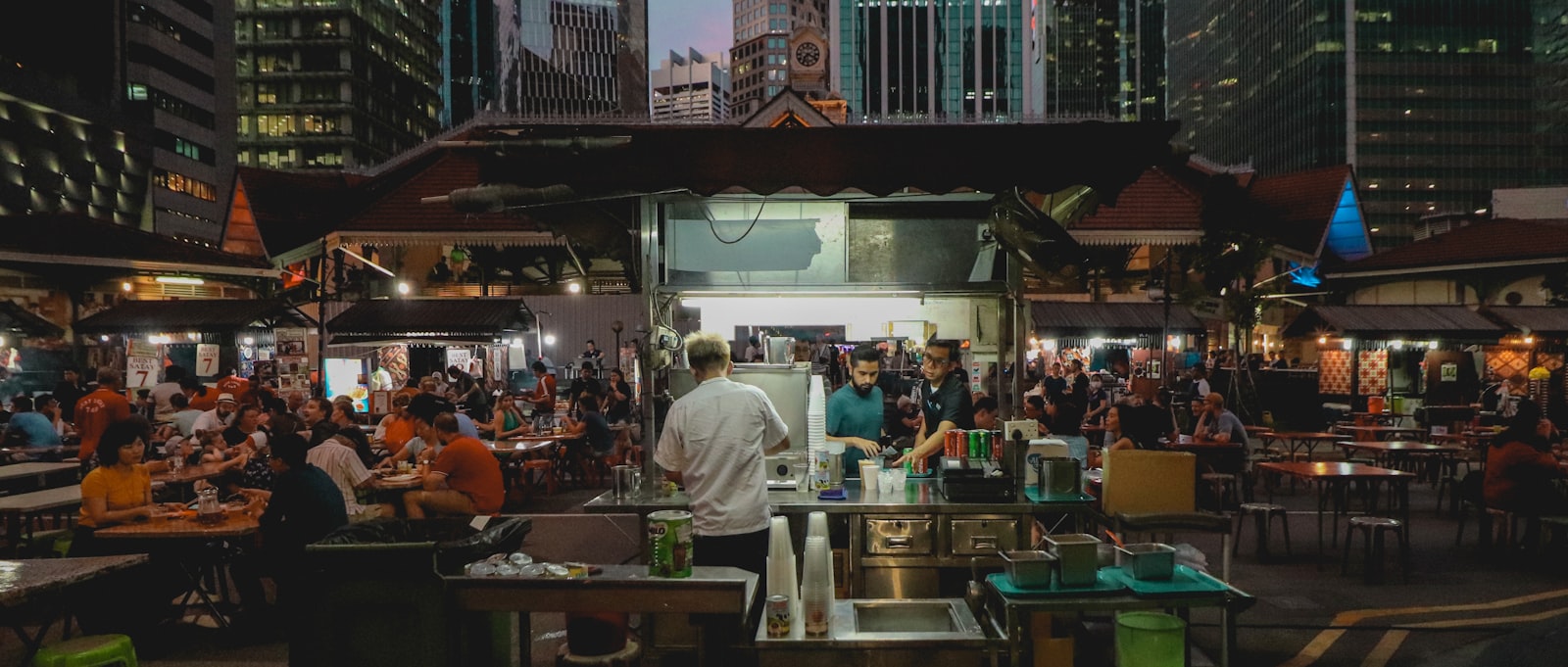
If you have just arrived and someone tells you the best breakfast in the neighbourhood is above the market, they mean the wet market. A visit to a wet market in Singapore is one of the friendliest ways to feel at home here: it is loud, colourful, wonderfully fresh, and far less intimidating than it first looks. This guide walks you through what a wet market is, what you can buy, how it differs from a supermarket, and the small habits that will have you shopping like a local within a week or two.
What is a wet market, and why the name?
A wet market is a traditional fresh-food market, usually a covered hall filled with individual stalls run by different vendors. The “wet” part is delightfully literal. Fishmongers keep their catch on crushed ice, vegetable sellers spritz greens to keep them crisp, and the floors are regularly hosed down through the day. All that moisture keeps the space cool and the produce lively, which is exactly the point.
The contrast is the “dry” market or dry-goods section, where you will find things that keep on a shelf: rice, noodles, spices, and preserved items. Many markets blend both under one roof. Across the island you will find wet markets in most established housing estates, often as part of a larger complex managed alongside the community. You do not need to travel far to find one, and half the fun is discovering the rhythm of the one nearest you.
What you can buy
The joy of a wet market is variety within arm’s reach. In a single loop you can gather a full day of meals, often from vendors who have sold the same speciality for years.
- Fresh produce: Vegetables, herbs, fruit, and aromatics like garlic, ginger, and chillies, frequently a step fresher than what you find pre-packed.
- Seafood: Fish, prawns, crabs, clams, and squid on ice. A good fishmonger will clean, scale, and fillet your choice for you.
- Meat and poultry: Pork, chicken, and sometimes beef or duck, cut to order. Ask for exactly the portion or cut you want.
- Dried goods: Rice, dried mushrooms, beans, noodles, spices, and preserved items in the dry section.
- Flowers and plants: Many markets have a stall or two selling cut flowers and small potted plants, handy for a home altar, a dinner table, or a housewarming.
If you are unsure what something is or how to cook it, just ask. Vendors are usually happy to explain and will often toss in a tip on preparation.
How wet markets differ from supermarkets
Supermarkets are convenient and air-conditioned, and there is nothing wrong with using both. But a wet market offers a genuinely different experience, and understanding the differences helps you get the most from each.
Freshness and choice
Produce at a wet market often arrives daily and moves quickly, so it tends to be very fresh. You can pick individual items, smell a mango, or ask the fishmonger which fish came in that morning. That kind of hands-on choosing is hard to match under supermarket cling film.
Price and value
Prices at wet markets can be very reasonable, especially for seafood, and buying loose means you take only what you need with less packaging. Costs shift with the seasons and the day’s supply, so treat any figure as a rough guide rather than a fixed price. For a wider view of everyday spending here, our cost-of-living guide is a useful companion.
Bargaining, lightly
Singapore is not a heavy-haggling culture, and most stalls price fairly from the start. That said, a light touch is normal: you might ask for a small discount when buying in quantity, or a vendor may round down or add an extra stalk of spring onion as a goodwill gesture. Keep it warm and good-humoured rather than pushy.
Cash is king
Many stalls now accept mobile payment, but plenty still prefer cash, and small notes and coins make everyone’s life easier. Bring a mix so you are never stuck fumbling at a busy stall.
Market etiquette and practical tips
Good market etiquette is mostly common sense and courtesy. A little awareness goes a long way, and vendors quickly warm to a polite regular.
Go once just to look, buy nothing, and watch how locals order. You will pick up the flow faster than any guide can teach you.
Quick tips for a smooth first visit
- Go early. The best selection, especially of seafood and popular vegetables, is in the early morning. By late morning the choicest items may be gone.
- Bring your own bag. A sturdy reusable bag or trolley beats juggling many small plastic ones, and it is kinder to the environment.
- Carry small notes. Break your larger notes beforehand so you can pay quickly with exact or near-exact change.
- Ask before touching. With seafood and cut meats especially, let the vendor handle the goods and point to what you want.
- Know your quantities. Produce is often sold by weight or in small bundles. It is fine to ask for “just a little” or a specific number.
- Be patient at busy stalls. Wait your turn, order clearly, and a friendly greeting never hurts.
- Wear sensible shoes. Floors can be wet, so closed, non-slip footwear is more comfortable than flip-flops.
None of this needs to be perfect on day one. Vendors deal with first-timers all the time, and a simple “I’m new here, what do you recommend?” often earns you the best advice in the building.
The wet market and hawker centre combo
Here is one of the loveliest local rituals: many wet markets share a roof with a hawker market or hawker centre, so food shopping and breakfast happen in the same trip. You buy your fresh produce Singapore-style downstairs or in one wing, then reward yourself with a plate of noodles, a bowl of congee, or kaya toast and kopi in the other.
This pairing is more than convenient. It is a social hub where neighbours chat, retirees linger over coffee, and the whole community crosses paths. Treating your market run as a small outing rather than a chore is exactly how locals do it. If you want to know what to order once you are there, our guide to must-try hawker food is a tasty place to start.
Navigating as a newcomer
Your first visit may feel like a lot at once. Give yourself permission to go slowly. Walk one full loop before buying anything so you can compare stalls and get a feel for prices. Notice which vegetable seller has the freshest greens, which fishmonger has the biggest queue, and which auntie or uncle greets everyone by name.
Over time you will build your own little circuit of favourite stalls, and those relationships are the real reward. A regular customer gets the freshest cut, the honest tip on what is good today, and sometimes a small extra “for you.” That warmth, more than any single ingredient, is what keeps people coming back to the wet market Singapore has quietly built its neighbourhoods around.
So bring a bag, bring small notes, and bring an appetite. Your local market is waiting, and it is one of the quickest ways to start feeling like this island is home.
Explore more: Must-try hawker food in Singapore · The cost of living in Singapore