
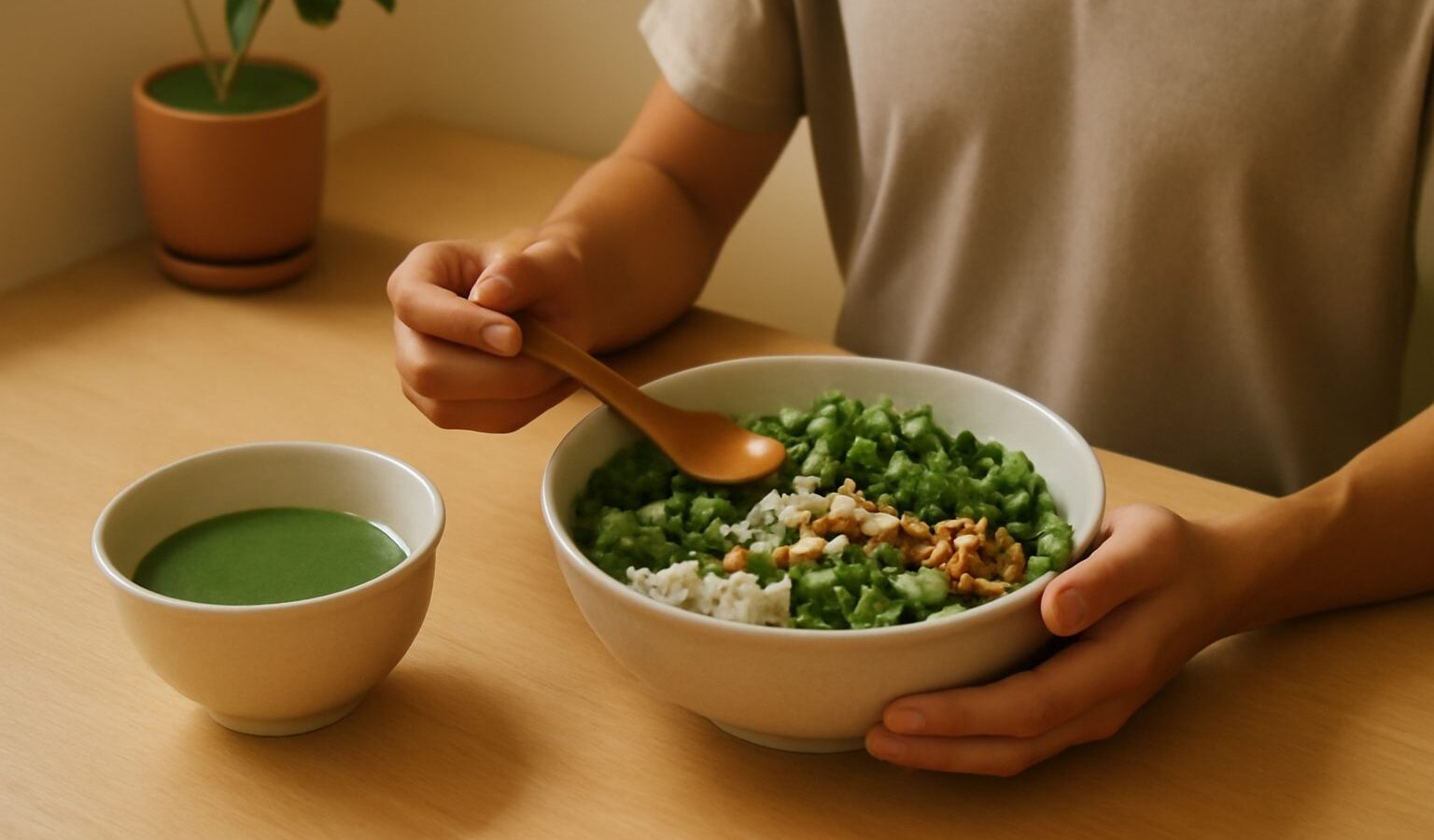
Few dishes look as startlingly green as thunder tea rice. A bowl of rice crowned with neatly diced vegetables arrives with a jug of jade-coloured soup on the side, and first-timers often hover, unsure whether to sip it or pour it. Pour it you should. Thunder tea rice, known in Mandarin as lei cha and to many Hakka families simply as ground tea, is one of Singapore’s most quietly beloved health bowls, a dish that manages to be frugal, herbal and deeply savoury all at once. This guide explains what it is, what goes into that famous soup, how to eat it properly, and where the curious eater can find a good bowl in Singapore.
What Thunder Tea Rice Actually Is
The name is a charming mistranslation. The Hakka word for the pounding or grinding action, “lei”, sounds like the word for thunder, so “ground tea” became “thunder tea” in playful English. The dish itself is a Hakka staple with roots in southern China, brought to the region by generations of Hakka migrants and adapted happily to local palates.
At its heart, thunder tea rice is two things served together: a base of rice topped with an array of chopped vegetables, and a savoury green broth made by grinding tea leaves with herbs, nuts and seeds. You eat the rice and vegetables, then flood the bowl with the warm soup so the whole thing becomes a fragrant, slightly gritty, wonderfully green porridge-like meal. It is almost always vegetarian, which has made it a fixture at vegetarian stalls and a favourite of anyone eating lighter.
Do not expect the soup to taste like a cup of tea. The grinding releases the oils in the herbs, and the result is grassy, nutty and savoury, closer to a herbal pesto loosened into a broth than to anything you would drink from a mug.
Inside the Bowl: The Toppings and the Soup
The pleasure of thunder tea rice is in the sheer number of components, each prepped separately and arranged in tidy little heaps. A generous bowl typically carries a mix of the following:
- Diced long beans, French beans or other green beans, lightly stir-fried.
- Chopped leafy greens such as kai lan, cabbage or preserved mustard.
- Firm tofu or tau kwa, cut into small cubes.
- Roasted peanuts and sometimes fried soybeans for crunch.
- Pickled or salted radish (chai poh) for a salty, savoury lift.
- Toasted sesame seeds scattered over the top.
- Occasionally a scatter of basil or other fresh herbs.
The soup is where the craft lies. Traditionally it is made by grinding green tea leaves together with a handful of herbs, which may include mint, basil, coriander and Chinese herbs, along with peanuts and sesame. The paste is loosened with hot water into a thin, vivid green broth. Because every family and every stall guards its own herb ratio, no two bowls of thunder tea rice taste quite the same. Some lean minty and fresh, others are earthier and more bitter.
The rice underneath is worth a mention too. Many stalls offer brown rice as the default or an option, which suits the dish’s wholesome character and stands up better to the flood of soup than soft white rice.
How to Eat Thunder Tea Rice the Right Way
Newcomers often make the same mistake, which is treating the soup as a drink to be sipped on the side while eating the rice dry. The dish is designed to be combined. Here is the simple sequence most regulars follow:
- Have a spoonful or two of the rice and vegetables on their own first, to appreciate the individual textures and the crunch of the peanuts.
- Pour some of the green soup over the rice, a little at a time rather than all at once, so you can judge how soupy you like it.
- Stir gently and eat with a spoon, topping up with more soup as you go.
How much soup you add is entirely personal. Some like it barely moistened so it stays more like a rice salad, others drown it into a savoury porridge. If a stall serves the soup very concentrated, add it sparingly and taste as you go. A squeeze of extra chilli or a dab of chilli paste is common for those who want more punch, though purists argue the herbal soup needs nothing at all.
Because it is light, high in vegetables and usually meat-free, thunder tea rice has a reputation as a virtuous meal. It can be a genuinely balanced bowl, though it is general enjoyment rather than a health prescription. If you have specific dietary needs or allergies, note that peanuts, sesame, soy and gluten commonly appear here, and check with the stall.
Thunder Tea Rice Versus Other Green Bowls
It is easy to lump thunder tea rice in with other wholesome one-bowl meals, but a quick comparison shows how distinct it is. The table below sets out how it differs from a couple of dishes people sometimes confuse it with.
| Dish | Base | Defining element | Typical flavour |
|---|---|---|---|
| Thunder tea rice (lei cha) | Rice with diced vegetables | Ground tea-and-herb soup poured over | Grassy, nutty, savoury, herbal |
| Yong tau foo (soup version) | Broth with tofu and vegetables | Stuffed tofu and fishcake items | Clear, mild, savoury |
| Mixed vegetable rice (economy rice) | White or brown rice | Self-picked cooked dishes | Varies by dishes chosen |
The distinction that matters most is the soup. No other everyday bowl in the local repertoire is built around a ground herbal broth, and that is exactly what makes thunder tea rice worth seeking out rather than defaulting to the familiar.
Where to Find a Good Bowl in Singapore
Thunder tea rice has a strong home in Singapore’s hawker culture, and you do not need to hunt hard for it. The most reliable places to look are vegetarian stalls in hawker centres and coffeeshops, where it often sits alongside other meat-free options. Heartland hawker centres, especially those with an established Hakka or vegetarian following, are a good bet, and some dedicated lei cha stalls have built loyal queues over the years.
Beyond the hawker circuit, you will spot it at casual vegetarian eateries and the occasional modern cafe giving the dish a lighter, prettier makeover. Whatever the setting, a few signs point to a good bowl:
- The soup arrives freshly made and vividly green rather than dull and murky.
- The vegetable toppings are plentiful, varied and cut small enough to scoop easily.
- There is a proper hit of crunch from peanuts and a savoury edge from preserved radish.
- Brown rice is offered for those who want it.
Prices, opening hours and stalls change often, so treat this as a starting point rather than a fixed list, and check current details before you make a special trip. Portion sizes vary too, so if you are very hungry, it is worth asking whether a larger bowl is available.
Thunder tea rice rewards the curious eater. It is inexpensive, packed with vegetables, and unlike almost anything else on the hawker menu. Order it once, learn how much soup you like, and it may well become your go-to when you want something green, warming and quietly satisfying.
Explore more
If you enjoy tracking down under-the-radar local classics, Sky Media has more in the same spirit. Try our companion or nee yam paste dessert guide for a Teochew sweet worth saving room for, and browse our soon kueh and png kueh guide and ang ku kueh guide for more heritage bites to seek out on your next hawker crawl.