
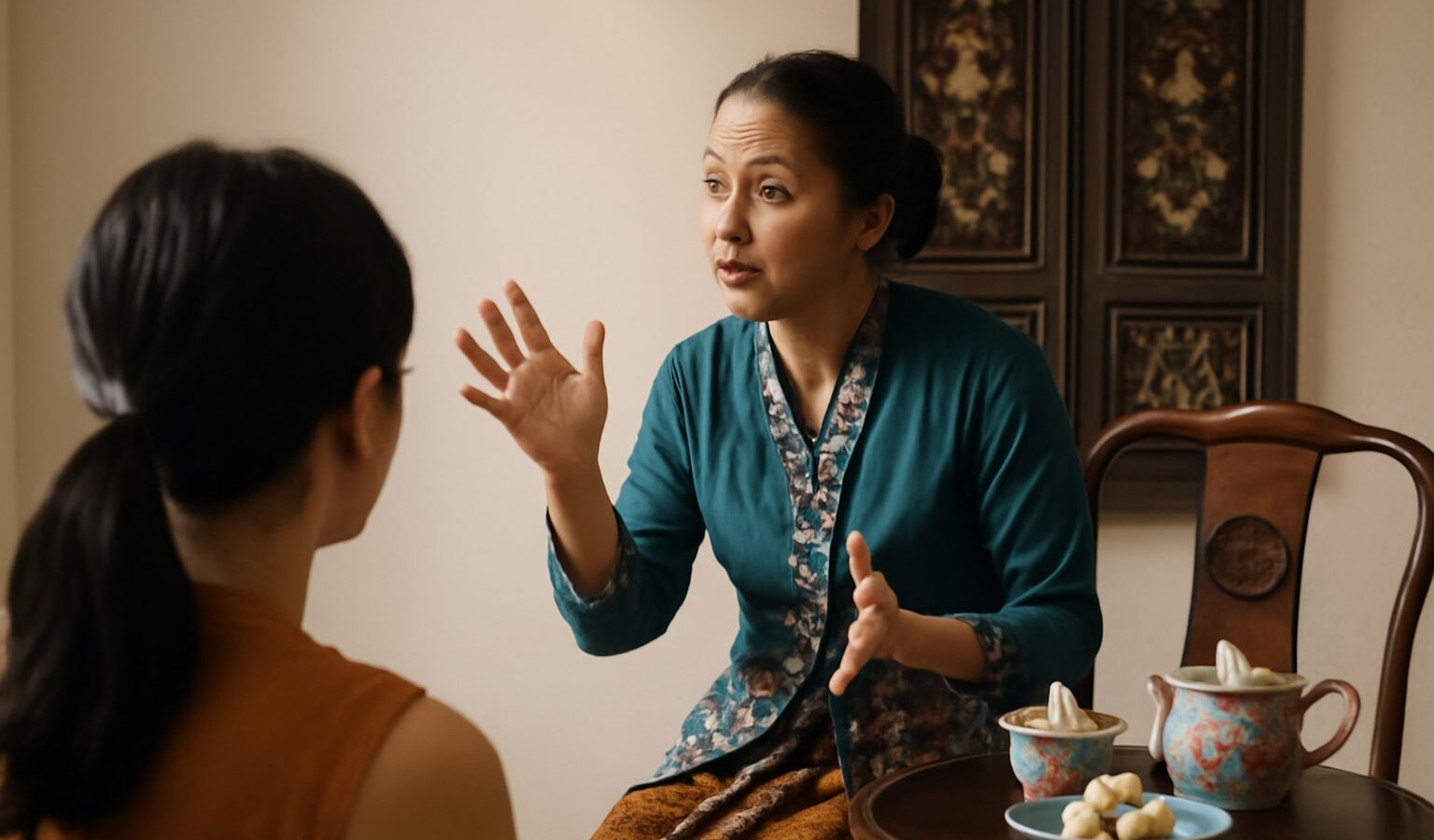
Peranakan theatre is one of Singapore’s most distinctive heritage performance traditions, and one of the least understood. Often called wayang Peranakan, it is a form of stage drama performed largely in Baba Malay, mixing family melodrama, sharp comedy, song and lavish costume. If you have watched Chinese opera or getai and assumed Peranakan theatre is similar, it is not. This guide explains what makes Peranakan theatre in Singapore unique, how it developed, what to expect at a show and why it matters for keeping a community’s language alive.
For a broader introduction to the community itself, see our guide to understanding Peranakan culture in Singapore.
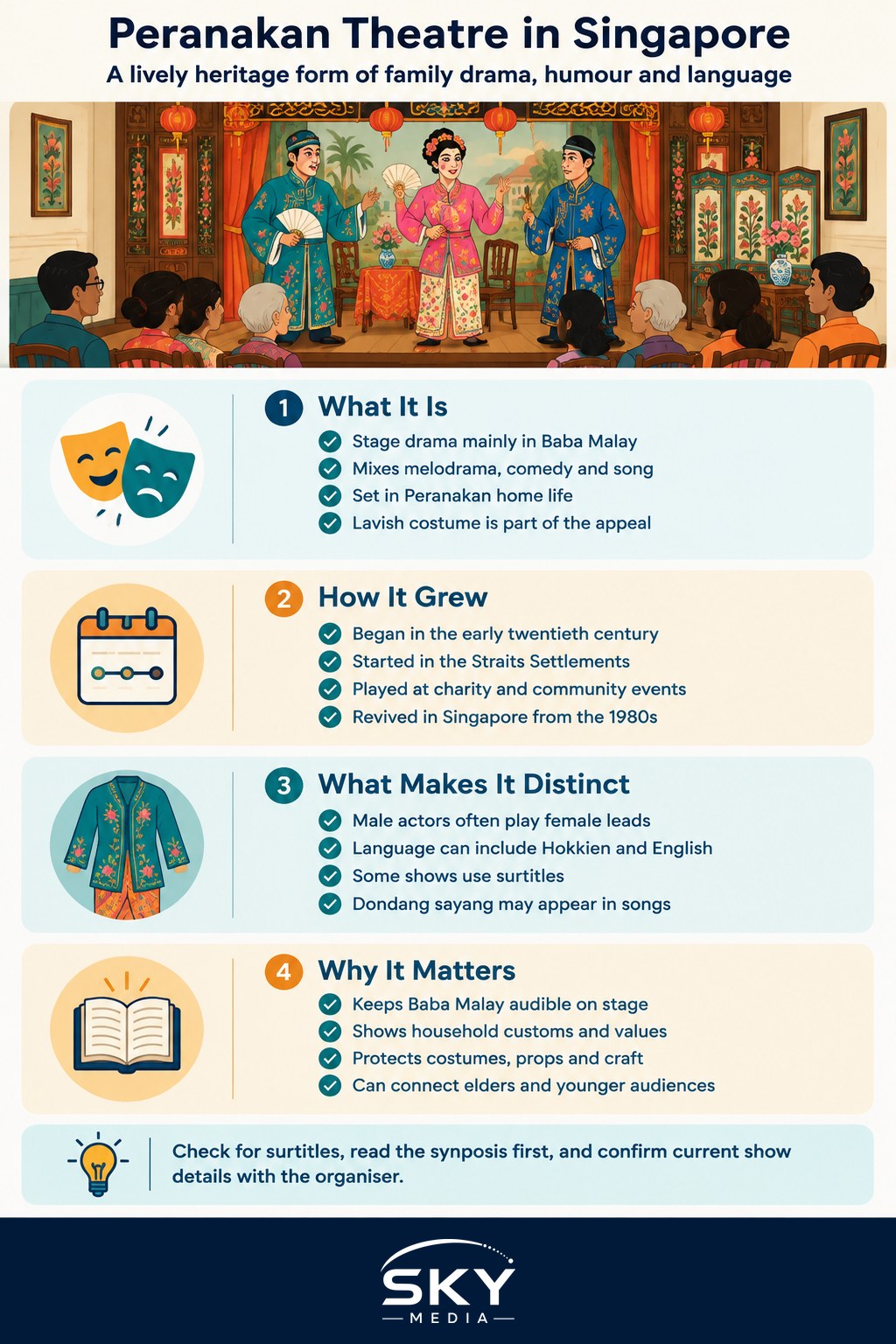
What Peranakan Theatre Is
The Peranakans, sometimes called Straits Chinese, are descendants of Chinese traders who settled in the Malay Archipelago and adopted many local customs. Men are traditionally called Baba and women Nyonya. Their home language, Baba Malay, blends Malay with Hokkien words and expressions.
Peranakan theatre grew out of this setting. Plays are typically domestic dramas set in a traditional Peranakan household, revolving around a strict matriarch, arranged marriages, family feuds, inheritance quarrels and the clash between old customs and modern ways. The tone swings from tearful to hilarious, often within the same scene.
A few features set it apart:
- Language. Dialogue is mainly in Baba Malay, peppered with Hokkien and English. Productions aimed at wider audiences often provide surtitles.
- Cross-dressing roles. Male actors have long played the female leads, especially the formidable bibik (an older Nyonya matriarch). This tradition began when it was considered improper for women to perform on stage and has become a beloved part of the form.
- Costume. Sarong kebaya, beaded slippers and gold jewellery bring the household to life. The costumes are a showcase of Peranakan craft in their own right.
- Song. Many productions include musical numbers, sometimes drawing on dondang sayang, a traditional form of sung, improvised Malay verse exchanged between singers.
A Short History of Wayang Peranakan
Peranakan theatre developed in the early twentieth century in the Straits Settlements, which included Singapore, Penang and Malacca. Amateur groups staged plays for charity, community events and family celebrations. Early productions sometimes adapted Western stories or Chinese folk tales into a Peranakan setting, while others drew directly on everyday household life.
Over the decades the form declined as fewer young people spoke Baba Malay and the wider community shifted towards English and Mandarin. From the 1980s onwards, a revival took hold in Singapore as community associations and dedicated theatre groups began staging regular Baba Malay productions, often as part of heritage and arts festivals. These shows drew audiences across generations, from elderly Peranakans who grew up with the language to younger viewers discovering it for the first time.
Today the tradition continues through community-led companies, festival programmes and occasional large-scale productions at major arts venues. Some contemporary works mix English and Baba Malay or experiment with new stories, while still keeping the household drama and the cross-dressing matriarch at the centre.
How It Compares with Other Traditional Performances
Visitors new to Singapore’s heritage stages often mix these forms up. Here is how they differ.
| Form | Main language | Typical setting | What to expect |
|---|---|---|---|
| Peranakan theatre | Baba Malay, with Hokkien and English | Indoor theatres, community and festival stages | Family drama, comedy, song, cross-dressing matriarch roles |
| Chinese opera | Chinese dialects such as Hokkien, Teochew or Cantonese | Temple stages, theatres, festival events | Stylised singing, painted faces, classical stories |
| Getai | Mainly Mandarin and Hokkien songs | Outdoor stages during the Hungry Ghost month | Live song performances and banter with the audience |
| Bangsawan | Malay | Theatres and heritage festivals | Malay opera with music, fantasy and historical tales |
Storytelling at the Heart of the Form
Peranakan theatre is, above all, storytelling about home life. The stories hold up a mirror to the community, gently mocking its quirks while honouring its values.
The matriarch. The bibik rules the household, upholds etiquette and has strong opinions about everything from cooking to marriage. Audiences love her sharp tongue and comic timing, and many recognise their own grandmothers in her.
Food and ritual. Characters argue over recipes, prepare for weddings or ancestral offerings, and fuss over the correct way to do things. If you know a little about Peranakan wedding customs, many on-stage jokes and scenes become much richer.
Language play. Puns, proverbs and insults in Baba Malay are a big part of the humour. Even with surtitles, some wordplay only lands fully for native speakers, which is part of the charm.
Moral lessons. Beneath the comedy, plays often explore filial piety, respect, loyalty and the cost of pride or greed.
Outside formal theatre, storytelling lives on in family gatherings, oral history projects, heritage talks and community events where older Peranakans share memories of kampung life, festive cooking and household customs.
Why It Matters for Heritage and Language
Baba Malay is considered an endangered language, with relatively few fluent speakers left. Theatre is one of the most visible places where it is still spoken in full, with its idioms, rhythm and humour intact. Each production helps keep the language audible to a new generation.
Peranakan theatre also preserves material culture. Costumes, set pieces and props reflect the same artistry you see in Peranakan porcelain and nyonyaware and beadwork. Watching a play is a living complement to a museum visit.
How to Watch Peranakan Theatre Today
Performances are not staged every week, so it helps to know where to look.
- Community associations. Peranakan associations in Singapore often organise or support productions and cultural events. Follow their websites and social channels for announcements.
- Arts and heritage festivals. Festivals celebrating Singapore’s heritage and the arts sometimes include Peranakan plays, readings or talks.
- Major ticketing platforms and arts venues. Larger productions are usually listed on the main ticketing sites and venue calendars.
- Museums and heritage institutions. The Peranakan Museum and similar institutions sometimes host talks, workshops or performances linked to the culture.
A few tips for first-timers:
- Check whether the show has English surtitles if you do not speak Baba Malay.
- Read the synopsis beforehand so you can follow the family relationships.
- Expect audience laughter and reactions. It is a lively, warm experience rather than a hushed one.
- Check age guidance, show length and the venue’s policy on photography before you go.
Schedules, venues and ticketing change from year to year, so always confirm current details with the organiser. Once you have seen a show, the bibik’s voice tends to stay with you long after the curtain falls.
Further reading: Tamil Theatre in Singapore: A Beginner’s Guide · Malay-Language Theatre in Singapore: Where to Start